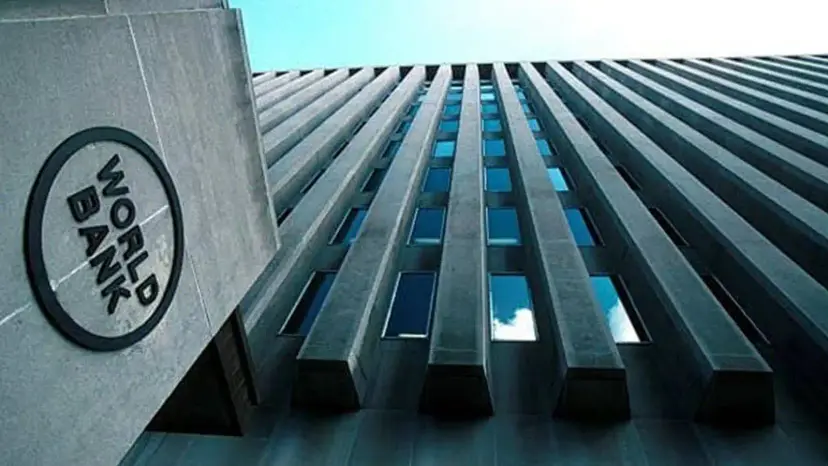
The World Bank has revised upward its forecast for Nigeria’s economic growth in 2026, projecting the economy to expand by 4.3 percent as macroeconomic conditions improve and investor confidence gradually strengthens.
The revised projection was published in the bank’s October 2026 Africa Economic Update, released on Tuesday. The World Bank also expects Nigeria’s economy to record 4.4 percent growth in both 2027 and 2028.

The latest estimate represents an improvement from the 4.0 percent growth recorded in 2025 and places Nigeria among the African economies that have received an upgraded growth outlook.
According to the World Bank, the expected acceleration will be supported by greater macroeconomic stability, improved investor sentiment and a gradual recovery in private-sector investment.
STRONGER ECONOMIC PERFORMANCE SUPPORTS UPGRADE
The improved forecast comes amid signs that Nigeria’s economy is gaining momentum following a period of significant economic reforms.
Data from the National Bureau of Statistics showed that Nigeria’s real Gross Domestic Product expanded by 4.43 percent year-on-year in the second quarter of 2026.

The figure was higher than the 4.23 percent recorded in the second quarter of 2025 and represented an improvement from the 3.89 percent growth recorded in the first quarter of 2026.
Agriculture and services were among the major drivers of the second-quarter performance, while both the oil and non-oil sectors also recorded growth.
The services sector continued to dominate economic activity, contributing 56.62 percent of Nigeria’s real GDP during the quarter.
The World Bank’s latest assessment suggests that continued improvements in economic management could provide a stronger foundation for investment and broader economic activity.

ECONOMIC GROWTH STILL NOT ENOUGH TO REDUCE POVERTY
Despite the more positive growth outlook, the World Bank cautioned that Nigeria still faces significant economic challenges.
The lender noted that stronger economic growth across Sub-Saharan Africa has not necessarily resulted in a corresponding reduction in poverty. Growth in income per person remains slower than the overall expansion of economic output.
For Nigeria, the bank said the current pace of expansion remains inadequate to generate sufficient productive employment and deliver a substantial reduction in poverty.
Rising living costs are also placing pressure on vulnerable households. The World Bank pointed to elevated fuel prices linked to the ongoing conflict in the Middle East as one of the factors likely to limit the pace of poverty reduction.
Low-income households are particularly exposed to such pressures because a larger share of their income is typically spent on transportation, food and other essential goods and services.
TURNING GROWTH INTO BETTER LIVING CONDITIONS
The World Bank said Nigeria’s priority should go beyond achieving higher GDP figures and focus on ensuring that economic expansion produces tangible improvements for households and businesses.
According to the lender, maintaining reform momentum, encouraging private investment, improving infrastructure, strengthening human capital and raising productivity will be critical to translating greater macroeconomic stability into higher living standards.

Although recent reforms have helped improve some aspects of the country’s macroeconomic environment, household incomes remain under pressure and poverty levels continue to be a major concern.
The bank also identified artificial intelligence and other digital technologies as potential sources of productivity gains and employment across Africa.
It urged governments to close infrastructure and skills gaps so that businesses and workers can take advantage of emerging technologies rather than being left behind by the digital transformation.

NIGERIA BENEFITS FROM STRONGER REGIONAL OUTLOOK
Nigeria’s revised projection comes as the World Bank also improves its overall outlook for Sub-Saharan Africa.
The bank raised its forecast for regional growth in 2026 to 4.3 percent, up from the previous estimate of 4.1 percent. Growth expectations were upgraded for a significant number of countries across the region.
Andrew Dabalen, the World Bank’s Chief Economist for Africa, said the region had demonstrated resilience despite challenging global conditions, including disruptions associated with the conflict in the Middle East.

For Nigeria, the upgraded forecast suggests that recent reforms and improvements in economic management are beginning to influence expectations for future growth.
However, maintaining the momentum will remain crucial.
The more important measure of Nigeria’s economic recovery will ultimately be whether higher growth can translate into increased investment, more productive employment, stronger household incomes and meaningful improvements in living standards.
In other words, the challenge is no longer simply achieving faster economic growth, but ensuring that the benefits of that growth are felt more broadly across the Nigerian economy.