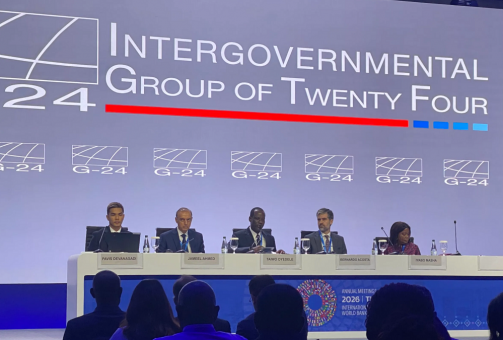

Oyedele, who chairs the Group of 24 (G24), raised the concern during the 2026 annual meetings of the International Monetary Fund (IMF) and the World Bank in Bangkok, Thailand, on Tuesday, October 13.
He described the growing debt burden and the high cost of borrowing as major obstacles to inclusive economic growth, particularly across Africa and other developing regions.
According to Oyedele, the challenge facing these countries goes beyond the volume of debt they owe. The increasingly expensive terms under which they borrow are also putting considerable pressure on government finances.
He explained that developing economies are struggling with rising fiscal deficits and higher debt-servicing obligations, leaving them with fewer resources to invest in infrastructure, public services and programmes that create jobs.

He noted that these financial pressures are being compounded by global economic disruptions, including the ongoing conflict in the Middle East, rising food prices linked to severe climate conditions and increasing interest rates on international loans. These developments are making it more difficult for developing nations to achieve sustainable growth and create employment opportunities.
G24 SEEKS CHEAPER FINANCING FOR DEVELOPING COUNTRIES
In response to the mounting debt crisis, members of the G24 have called on the IMF and World Bank to expand access to affordable financing for vulnerable economies.
The group wants international financial institutions to provide more favourable lending terms, particularly for countries that need urgent financial support to stabilise their economies and fund essential development projects.

Iyabo Masha, Director of the G24 Secretariat, explained that excessive debt repayments were restricting economic progress because governments had fewer funds available for new investments.
She stressed that countries could struggle to finance development when a substantial portion of their public revenue was committed to meeting existing debt obligations.
Masha, however, expressed optimism that improvements in the international debt restructuring framework could help countries resolve financial crises more quickly.
She cited Senegal as an example of a country approaching a potential resolution with its creditors. The West African nation has been working towards an agreement with official lenders and bondholders following the emergence of previously misreported debt estimated by analysts at $13 billion.

DEVELOPING COUNTRIES FACE RISK OF FALLING BEHIND IN AI
Beyond the debt crisis, the G24 also warned that developing economies could fall further behind advanced nations in adopting artificial intelligence (AI).
Masha expressed concern that unequal access to technology could widen the digital divide, particularly for countries that lack the infrastructure needed to benefit from emerging technologies.
She explained that reliable electricity and investment in data centres would be essential for developing countries to take advantage of AI-driven economic opportunities.

Without these foundations, she warned, poorer economies could struggle to benefit from technological advances that are already helping other countries improve productivity and strengthen their economies.
The concerns come as international financial institutions continue to assess the impact of global economic pressures on developing markets.
The G24 is seeking stronger international cooperation to address debt vulnerabilities, improve access to affordable financing and ensure that developing countries have a fairer opportunity to achieve inclusive economic growth.
The group maintains that addressing the cost of borrowing is essential to freeing up resources for infrastructure, job creation and other investments needed to improve living standards.