

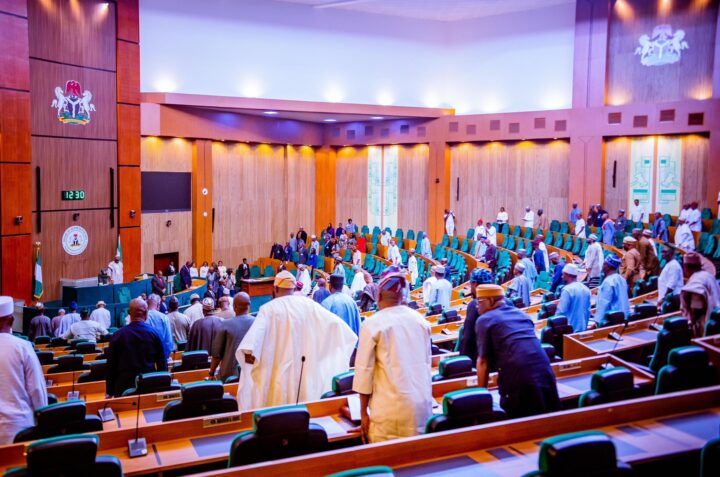
The House of Representatives has urged the Federal Government to maintain the initially proposed route of the Lagos-Calabar Coastal Highway through Ondo State and the Escravos–Ogheye–Ugborodo corridor in Delta State.
The resolution was adopted on Wednesday, October 21, 2026, after lawmakers considered a motion sponsored by Thomas Ereyitomi, who represents Warri North, Warri South and Warri West Federal Constituency in Delta State.

The development follows a recent announcement by the Minister of Works, David Umahi, that the highway would be redirected through sections of the existing East-West Road, linking Ondo State to Edo State. The minister explained that the decision was influenced by flooding concerns, particularly around the Ughelli axis in Delta State, and was intended to avoid constructing an entirely new route through the affected corridor.
However, Ereyitomi warned that changing the original alignment could undermine the project’s connectivity objectives and prevent coastal communities from benefiting from the economic opportunities the highway is expected to create.
He expressed concern that the proposed route would bypass riverine communities along the Ogheye–Orere–Ugborodo–Escravos corridor. The area hosts important oil and gas facilities, including Chevron’s tank farm and the Escravos Gas-to-Liquids (EGTL) plant, alongside other infrastructure that supports Nigeria’s crude oil exports, foreign exchange earnings and energy supply.

According to the lawmaker, preserving the original coastal route would improve access to these economic centres, facilitate the movement of workers, equipment and commercial goods, and encourage the development of connecting roads and supporting infrastructure.
He also called for a comprehensive assessment of the costs associated with alternative routes, including additional road construction, bridges, ground improvement, environmental protection, compensation, flood control and long-term maintenance.
Ereyitomi noted that engineering methods such as soil stabilisation, geosynthetics, piled foundations, reinforced embankments and elevated viaducts could provide possible solutions to difficult terrain, subject to appropriate technical and environmental assessments.

LAWMAKERS QUESTION PROPOSED REALIGNMENT
Contributing to the debate, Awaji-Inombek Abiante, a lawmaker from Rivers State, criticised the proposed change, arguing that it could deprive coastal communities of the benefits expected from the highway project.
Abiante questioned whether difficult terrain would be considered sufficient justification for avoiding the same communities if the government were seeking to extract crude oil from the area.
He called on the Minister of Works to appear before the House and explain the technical reasons behind the proposed realignment. He also disclosed that his constituency had not received an environmental impact assessment for the project.

The lawmaker initially expressed doubts about the ability of the House Committee on Works to investigate the matter adequately. However, the presiding officer, Benjamin Kalu, interrupted him and asked him to withdraw the remark questioning the committee’s competence.
Abiante subsequently clarified that his concern was for the committee to properly consider the interests of affected communities and make recommendations based on a clear understanding of the reasons for the proposed change.
HOUSE SEEKS ENVIRONMENTAL ASSESSMENT
Mark Esset, a lawmaker representing Akwa Ibom State, proposed that the Federal Ministry of Works submit the highway’s environmental impact assessment to the House.
He argued that the document would enable lawmakers to understand the project’s potential environmental challenges and the measures required to address them before construction progresses.
Esset maintained that examining the assessment would help clarify the environmental implications of the project and support informed decisions about the proposed route.
PROPOSAL FOR COASTAL FEEDER ROADS
Ademorin Kuye, a Lagos lawmaker, suggested that reinforced coastal feeder roads should be constructed to reconnect maritime and fishing communities that might otherwise become isolated if sections of the main highway were diverted inland.
He explained that where deep water pits and unstable terrain made the original alignment difficult, alternative feeder roads could help affected communities retain access to the main highway.

The proposal was aimed at ensuring that changes to the highway’s route would not completely cut off coastal settlements from the transportation network and its expected economic benefits.
Following deliberations, the lawmakers unanimously adopted the motion and the accompanying proposals through a voice vote.
The House’s position calls for the Federal Government to reconsider the proposed route and ensure that engineering requirements, environmental concerns and the economic interests of coastal communities are adequately considered in decisions concerning the Lagos-Calabar Coastal Highway.