

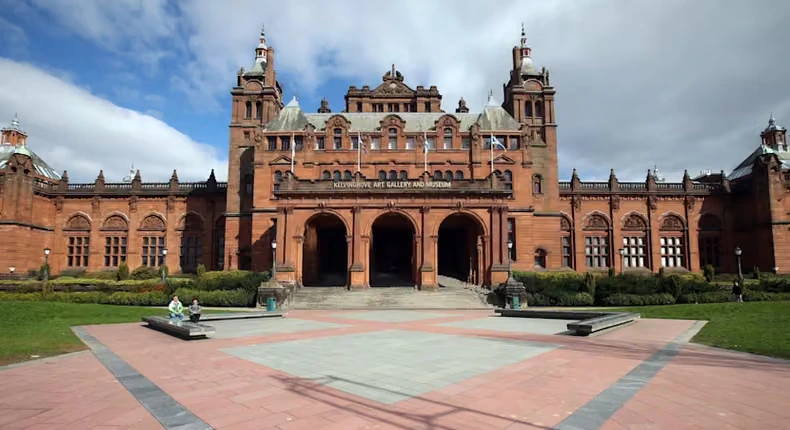
Egypt is seeking the return of the remains of an ancient Egyptian priest that have been held in a museum in Glasgow, Scotland, for more than 100 years.
Glasgow Life, the organisation responsible for managing the Kelvingrove Art Gallery and Museum, has confirmed receiving a formal request for the repatriation of the remains, widely identified as those of an ancient priest named Nekht.
Although reports have attributed the request to Egyptian authorities, Glasgow Life has not publicly disclosed the identity of the individual or institution that submitted it.

The development follows the museum’s decision to remove the remains from public display over concerns about the ethics of exhibiting human remains without documented consent from the deceased or their descendants.
REMAINS DATE BACK MORE THAN 3,900 YEARS
According to Glasgow Museums’ official catalogue, the remains are associated with a wooden coffin excavated from Tomb 130 at Beni Hasan in Middle Egypt.
The coffin dates to Egypt’s 12th Dynasty, between approximately 1985 and 1797 BC.
Although the remains have frequently been described as a mummy, the museum’s records indicate that the coffin contains the skeleton of an adult man, despite originally being designed for a child.

The museum also explained that the priest’s original mummy had probably decayed before his remains were reburied inside the coffin.
The coffin identifies the deceased as Nakht, a sem-priest who held an important position in ancient Egyptian religious practices.
He was associated with the ‘Opening of the Mouth’ ceremony, a traditional ritual believed to restore a deceased person’s ability to breathe, speak and receive food in the afterlife.
Archaeologist John Garstang excavated the coffin, which was subsequently donated to Glasgow in 1923 by the Egyptian Research Students’ Association’s Glasgow branch.

MUSEUM’S DECISION SPARKS DEBATE OVER DISPLAYING HUMAN REMAINS
Glasgow Life removed Nakht’s remains from public exhibition alongside a mummified head, hand and foot associated with Egypt’s Valley of the Kings.
The decision was based on evolving museum standards and a revised code of the International Council of Museums, which emphasises the need to respect the dignity of human remains.
The changes have generated differing opinions among Scottish politicians, historians and museum professionals.

While critics argue that removing ancient human remains limits opportunities for historical education and public engagement, supporters believe museums should reconsider how human remains acquired during colonial-era excavations are displayed.
The debate has also raised broader questions about whether museums should continue holding and exhibiting human remains taken from other countries without clear evidence of consent.
GLASGOW TO REVIEW EGYPT’S REPATRIATION REQUEST
The return of the remains to Egypt is not guaranteed, as Glasgow City Council, which owns the museum collection, must consider the request through its established repatriation process.
The case is expected to be reviewed initially by Glasgow’s Working Group for Repatriation, Restitution and Spoliation.
A council committee will subsequently make the final decision after considering the legal status and history of the remains, ethical concerns and the identity of the requesting party.
Glasgow Life has confirmed that it will follow the established procedure, stressing that receiving a repatriation request does not automatically mean that the return has been approved.
EGYPT INTENSIFIES EFFORTS TO RECLAIM HISTORICAL HERITAGE
Egypt’s request comes amid renewed international attention on the country’s efforts to preserve its ancient heritage and address the presence of Egyptian antiquities in foreign museums.

The opening of the Grand Egyptian Museum near the Giza pyramids has further highlighted the country’s ambitions to showcase its historical collections. The institution houses more than 100,000 objects, including the complete collection recovered from the tomb of Tutankhamun.
A successful return of Nakht’s remains could strengthen Egypt’s wider efforts to encourage museums in Britain and other countries to reconsider the ownership and display of ancient Egyptian human remains and artefacts acquired during European excavations.
The Glasgow case is therefore expected to serve as an important test of whether museums’ changing ethical standards will extend beyond removing human remains from public exhibitions to returning them to their countries of origin.




