

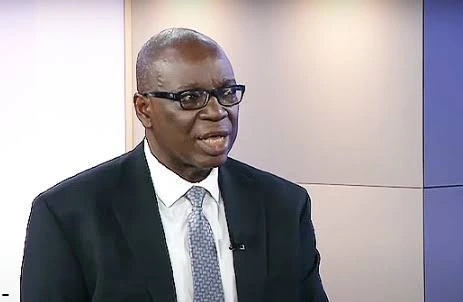
Osaze-Uzzi raised the concerns during an interview on Arise Television, describing the discovery as troubling given the safeguards and technological measures INEC has introduced to prevent multiple voter registrations and other irregularities.

He argued that voter registration should be a straightforward exercise, noting that the law clearly stipulates the requirements for eligibility. According to him, an individual must be a Nigerian citizen, be at least 18 years old and appear physically for registration and biometric data capture.
He questioned how such a significant number of questionable entries could have entered the database despite these requirements and the commission’s existing verification mechanisms.
“The work ordinarily ought to be easier for the commission. The law is quite clear about who is entitled to be on the register: you’re a Nigerian citizen, you’re 18 years and above, and then you go there, and you register. It’s as simple as that,” he said.
The former INEC director added that the physical registration process should make it difficult for multiple registrations to occur.

He further questioned the commission’s ability to detect irregularities despite the availability of technologies such as artificial intelligence and biometric verification.
Osaze-Uzzi also faulted INEC for failing to provide sufficient details about the scope of the exercise, particularly the period covered by the review and the methods used to identify the questionable records.
He said it remained unclear whether the verification exercise focused exclusively on the Continuous Voter Registration (CVR) conducted last year or covered the entire national voters’ register, dating back to the first registration exercise in 2011.

He maintained that INEC needed to explain how the questionable entries initially found their way into the database, rather than concentrating solely on announcing the number of records removed.
The former official identified the Automated Fingerprint Identification System (AFIS) as one of the important technologies available to the commission for detecting multiple registrations.
According to him, fingerprint verification across different states and communities could help identify individuals who had registered more than once, whether deliberately or unknowingly.

He also called for clarification regarding INEC’s reported use of artificial intelligence in identifying questionable records, noting that the commission’s Director of Information and Communication Technology had reportedly acknowledged the technology’s involvement.
Although INEC had reportedly removed approximately 1.2 million questionable records during the clean-up exercise, Osaze-Uzzi insisted that the commission must address the fundamental question of how the entries were allowed into the register despite the existing safeguards.
He stressed that Nigerians deserved a comprehensive explanation of the findings and the measures being taken to prevent similar irregularities in the future.
The controversy comes as INEC intensifies preparations for the 2027 general elections, with growing calls for transparency and greater public confidence in the credibility of the national voters’ register.




