2027: President Draws Sharp Contrast Between His Lagos Coastal Protection Record and Obi’s Governorship, Says Nigeria Needs Leaders Who Confront Challenges
UYO, NOVEMBER 6, 2026
President Bola Ahmed Tinubu has challenged former Anambra State Governor Peter Obi over his record in confronting the state’s persistent erosion crisis, drawing a striking comparison with the ambitious coastal protection initiative conceived during his tenure as Governor of Lagos State.

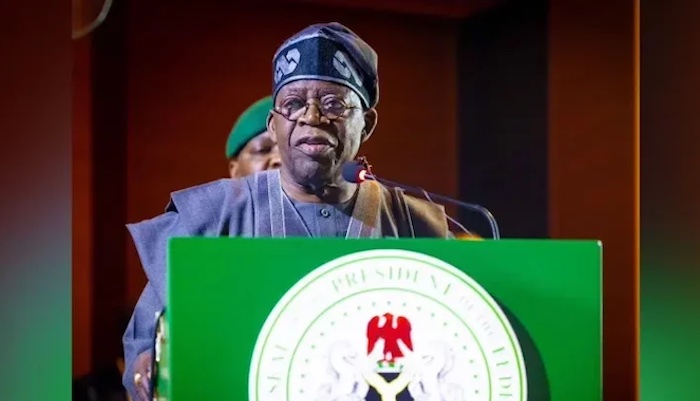
Speaking at the All Progressives Congress (APC) presidential rally in Uyo, Akwa Ibom State, on Friday, Tinubu presented his experience in confronting Atlantic Ocean encroachment as an illustration of the leadership qualities he believes are essential for addressing Nigeria’s complex national challenges.
In one of the most pointed moments of his address, the President declared:
“Peter Obi is in one party they call NDC where he’s running for president. He ran away from erosion in Anambra. He couldn’t confront erosion. I, Bola Ahmed Tinubu, confronted the Atlantic Ocean. I tamed it for you.”
The remarks placed the governance records of both political figures at the centre of the emerging 2027 presidential debate, raising questions about executive experience, political courage, long-term planning and measurable achievements.
FROM THE ATLANTIC OCEAN TO THE PRESIDENCY
Tinubu’s reference recalls the Atlantic Ocean’s encroachment on Victoria Island and adjoining Lagos communities, which threatened valuable coastal infrastructure and commercial development.
During his governorship between 1999 and 2007, the Lagos State Government initiated an ambitious coastal protection and land reclamation vision in collaboration with private investors.

The initiative subsequently developed into Eko Atlantic City, supported by the Great Wall of Lagos, an extensive sea defence structure designed to protect vulnerable sections of the coastline.
Conceived during Tinubu’s administration, the project progressed through successive Lagos governments, with construction of the Great Wall commencing in 2008.
Its implementation involved substantial private-sector investment, engineering expertise and sustained institutional commitment.
The distinction is important: Tinubu initiated the vision and helped establish its foundation, while subsequent administrations and private-sector partners advanced its execution.
The President’s argument in Uyo was that confronting difficult challenges requires more than acknowledging their existence. It demands the willingness to pursue ambitious solutions, mobilise resources and sustain long-term development initiatives.

ANAMBRA’S EROSION CRISIS: THE QUESTION OF RESULTS
Anambra State has experienced devastating erosion for decades, with affected communities suffering damage to homes, roads, agricultural land and public infrastructure.
The environmental challenge remains unresolved, despite successive interventions and the involvement of federal and state authorities.
Peter Obi governed Anambra between 2006 and 2014, during which erosion remained a major environmental concern.
Tinubu’s criticism has therefore reopened questions about the effectiveness and lasting impact of erosion-control interventions undertaken during Obi’s administration.

The central issue is not whether remedial measures were attempted, but what measurable and enduring outcomes resulted from those interventions.
Although the persistence of erosion across Anambra does not establish that every intervention failed, it provides grounds for examining the scale, durability and effectiveness of projects undertaken during successive administrations.
NATIONAL PATRIOTS: LEADERSHIP MUST BE JUDGED BY RESULTS
Reacting to the President’s remarks, the National Patriots, through its President, Princess Gloria Adebajo-Fraser, MFR, emphasised that executive leadership must be evaluated through demonstrable achievements rather than political declarations alone.
“Peter Obi governed Anambra State for eight years. We are not questioning whether he attempted to address erosion during his tenure. We are questioning the results. The erosion crisis remained unresolved when he left office and continues to threaten communities today. What lasting, measurable achievements can his administration demonstrate against one of the state’s most serious environmental challenges? Nigerians deserve an answer,” Adebajo-Fraser stated.

She further observed that Tinubu’s Lagos coastal protection initiative represented an ambitious attempt to confront a formidable environmental threat through long-term planning, institutional commitment and collaboration with private investors.
“President Tinubu initiated the Lagos coastal protection and reclamation vision that subsequently developed into Eko Atlantic. The project demonstrates the importance of confronting difficult challenges through decisive action and sustained development planning.
“The Nigerian presidency presents challenges far greater than those confronting any single state. Presidential aspirants must therefore demonstrate not merely intentions and promises, but the courage to confront difficult problems, initiate solutions and deliver measurable results. Leadership must ultimately be judged by demonstrable achievements, not rhetoric,” she added.

THE CHALLENGES OF NATIONAL LEADERSHIP
Beyond the immediate political exchange, Tinubu’s remarks raised broader questions about the responsibilities of presidential leadership.
Nigeria faces interconnected challenges involving economic management, security, energy, infrastructure, environmental protection, public finance and institutional reform.
Addressing these challenges requires policy continuity, effective implementation, financial discipline and the ability to sustain major development initiatives beyond individual political tenures.
The Lagos coastal protection experience illustrates how a project initiated under one administration can develop through successive governments and private-sector participation.

Nevertheless, Anambra’s inland erosion challenges and Lagos’s Atlantic coastal encroachment involve different environmental conditions, engineering requirements and financing arrangements. A comprehensive assessment of either leader’s performance must consider these differences alongside documented outcomes.
2027: GOVERNANCE RECORDS TAKE CENTRE STAGE
The President’s Uyo remarks come as the APC intensifies political mobilisation ahead of the 2027 presidential election.
His visit to Akwa Ibom also featured development projects undertaken by Governor Umo Eno’s administration, reflecting the party’s emphasis on linking political engagements with infrastructure achievements.
The President is scheduled to proceed to Rivers State on Saturday for another APC rally.

As the presidential contest develops, the records of former and serving governors are expected to attract increasing scrutiny, particularly regarding infrastructure delivery, environmental management, fiscal responsibility and public welfare.
Tinubu’s comparison between Anambra’s erosion crisis and Lagos’s Atlantic coastal protection initiative has introduced another dimension to that debate.
The underlying question is one that extends beyond political affiliation: what problems did each leader confront, what solutions were implemented, and what lasting benefits were delivered to the people?
For the National Patriots, that is the standard by which claims of executive achievement should be examined.
Princess Gloria Adebajo-Fraser, MFR
President, National Patriots
Member, APC-PCC Strategic Communications Committee 2027