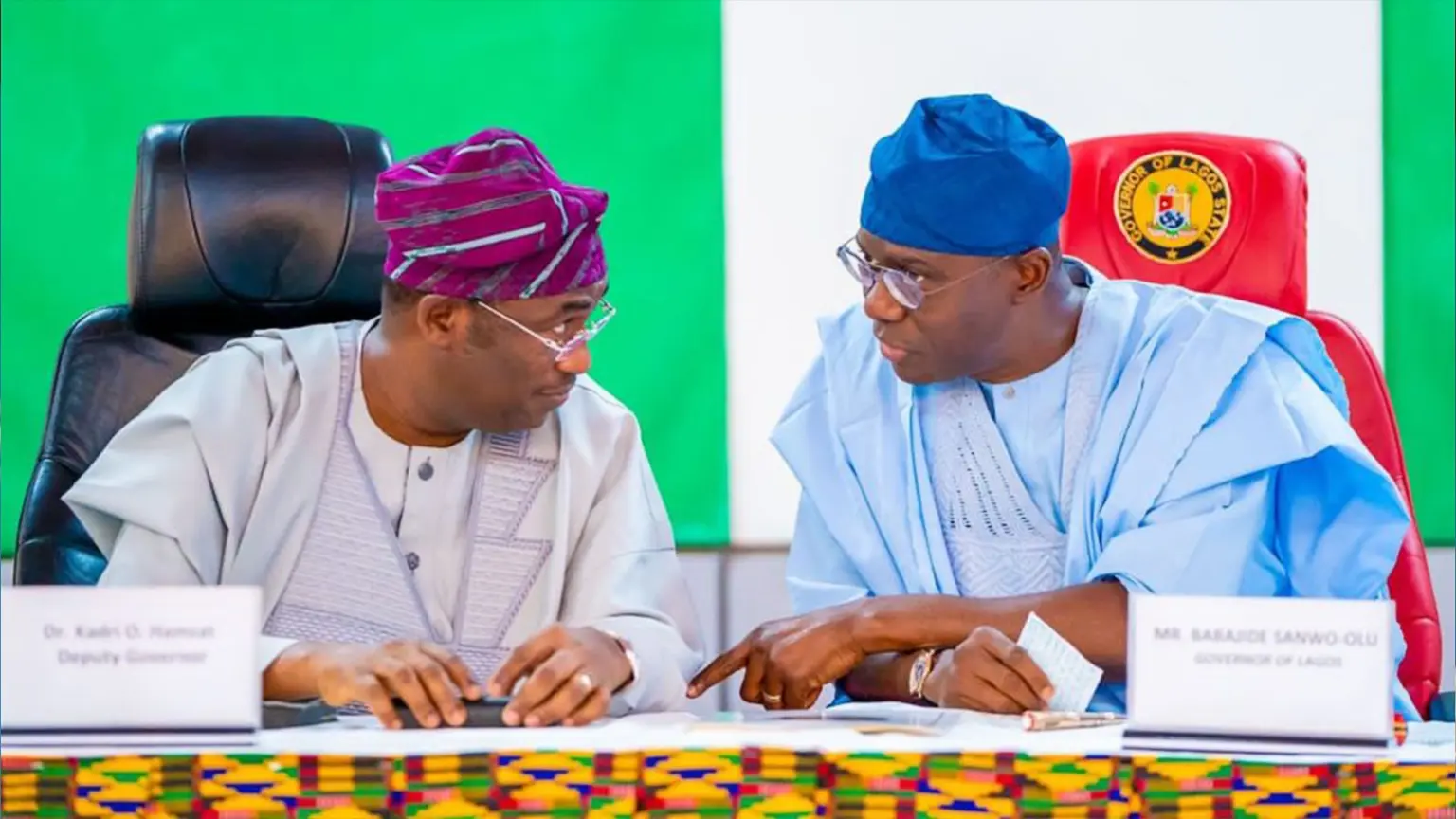

The race to succeed Governor Babajide Sanwo-Olu in the 2027 Lagos State governorship election is gradually gaining momentum, with Deputy Governor Obafemi Hamzat facing the challenge of convincing residents that the All Progressives Congress (APC) deserves another opportunity to govern the state.
The APC has maintained control of Lagos since 1999, with successive administrations led by Bola Tinubu, Babatunde Fashola, Akinwunmi Ambode and Sanwo-Olu. However, growing concerns over the cost of living, housing affordability, traffic congestion, unemployment and access to healthcare are expected to feature prominently in the next election.

Hamzat received the endorsement of Sanwo-Olu as his preferred successor during the unveiling of his governorship manifesto on October 30. The governor highlighted their working relationship since 2019, describing his deputy as someone who had participated in major policy decisions and infrastructure programmes.
However, the incoming candidate will need to explain how the administration’s achievements have improved the everyday lives of residents and how he intends to address outstanding challenges.
The Sanwo-Olu administration has highlighted several infrastructure projects, including the Blue and Red rail lines, road construction, healthcare investments and improvements in public transportation.
The state government disclosed in June 2026 that it had completed 362 roads covering approximately 347 kilometres since taking office in 2019. It also reported delivering 10,623 housing units during the same period.
The Blue Line rail system transported approximately 3.5 million passengers in 2025, averaging about 15,000 passengers daily. The government has also reported spending N14.9 billion on transportation subsidies over six years.
Despite these developments, concerns remain about the affordability and accessibility of public transportation, the availability of quality healthcare, housing costs and sustainable employment opportunities.
In his manifesto, Hamzat outlined plans to increase the state’s public bus fleet from 1,000 to 4,000, upgrade 100 primary healthcare centres and expand maternal and child healthcare facilities from 10 to 15.
He also promised to provide 580 additional hospital beds, extend Ilera Eko health insurance coverage to one in every three Lagos residents and construct two general hospitals.
Other proposals include expanding rail, road and water transportation, improving public school education, providing affordable housing, strengthening neighbourhood security and creating more employment opportunities for young people.

Economic hardship is another issue expected to influence the election. The removal of petrol subsidies and foreign exchange reforms introduced by the Federal Government have contributed to increased transportation, food and business operating costs.
Although the national government has defended the reforms as necessary economic measures, residents continue to face pressure from the rising cost of living.
Hamzat will therefore be expected to explain how his proposed administration would improve household welfare, create jobs and make essential services more affordable.
One major infrastructure project that could become an important campaign issue is the proposed Fourth Mainland Bridge.
Initially proposed during Tinubu’s administration in 2003, the project has passed through several administrations, revised designs and financing arrangements without reaching the construction stage.
An agreement signed during Ambode’s administration in 2016 was cancelled the following year. Under Sanwo-Olu, a preferred bidder was announced in December 2022, with subsequent financing arrangements involving Afreximbank and Access Bank.
However, construction had yet to commence as of January 2026.
The proposed bridge is expected to improve connectivity between different parts of Lagos, particularly the mainland and the rapidly developing Lekki-Epe corridor.
For residents who spend several hours commuting daily, the project remains an important transportation concern.
Housing is another major challenge, with estimates placing Lagos State’s housing deficit at approximately 3.4 million units. The situation has continued to raise concerns about rising rents and the availability of affordable accommodation for low-income earners and young families.
Meanwhile, opposition parties are also preparing to challenge the APC’s longstanding political dominance.
The 2023 governorship election saw Labour Party candidate Gbadebo Rhodes-Vivour secure 312,329 votes against Sanwo-Olu’s 762,134 votes, demonstrating the opposition’s ability to attract considerable electoral support.
However, opposition parties continue to face difficulties, including internal disagreements, leadership disputes, defections and challenges in maintaining strong grassroots structures.
Former Lagos PDP chairman Tunji Shelle attributed some of these difficulties to internal divisions and what he described as political strategies by the ruling party to weaken its opponents.
He also identified the APC’s established political network and influence across local government areas as factors contributing to its continued dominance.
Rhodes-Vivour, who is contesting under the African Democratic Congress (ADC), has dismissed suggestions that the APC cannot be defeated in Lagos.
He maintained that his political structure and grassroots support had expanded since the 2023 election, adding that his engagement with communities affected by demolitions had strengthened his connection with residents.
As preparations for the 2027 election continue, the contest is expected to focus on the APC’s record in government, the outstanding challenges facing Lagos residents, Hamzat’s proposed policies and the ability of opposition parties to present alternative development plans.