

Nigeria has maintained its position as the only country in Africa with an instant payment system classified at the highest level of inclusivity, according to the 2026 State of Inclusive Instant Payment Systems (SIIPS) in Africa Report.
The report, released on Thursday by the AfricaNenda Foundation in partnership with the World Bank Group and the United Nations Economic Commission for Africa (UNECA), classified Nigeria’s National Instant Payment (NIP) system as the continent’s only mature instant payment platform.

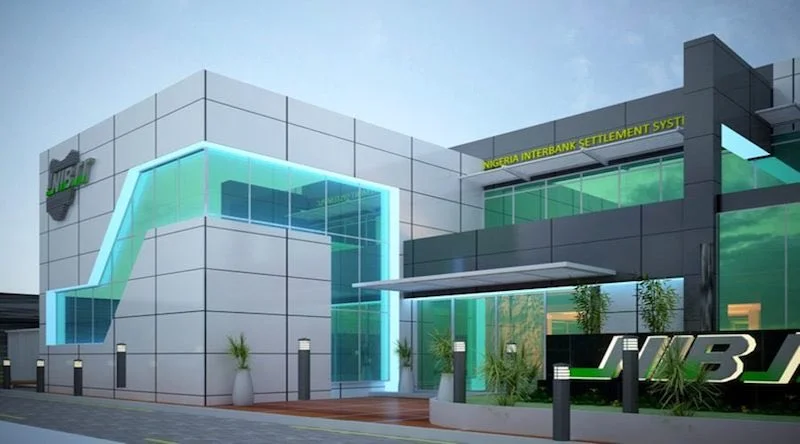
Operated by the Nigeria Inter-Bank Settlement System (NIBSS), the NIP system retained the classification despite the continued expansion of digital payment infrastructure across Africa.
The report showed that the number of operational instant payment systems on the continent had increased to 39, serving 43 countries. However, only Nigeria attained the mature classification, the highest category on the report’s Inclusivity Spectrum.
Of the 39 systems assessed, 19 were classified as basic, 11 as progressed and eight as unranked, leaving Nigeria as the only country in the mature category.

Speaking at the launch of the report, AfricaNenda Foundation’s Deputy Chief Executive Officer, Sabine Mensah, confirmed that Nigeria had maintained its position, noting that the system had sustained public trust, incorporated identification mechanisms for user verification and maintained effective channels for addressing consumer complaints and disputes.
The mature classification recognises payment systems that provide extensive payment options, affordable services, effective consumer protection and reliable mechanisms for resolving transaction disputes.

Such systems are also expected to support different categories of transactions, including government payments, business transactions and cross-border transfers, while ensuring that users can access services conveniently and securely.
Nigeria first attained the mature classification in 2025, becoming the first instant payment system in Africa to reach the level. Its latest recognition means no other payment system on the continent has matched the achievement since then.
The 2026 report also highlighted broader improvements in Africa’s digital payment landscape, with 23 countries now having access to instant payment systems classified as either progressed or mature. These systems collectively cover 56 per cent of the continent’s adult population.

However, the report identified persistent challenges affecting the development of inclusive payment infrastructure across Africa. These include gaps in interoperability, governance, payment functionality and consumer protection.
Some systems still lack adequate merchant-payment facilities, while others have insufficient channels for customers to report failed transactions, lodge complaints and seek redress when payment disputes arise.
AfricaNenda Foundation Chief Executive Officer, Robert Ochola, also raised concerns about increasing fraud across the continent, noting that inadequate consumer protection mechanisms could discourage customers from reporting incidents.
He urged regulators and payment system operators to strengthen collaboration and learn from existing models, identifying Nigeria’s NIP as a benchmark for other African countries seeking to improve their payment infrastructure.
The report’s findings were based on information collected from central banks and payment system operators between January and July 2026. It also incorporated research involving 1,403 individuals and micro, small and medium-sized enterprise (MSME) users of digital payment services across 15 African markets.
GROWTH IN NIGERIA’S DIGITAL PAYMENT TRANSACTIONS
Nigeria’s achievement comes amid significant growth in the country’s electronic payment transactions.
Data from NIBSS showed that transactions processed through the NIP platform reached N1.07 quadrillion in 2024, representing a 79.6 per cent increase from the N600 trillion recorded in 2023.

Transaction volume also increased by 15.5 per cent to 11.2 billion in 2024, reflecting the growing adoption of electronic payment channels by individuals and businesses.
In June 2025, NIBSS introduced the National Payment Stack (NPS), a next-generation payment infrastructure designed to strengthen the country’s existing payment ecosystem.
The platform is expected to improve instant settlements, bulk payments, transaction messaging and dispute management. It had processed 153,000 transactions during its pilot operations as of June 2026.
NIBSS has also explored offline payment solutions to extend digital financial services to Nigerians who use basic mobile phones or live in areas with unreliable internet connectivity.
Despite the progress, the latest SIIPS report underscores the need for continued investment in payment infrastructure, stronger consumer protection and wider access to affordable digital financial services across the continent.