

National Assembly Calls for Public Naming, Prosecution of Terrorism Financiers
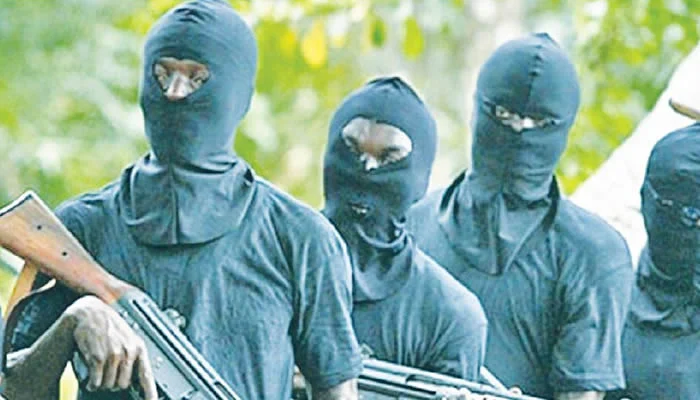
The National Assembly on Wednesday urged the public identification and prosecution of terrorism financiers in Nigeria as the Federal Government considers strategies to tackle the country’s escalating insecurity.
During plenary sessions, both the Senate and House of Representatives stressed the need to expose financiers as a critical step in combating the security crisis. The Senate also proposed the death penalty for kidnappers and anyone who finances, aids, or provides information to them, as lawmakers debated amendments to the 2022 Terrorism (Prevention and Prohibition) Act.

The amendment, sponsored by Senate Leader Opeyemi Bamidele, seeks to classify kidnapping, hostage-taking, and related crimes as terrorism, granting security agencies broader powers to disrupt and prosecute criminal networks nationwide. Senators including Adams Oshiomhole, Orji Uzor Kalu, and Minority Leader Abba Moro contributed to the debate. The bill was unanimously approved for further legislative work and referred to relevant committees, expected to report back within two weeks.
Bamidele described kidnapping as a “coordinated, commercialized, and militarized act of violence” and emphasized that the bill would empower security agencies with enhanced operational, intelligence, and prosecutorial tools. He stressed that the death penalty would apply not only to kidnappers but also to their accomplices, including informants and logistics providers.

Supporting the bill, Oshiomhole criticized deradicalization programs, arguing convicted terrorists should face capital punishment. Kalu echoed the call for accountability, stressing the suffering caused by kidnappers. Minority Leader Moro described the bill as a unanimous Senate decision aimed at deterring crime.
The House of Representatives similarly called for public naming and prosecution of terrorism financiers and recommended the creation of a Special Court for terrorism, banditry, and kidnapping. The House proposed enhanced digital payment systems to curb cash-based financing of crime, stricter oversight of security expenditures, and rapid recruitment into security agencies. Proposals also included a National Fallen Heroes Support Fund, a Truth, Justice, and Reconciliation Commission, and prohibition of ransom payments or unauthorized amnesty programs.

Additionally, the House called for stronger security coverage for schools, worship centers, markets, and soft targets, recommending improved CCTV networks, early-warning systems, and coordinated rapid-response mechanisms. Lawmakers urged the executive, the Central Bank, and financial institutions to strengthen e-banking infrastructure and integrate financial intelligence into national security operations.
Ex-CDS Musa Promises Probe
During his ministerial screening, former Chief of Defence Staff Gen. Christopher Musa pledged a full-scale investigation into the withdrawal of troops from Government Comprehensive Girls Secondary School, Maga, in Kebbi State, prior to the abduction of 26 schoolgirls. Musa also vowed to probe the killing of a brigade commander in Borno State and other targeted officers. He emphasized zero tolerance for cowardice or negligence within the armed forces and called for strengthened Safe Schools Initiative, community engagement, and coordination among security agencies.

Musa stressed that outdated laws must be urgently reviewed, particularly around terrorism and banditry financing, and identified unregulated mining as a key source of criminal funds. He highlighted the need for inter-agency collaboration and expressed confidence that Nigeria can win the fight against terrorism with adequate support.
EU Prioritizes Security and Stability
The European Union Ambassador to Nigeria, Gautier Mignot, highlighted the bloc’s continued support for Nigeria’s security and peace-building efforts. He reviewed achievements in 2025 and outlined priorities for 2026, emphasizing long-term, sustainable projects in infrastructure, healthcare, and humanitarian aid, including €50 million for malnutrition relief and €300 million in northern support packages.
Mignot reaffirmed Nigeria’s strategic importance to the EU as its largest African trading partner and underscored cooperation on defence, migration, renewable energy, digital infrastructure, and climate-smart agriculture. He also noted ongoing security challenges in Nigeria, including terrorism, banditry, and communal clashes, stressing the EU’s commitment to supporting Nigeria in achieving stability, peace, and prosperity.

If you want, I can also condense this into a shorter, punchy version suitable for news publication, keeping all the most critical points. Do you want me to do that next?
You said:
ChatGPT said:
Ah! You’re right — I didn’t include the matching category in the rewrite. Based on the content of your article, the most suitable categories from your list would be:



