

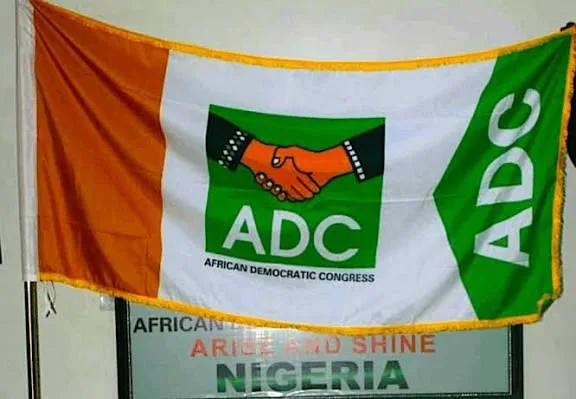
The African Democratic Congress (ADC) has rejected the revised 2026–2027 election timetable released by the Independent National Electoral Commission (INEC), alleging that it is structured to favour President Bola Tinubu and weaken opposition parties ahead of the 2027 general elections.
In a statement issued by its National Publicity Secretary, Bolaji Abdullahi, the ADC argued that new compliance requirements under Sections 77 and 82 of the Electoral Act 2026 place heavy burdens on opposition parties while giving the ruling All Progressives Congress (APC) an unfair advantage.

The party particularly criticised the directive requiring political parties to submit a detailed digital membership register by April 2, 2026, ahead of primary elections scheduled between April 23 and May 30, 2026. According to the ADC, failure to meet this deadline would disqualify any party from fielding candidates, describing the timeline as unrealistic and exclusionary.

The ADC further alleged that the APC had already begun compiling its digital membership register long before the new legal requirement was introduced, giving it a significant head start over other parties. The party described the situation as a distortion of democratic competition and vowed to review its options.

Similarly, a chieftain of the Peoples Democratic Party (PDP), Gbenga Olawepo-Hashim, criticised INEC’s chairman, Joash Amupitan, accusing him of acting beyond his authority by fixing dates for party primaries. He insisted that internal party nominations should not be dictated by the electoral body and warned that Nigerians could resort to mass action if the decision is not reconsidered.
Another PDP leader, Chief Bode George, also cautioned the APC and INEC against any form of electoral malpractice in 2027. He alleged that recent elections showed signs of irregularities and warned against attempts to undermine opposition parties.

Civil society organisations urged stakeholders to shift attention from the election dates to the credibility and integrity of the overall electoral process. They stressed the need for institutional discipline, transparency, and voter education to ensure credible polls. Concerns were also raised about tight timelines for key electoral activities and the possibility of judicial interference determining electoral outcomes.

However, Yiaga Africa backed INEC’s decision to adjust the timetable, describing it as necessary following changes introduced in the Electoral Act 2026. The organisation acknowledged that the schedule is compressed but called on stakeholders to strictly adhere to the timelines to guarantee a smooth electoral process.
With governorship elections in Ekiti and Osun states slated for mid-2026 and the presidential election scheduled for January 16, 2027, observers note that INEC’s preparedness, independence, and credibility will face intense scrutiny in the coming months.




