

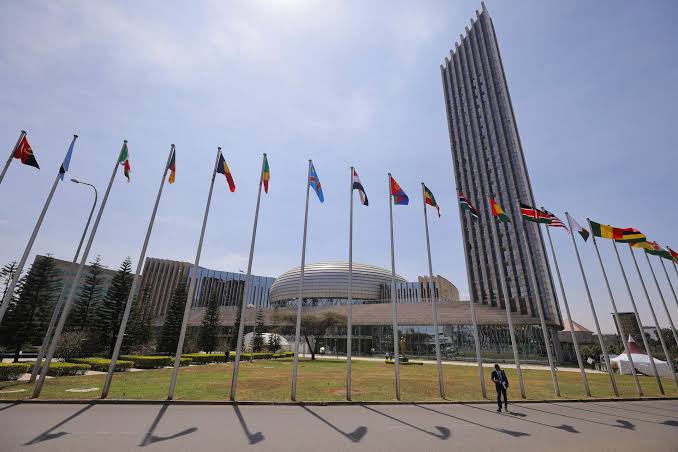
The ongoing rivalry between Saudi Arabia and the United Arab Emirates is casting a significant shadow over this weekend’s African Union (AU) summit in Addis Ababa, even as most African leaders seek to avoid being drawn into the Gulf powers’ competition, according to diplomats and regional experts.

What began as a contest for influence in Yemen has expanded across the Red Sea into the Horn of Africa — a region already marked by multiple conflicts, including wars in Sudan and Somalia, tensions between Ethiopia and Eritrea, and instability in Libya.

In recent years, the UAE has emerged as a major player in the Horn (primarily Sudan, Somalia, Ethiopia, Eritrea, and Djibouti) through large-scale investments, active diplomacy, and discreet military backing. Saudi Arabia, traditionally more reserved in the region, is now actively countering that influence by forging alliances with countries such as Egypt, Turkey, and Qatar.

A senior African diplomat told Reuters: “Saudi has woken up and realised that they might lose the Red Sea. They have been sleeping all along while UAE was doing its thing in the Horn.”
The rivalry, initially centred on vital maritime routes in the Red Sea and Gulf of Aden, is now extending deeper inland, influencing dynamics in Somalia, Sudan, and even parts of the Sahel.

While local factors drive many of these conflicts, Gulf involvement is increasingly forcing governments, regional blocs, and even armed groups to pick sides.
Michael Woldemariam, a Horn of Africa specialist at the University of Maryland, noted that several regional actors — including Eritrea, Djibouti, Somalia, and Sudan’s Armed Forces (SAF) — have become increasingly wary of the UAE’s assertive (“muscular”) foreign policy approach.

“Saudis may seek to limit or curtail UAE in the Horn but, it remains to see how that will play out,” he said. “UAE has a lot of leverage across the region – it has this expeditionary military presence and dense financial linkages.”
Saudi officials view certain UAE actions in Yemen and the Horn as threats to their national security, while Emirati officials insist their strategy helps strengthen states against extremism. However, UN experts and Western officials have accused the UAE of sometimes fuelling conflict and supporting authoritarian figures — allegations the UAE rejects.

Key flashpoints illustrating the rivalry include:
– Israel’s recognition of Somaliland’s independence bid, which Somalia blames on UAE influence. In response, Mogadishu severed ties with Abu Dhabi, signed a defence pact with Qatar, and received Turkish fighter jets in a show of support.

– Rising tensions between Ethiopia and Eritrea, where Eritrea’s recent visit by its leader to Saudi Arabia was interpreted by analysts as a signal of Riyadh’s backing.
– In Sudan’s civil war, the UAE is accused of providing logistical support to the Rapid Support Forces (RSF) paramilitary, while Saudi-aligned states back the Sudanese Armed Forces (SAF). Egypt, a close Saudi ally, has reportedly used Turkish-made drones to strike RSF positions along its border.

– Reports that Ethiopia — a beneficiary of UAE support — is hosting a base in western Ethiopia where RSF fighters are being recruited and trained (Ethiopia has not commented publicly).
Experts describe Saudi Arabia’s approach as often operating through allies and proxies rather than direct intervention.
Many African nations in the region are expected to proceed cautiously to avoid entanglement in what could become a direct confrontation between the two Gulf powers.

“The Horn is not the only crisis on the AU summit’s agenda,” noted Alex Rondos, former EU special representative for the region. “War continues in Democratic Republic of Congo, and al Qaeda- and Islamic State-linked insurgencies are spreading across the Sahel region. But those conflicts are still likely to take a back seat to the Horn.”
He questioned whether Saudi Arabia and the UAE fully understand the long-term consequences of their competition: “Will the Horn of Africa allow itself to be broken into pieces by these foreign rivalries and their African accomplices?”
The 38th Ordinary Session of the AU Heads of State and Government continues amid these geopolitical undercurrents, with the Horn of Africa emerging as a key arena for broader Middle East rivalries.




