

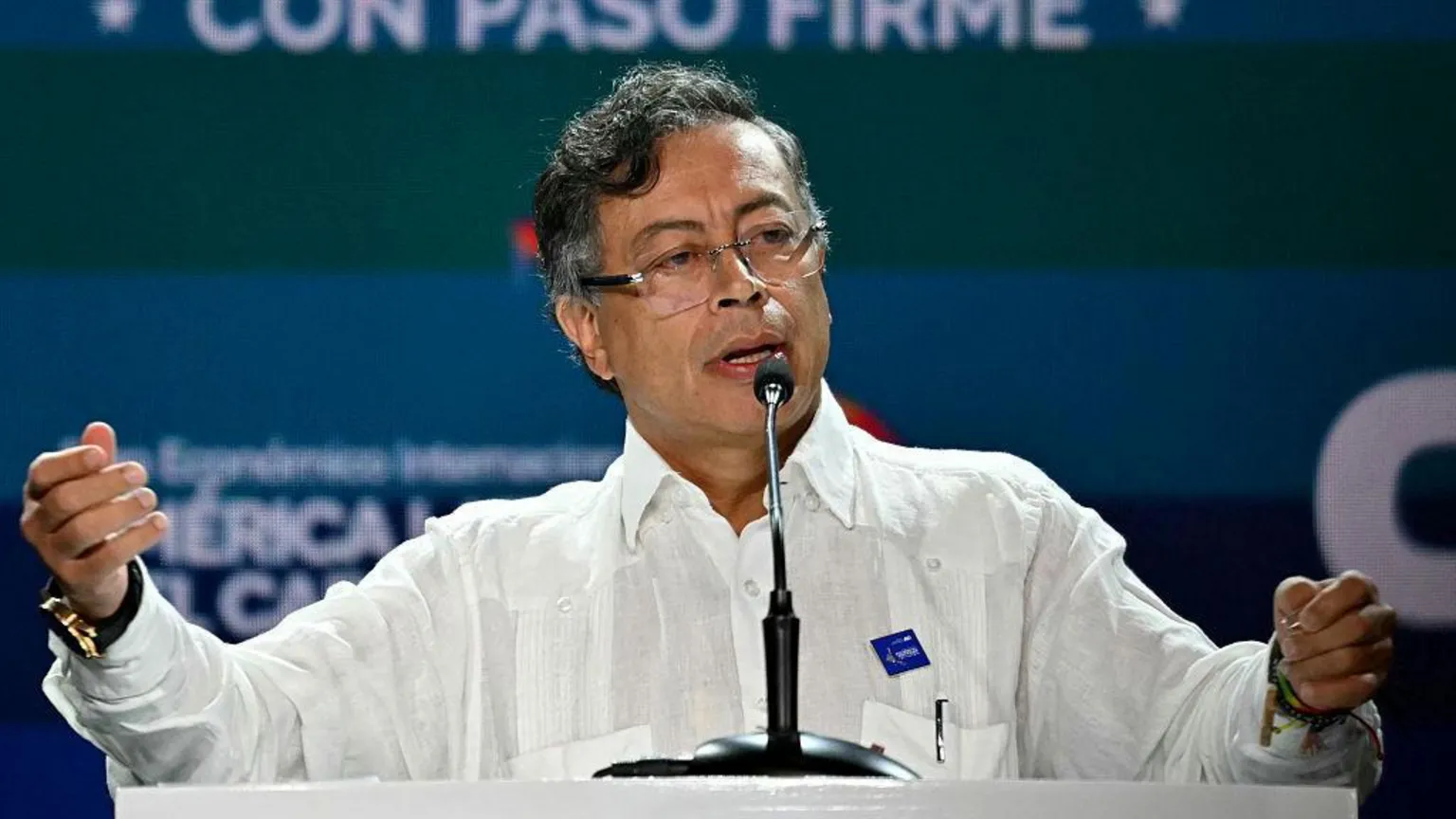
Colombian President Gustavo Petro is set to meet US President Donald Trump in Washington on Tuesday, marking their first in-person encounter after months of escalating tensions over Venezuela, drug trafficking, oil, security, and US military actions in the region.
The meeting follows Petro’s criticism of repeated US strikes on alleged drug vessels in the Caribbean and Pacific, as well as the United States’ immigration policies. Trump, meanwhile, has accused Colombia of not doing enough to curb cocaine flows and has previously suggested that a military operation in Colombia “sounds good.”

Despite months of strained relations, a recent “cordial” phone call, facilitated by US Senator Rand Paul, signaled a potential thaw. The upcoming talks are expected to focus on stabilizing the Venezuelan-Colombian border, addressing the threat posed by the National Liberation Army (ELN), and strengthening counter-narcotics cooperation.
Colombia’s Foreign Minister, Rosa Yolanda Villavicencio, said discussions will include security concerns along the 2,200km border with Venezuela, much of which is controlled by the ELN. The guerrilla group is heavily involved in drug trafficking, extortion, and illegal mining, sometimes in coordination with corrupt elements of the Venezuelan government. Petro has deployed 30,000 soldiers to prevent ELN movements across the border.
For Trump, tackling the ELN is critical to safeguarding US firms involved in Venezuelan oil operations, especially following the seizure of President Nicolás Maduro. Analysts caution that the ELN’s influence over Venezuela’s military could complicate these efforts.

Counter-narcotics remains a pressing concern. Petro previously paused intelligence sharing with the US after Trump’s threats, though military and DEA cooperation has continued. Colombian officials hope the meeting will demonstrate the country’s commitment to controlling cocaine production.
Observers note that while cooperation is possible, the potential exists for tensions in the Oval Office, given Trump’s unpredictable approach. Diplomats and analysts suggest Petro may offer concessions to avoid punitive measures, while also safeguarding Colombia’s national sovereignty.

The outcome of the meeting could influence Petro’s political legacy and the electoral prospects of his endorsed successor, Senator Iván Cepeda, as his term ends in August.



