

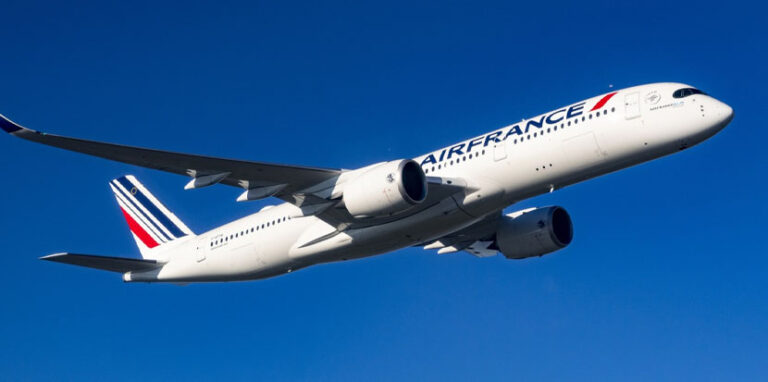
Air France flight AF954, a Boeing 777-200 traveling from Paris Charles de Gaulle (CDG) to Yaoundé Nsimalen International Airport (NSI) in Cameroon, was forced to make an emergency landing back at CDG after encountering an issue mid-flight. The aircraft, which had departed Paris, was near Bordeaux when it transmitted squawk code 7700, a universal signal for a serious emergency. This prompted the crew to divert back to Paris, ensuring the safety of all passengers and crew. The swift response underscores the critical role of aviation safety protocols and the rigorous training of airline crews in handling unexpected situations.


What Happened with Flight AF954?
During its journey to Yaoundé, scheduled to arrive at 7:20 PM, flight AF954 issued a squawk 7700 distress signal, indicating a significant problem such as a mechanical issue, medical emergency, or other critical situation. Air traffic control (ATC) immediately coordinated with the crew, directing the aircraft to return to CDG, a well-equipped airport capable of handling the emergency landing. Passengers were safely evacuated, and the aircraft underwent thorough inspections, though the specific cause of the emergency has not been disclosed.
The Role of Squawk Codes in Aviation Safety


Squawk codes are four-digit signals sent via an aircraft’s transponder to communicate with ATC. Key codes include:
– 7700: General emergency (e.g., engine failure, onboard fire, or medical issue).
– 7500: Hijacking.
– 7600: Communication failure.
The 7700 code used by AF954 alerted ATC to prioritize the flight, ensuring a rapid response and safe landing. This system allows controllers to monitor aircraft and manage emergencies efficiently.
Why Was the Flight Diverted?
The decision to return to CDG was made to prioritize passenger and crew safety. Diverting to a familiar, well-resourced airport like CDG allowed for a secure landing and immediate support from ground crews, including rescue and firefighting services. While the diversion caused delays, it ensured the situation was handled with minimal risk.


How Airlines Manage Emergencies
Airlines like Air France maintain robust safety measures, including:
– Crew Training: Pilots and cabin crew are trained to manage emergencies, from medical incidents to technical failures, ensuring calm and effective responses.
– Advanced Technology: Aircraft are equipped with redundant systems and transponders to monitor and communicate issues in real time.
– ATC Coordination: ATC provides critical guidance, offering the nearest suitable airport and managing airspace to facilitate safe landings.
– Passenger Communication: Crews keep passengers informed to maintain calm and order during emergencies.


Aviation Safety and Accountability
Air travel remains one of the safest modes of transportation, thanks to stringent safety protocols. The incident with AF954 highlights the effectiveness of these measures, with quick action from the crew, ATC, and ground teams ensuring no harm to passengers. While emergencies are rare, they demonstrate the aviation industry’s commitment to safety through training, technology, and transparency.




