

The Presidency has rejected claims that it secretly modified any provisions of the recently enacted tax reform laws, stressing that all processes were conducted in accordance with established legislative and legal procedures.
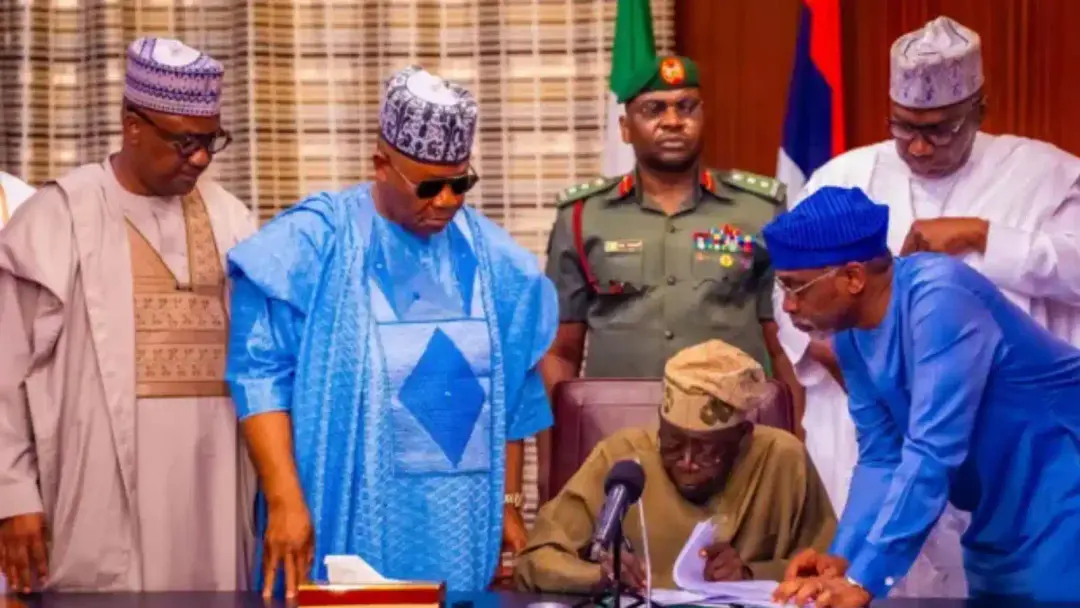
President Bola Ahmed Tinubu had signed the four tax reform bills into law in June, concluding months of review and debate by lawmakers and Nigerians. The bills include the Nigeria Tax Bill, the Nigeria Tax Administration Bill, the Nigeria Revenue Service (Establishment) Bill, and the Joint Revenue Board (Establishment) Bill. The government has scheduled their implementation to begin in January 2026.

Lawmaker raises alarm over alleged changes
Recently, House of Representatives member Abdussamad Dasuki raised concerns that the officially gazetted versions of the laws differ from the copies approved by the National Assembly. The gazette is the government’s formal publication of laws and legal notices and serves as an authoritative reference for agencies, courts, and the public.
Dasuki claimed that what is available in the gazette does not match what lawmakers passed. “What was passed on the floor is not what is gazetted. I gave my vote, and it was counted, but I am seeing something completely different,” he said. He added that copies obtained from the Ministry of Information confirmed the discrepancies. Dasuki warned that this amounts to a constitutional breach and urged urgent action by the House.

Opposition leaders call for suspension
Following Dasuki’s allegation, prominent opposition figures including former Vice President Atiku Abubakar and former Labour Party presidential candidate Peter Obi called on the Federal Government to halt the implementation of the tax laws until an independent investigation is conducted. They argued that transparency and accountability are crucial for public trust in fiscal policy.
In a statement, Atiku’s media aide, Paul Ibe, said suspending the laws would allow proper scrutiny and safeguard the legislative process. Atiku accused certain actors of altering the laws to criminalize previously legal activities and target political opponents.

Peter Obi described the alleged alterations as “a serious escalation from poor governance to outright abuse of law,” noting that changes to enforcement powers—including mandatory 20% deposits before appeals, asset sales without judicial oversight, and expanded arrest powers—had not been approved by lawmakers. Obi warned that such changes undermine constitutional governance and public trust.
The African Democratic Congress (ADC) also labelled the laws “draconian,” demanding their immediate suspension and calling for a public inquiry into the alleged alterations. The party warned that tampering with a passed law suggests an attempt to centralize power in the Presidency.
Presidency dismisses allegations
In response, the Presidency dismissed the claims, stating that no evidence supports the allegations of alteration. Senior Special Assistant on Media and Publicity, Temitope Ajayi, described opposition criticisms as “noise” aimed at creating controversy. He stressed that the tax laws were enacted through proper channels and will take effect on January 1, 2026.
Ajayi noted that the House of Representatives has already established a committee, chaired by James Faleke, to investigate the allegations. He urged that the committee’s findings should guide any further action. Special Adviser on Information and Strategy, Bayo Onanuga, also confirmed that no suspension is planned, emphasizing that parts of the law are already being implemented.
The Presidency reaffirmed its commitment to the January 2026 timeline, insisting that opposition claims will not affect the implementation of the tax reforms




