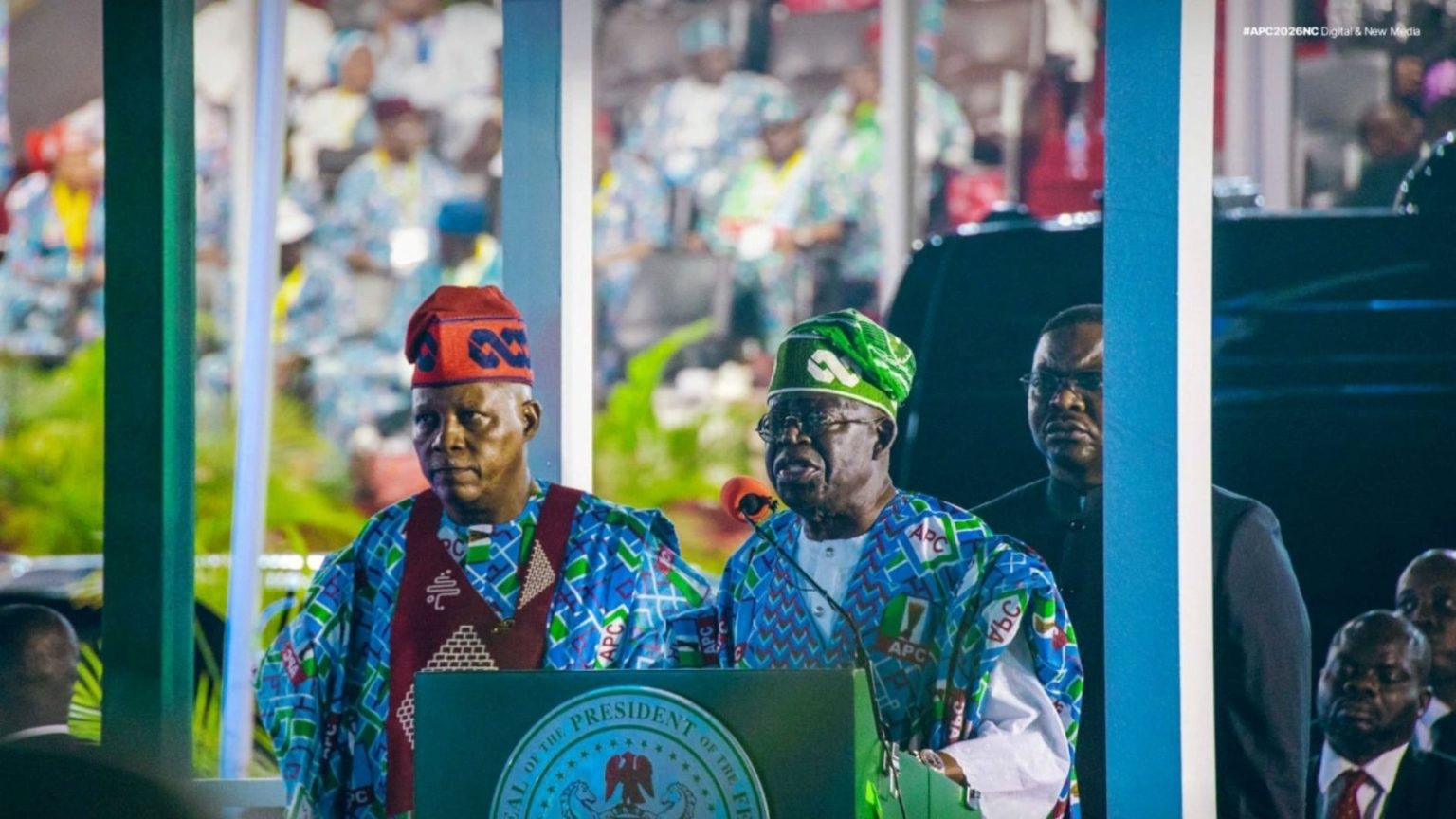
After its recent national convention, the future of the All Progressives Congress (APC) may depend on how it handles rising concerns over consensus arrangements and proposals for automatic tickets for incumbent officeholders.
At first glance, the convention—held at Eagle Square—appeared orderly and united. Delegates, governors and party leaders gathered in what seemed like a well-coordinated event, projecting stability and discipline. But beneath the surface, subtle tensions hinted at deeper internal challenges.
The process largely avoided open confrontation, with most party positions filled through consensus. Key members of the National Working Committee retained their seats, reflecting a deliberate strategy to maintain continuity and avoid internal conflict. This approach aligned closely with the leadership of Bola Ahmed Tinubu, reinforcing party cohesion at a time of major political and economic reforms.

However, not everyone was satisfied. Quiet discontent emerged among some party members, particularly over the growing push for automatic tickets for incumbents. Critics argue that such a move could weaken internal democracy by limiting opportunities for new aspirants and sidelining grassroots participation.
Supporters of the proposal, including lawmakers led by Godswill Akpabio and Tajudeen Abbas, insist that continuity is essential for governance. They argue that shielding experienced legislators from the uncertainty of primaries would help sustain policy direction and preserve institutional memory.
Still, concerns persist that the policy could concentrate power among a small group of incumbents and political elites. Many party loyalists fear that long-standing members who helped build the APC may be pushed aside, especially as defectors from opposition parties continue to gain influence within the party.

The issue also extends to governors, who already wield significant control over party structures in their states. If automatic tickets are extended further, their influence could become even more dominant, reducing competition and narrowing political space.
For many aspiring politicians, this raises serious concerns. Party primaries, despite their flaws, remain one of the few avenues for participation and upward mobility. Removing or limiting that process could lead to frustration, defections, or internal divisions.
Despite these tensions, President Tinubu struck a conciliatory tone, urging unity and discipline. He reminded party members that internal discord, not external opposition, often poses the greatest threat to political parties.
Ultimately, while the convention succeeded in presenting a united front, it also exposed unresolved questions about fairness, inclusion, and the future direction of the party. How the APC balances stability with internal democracy may shape not only its cohesion but also its chances in the 2027 general elections.