

Nigeria has reaffirmed its goal to increase crude oil production to 3 million barrels per day within the next five years, as the federal government continues reforms aimed at restoring investor confidence and positioning the energy sector as a driver of national growth.
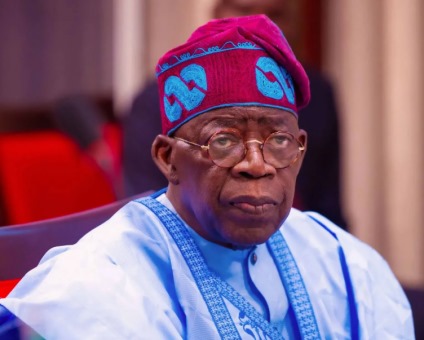
President Bola Ahmed Tinubu made the announcement at the 9th Nigeria International Energy Summit (NIES) in Abuja, themed “Energy for Peace and Prosperity: Securing Our Shared Future.” Vice President Kashim Shettima represented the President at the event. Finance Minister Wale Edun and Deputy Chief of Staff Ibrahim Hassan Hadejia were also in attendance, alongside officials from the World Bank and other international partners.

Tinubu highlighted that his administration inherited an oil and gas sector constrained by inefficiencies, regulatory uncertainty, and underinvestment. He said decisive steps have been taken to reverse the decline, including full implementation of the Petroleum Industry Act (PIA), which has improved regulatory clarity, strengthened governance, and restored investor confidence.
“The government has introduced transparent and competitive licensing rounds, among the most credible in the nation’s history. Upstream activities are rebounding, rig counts have increased, and major projects exceeding $8 billion have received final investment approval,” Tinubu said.

Average crude oil production has reached about 1.6 million barrels per day, supported by initiatives such as ‘Project One Million Barrels Per Day’. The government aims to reach 2.5 million barrels per day by 2027, with a long-term target of 3 million barrels per day of liquid hydrocarbons and 12 billion cubic feet of gas per day by 2030.
The President also noted significant progress in the gas sector, describing it as a strategic transition fuel. Domestic gas supply surpassed 2 billion cubic feet per day for the first time, boosting power generation, industrial output, and energy access. Export volumes have also increased alongside expanded gas processing and transportation infrastructure. On refining, Tinubu highlighted the commencement of full operations at the Dangote Petroleum Refinery and the rehabilitation of state-owned refineries, while modular refineries are advancing under supportive regulations.

Fuel subsidy removal and foreign exchange liberalisation, though challenging, have improved market efficiency and long-term sustainability, Tinubu added.
Minister of State for Petroleum Resources (Oil), Senator Heineken Lokpobiri, described Nigeria as “investment-ready” following comprehensive legal, regulatory, and fiscal reforms. He noted that Project One Million Barrels Per Day had lifted production to between 1.7 and 1.83 million barrels per day, with active rig counts rising from 14 in 2023 to over 60.
Lokpobiri cited major final investment decisions, including Shell’s $5 billion Bonga North project and TotalEnergies’ Ubeta project, as evidence of renewed international confidence. He also highlighted the successful transfer of onshore and shallow-water assets to Nigerian firms, adding about 200,000 barrels per day to output.

Minister of State for Petroleum Resources (Gas), Ekperikpe Ekpo, said gas remains central to Nigeria’s energy security and economic transformation. Gas production averaged 7.5 to 7.6 billion standard cubic feet per day in 2025, while flaring declined to historic lows. Expanded pipeline networks, processing facilities, and gas-to-power projects have improved domestic utilisation and supply reliability. The government targets 10 billion standard cubic feet per day by 2030, positioning Nigeria as a regional energy hub.
NNPC Group Chief Executive Officer, Bayo Ojulari, stressed that Nigeria’s abundant gas resources can power Africa’s rise and support global stability. He said gas will drive industrialisation, industrial growth, export-led development, and energy access, addressing Africa’s energy trilemma of accessibility, affordability, and sustainability.
Ojulari also highlighted strategic gas infrastructure projects, including the Obiafu-Obrikom-Oben (OB3) pipeline, the Ajaokuta-Kaduna-Kano (AKK) pipeline, and the Escravos-Lagos Pipeline System (ELPS) expansion, calling them “highways for economic opportunity.”

Speaking at the summit, IPPG Chairman Adegbite Falade urged the government to reduce bureaucracy and streamline fees faced by oil and gas operators. He also called for policy stability, competitive fiscal frameworks, and access to long-term, affordable capital to unlock Nigeria’s full sector potential.
The African Petroleum Producers Organisation (APPO) announced the launch of the $5 billion African Energy Bank (AEB) in Nigeria, aimed at mobilising $200 billion for Africa’s gas transition and energy transformation. Secretary-General Farid Ghezali explained that the Bank would raise $15 billion within three years by listing national companies and midstream projects.

“The African Energy Bank will unify intra-African pricing for oil and gas, enabling member countries to save up to 30 per cent on imports and create new economic opportunities,” Ghezali said. He outlined a three-phase roadmap, with the bank expected to become a major African financial hub by 2030, supporting regional projects, industrialisation, and job creation.
Ghezali highlighted successful projects such as the Dangote Refinery, demonstrating that Africa can attract private and international investment when projects are de-risked. He proposed an “Abuja Pact” to unite APPO member countries in launching and fully operationalising the African Energy Bank by May 2026.
He emphasised that financing remains a key bottleneck for Africa’s energy infrastructure, noting that over 150 projects, including refineries and pipelines such as AKK, are delayed due to high financing costs compared to other regions.



