

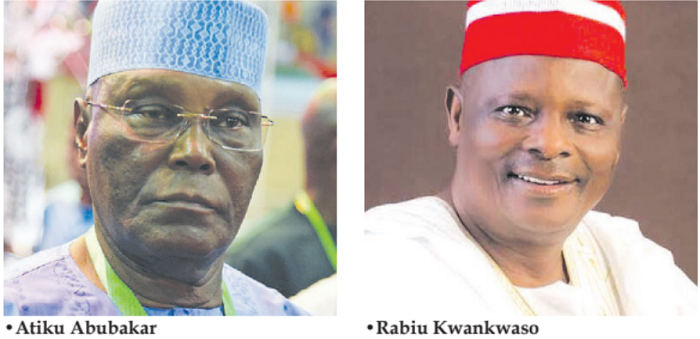
In Nigeria’s dynamic political landscape, certain figures continue to remain central to the conversation, returning each election cycle with renewed ambition. Among the most prominent are Atiku Abubakar and Rabiu Musa Kwankwaso—two seasoned politicians whose careers reflect persistence, even as the presidency has remained beyond their reach.

Both men have recently aligned with the African Democratic Congress (ADC), signaling another strategic shift as the political space begins to reshape ahead of future elections. Over the years, they have moved across multiple political parties, built alliances, and maintained relevance despite repeated electoral setbacks.

Since 1998, Atiku has been affiliated with several parties, including the PDP, ACN, APC, and now ADC. Kwankwaso has followed a similar trajectory, transitioning from the PDP to the APC, back to the PDP, then to the NNPP, and now the ADC. Their journeys highlight a broader trend in Nigerian politics, where experienced figures continue to re-emerge as key contenders.

Their enduring presence is driven by strong political structures, extensive networks, and high name recognition. In a system where visibility and established influence matter, both men retain advantages that newer entrants often lack. However, persistent fragmentation within the opposition has also allowed them to remain competitive, even when electoral victories have proved elusive.
This recurring pattern has broader implications. The continued dominance of long-standing figures can limit opportunities for emerging leaders and contribute to voter fatigue, particularly among younger citizens seeking fresh alternatives. It also shifts the nature of political contests, where endurance and name recognition sometimes outweigh new ideas and innovation.

Despite their influence, both politicians face a unique challenge. Atiku commands a wide national network but has struggled to convert that reach into a winning formula. Kwankwaso, while enjoying strong grassroots support in the North, has yet to build a truly nationwide coalition capable of securing the presidency.
As the 2027 election cycle approaches, attention is turning to whether they will remain frontline contenders or transition into kingmakers shaping the political direction from behind the scenes. Their next moves could either unify opposition forces or deepen existing divisions.

Ultimately, Nigeria’s political future may depend on whether new voices emerge to challenge the established order or whether familiar figures continue to dominate the stage. Until then, the cycle of recurring ambitions and shifting alliances is likely to persist.




