

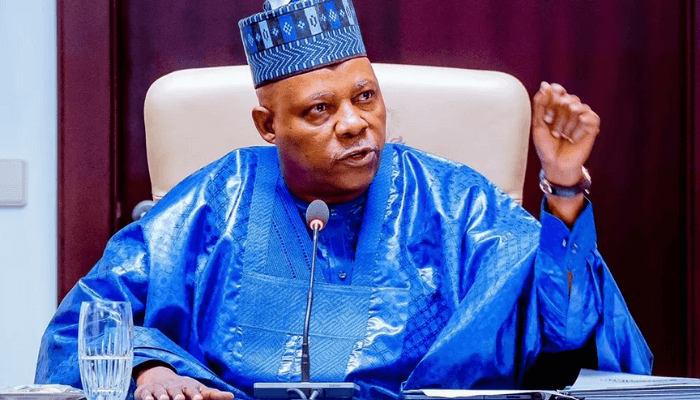
Nigeria’s diplomatic momentum continues as Vice President Kashim Shettima departs for Luanda, Angola, to represent President Bola Ahmed Tinubu at the African Union–European Union (AU–EU) Summit, a high-stakes gathering convened to redefine Africa–Europe relations amidst rising global realignments, shifting development priorities, and deepening security challenges across both continents.
This summit is far more than a ceremonial meeting. It is a strategic platform where decisions affecting trade, energy, migration, security cooperation, climate finance, technological development, and investment flows are negotiated at the highest levels. For Nigeria—Africa’s largest economy and one of the continent’s most influential diplomatic actors—this moment arrives with significant opportunities and urgent priorities.

The AU–EU Partnership
Relations between Africa and Europe have evolved dramatically over the last two decades. Key moments include:
2000 Cotonou Agreement – Set the foundation for structured economic and political cooperation between the EU and African, Caribbean, Pacific (ACP) states.
2007 Joint Africa–EU Strategy (JAES) – Created a continental framework for equal partnership rather than donor–recipient dynamics.

2020 Post-Cotonou Negotiations – Shifted the conversation toward security, migration, climate, and investment.
2022 AU–EU Summit in Brussels – Europe announced €150 billion for Africa under the Global Gateway initiative.
Today, with global powers such as China, India, Russia, and the Gulf States deepening their African footprints, Europe sees Africa as a strategic priority in trade, energy security, supply chains, and geopolitical stability.
Nigeria—home to over 220 million people, accounting for 15% of Africa’s population and nearly 20% of its GDP—is central to this evolving partnership.
Why This Summit Is Crucial for Nigeria Now
● Security Cooperation and Counterterrorism
Nigeria continues to confront terrorism, banditry, kidnapping, and violent extremism. The AU–EU Summit offers a platform to leverage:
EU security support missions
Intelligence-sharing arrangements
Training for counterterrorism units
Advanced surveillance technologies
Stabilisation funding for conflict-prone regions
European partners are increasingly concerned about Sahel instability spilling into coastal West Africa. Nigeria’s leadership is therefore critical.
● Energy Transition and Clean Investment
With the EU pushing aggressive climate goals, Europe needs reliable gas partners as it diversifies away from Russian energy. Nigeria, holding over 206 trillion cubic feet of gas reserves, is strategically positioned to benefit through:
Gas export partnerships
Renewable energy investment
Power-grid modernization
Carbon-credit financing
This summit gives Shettima the opportunity to deepen ties with EU energy ministers and investors.
● Trade, Industrialisation, and Job Creation
Europe remains one of Nigeria’s largest trading partners, with annual trade exceeding €45 billion. Yet Nigeria exports mostly raw materials.
The summit allows Nigeria to press for:
Greater access for manufactured goods
Industrial partnerships
Technology transfers
Agro-processing investment
Value-added minerals processing
Support for export-focused SMEs
With Africa’s AfCFTA gaining momentum, Nigeria can position itself as a continental manufacturing and logistics hub.
● Migration and Human Capital Mobility
Irregular migration remains a sensitive issue. Nigeria seeks agreements that:
Expand legal migration pathways
Increase scholarships and skills-exchange programmes
Strengthen economic opportunities at home
Reduce human trafficking networks
A balanced migration framework benefits both continents.
● Infrastructure and the EU Global Gateway
Europe’s €150 billion Africa investment pledge under the Global Gateway targets:
Roads, rail, and ports
Digital connectivity
Clean energy corridors
Green industrial zones
Nigeria must secure a significant share of this funding, especially for rail modernisation, power distribution, and renewable energy projects.
Shettima’s Presence to Represent President Tinubu Appropriate.
Vice President Shettima, representing Nigerian President Bola Tinubu while the President oversees the pressing security issues to ensure the rescue of victims of abduction immediately in Nigeria has emerged as one of the Tinubu administration’s most active international envoys—engaging global stakeholders on security, investment, industrial policy, and energy.
His background in:
Development economics
Security sector oversight
Regional diplomacy
Investment attraction
…positions him effectively to articulate Nigeria’s priorities at a forum where Africa’s future partnerships are being reshaped.
His mission in Angola is to ensure that Nigeria is not a passive participant—but a leading architect of AU–EU engagement.
Nigeria’s Strategic Goals at the Summit
● Secure deeper security cooperation without compromising sovereignty.
● Attract EU financing for renewable energy, gas infrastructure, and power grids.
● Push for fairer trade rules and greater access for Nigerian products.
● Expand EU-backed industrial investments in manufacturing and agro-processing.
● Ensure migration policies protect Nigerians while enabling legal mobility.
● Position Nigeria as a top beneficiary of the EU’s €150bn Global Gateway.
The Bigger Picture: A Re-Positioned Nigeria on the World Stage
Under the Tinubu administration, Nigeria has been assertively re-engaging multilaterally—from G20 sessions to UN gatherings, and now the AU–EU Summit. This reflects a broader strategy to restore Nigeria’s global standing, rebuild investor confidence, and secure partnerships that support national development.
With Africa rapidly becoming the world’s youngest and fastest-growing region, and Europe seeking stable allies, Nigeria stands at the intersection of historic opportunity.
Conclusion: A Defining Moment for Nigeria’s Foreign Policy
The AU–EU Summit in Angola is more than a diplomatic formality. It is a crucial arena where security, investment, energy transition, trade, and migration policies affecting Nigeria for decades will be shaped.
As Vice President Shettima arrives to represent the nation, Nigeria carries both the weight of its challenges and the promise of its potential. The world will be watching — and the decisions made in Luanda may influence Nigeria’s developmental trajectory for years to come.
Princess Gloria Adebajo-Fraser MFR
The National Patriots.



