


The Federal Government of Nigeria has confirmed that the United States conducted a December 25, 2025 airstrike in north-western Nigeria in collaboration with Nigerian authorities. While this confirmation settles speculation over whether the strike occurred, it has opened a wider and more consequential debate—centred on constitutional process, sovereignty, cost, intelligence credibility, and public accountability.
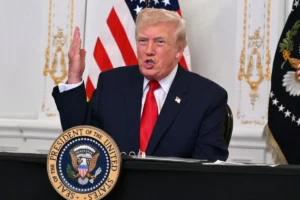

The issue is not cooperation itself. Nigeria has long partnered with allies in counterterrorism. The issue is how this cooperation was structured, what was agreed, who approved it, what it cost, and what it achieved.
Section 14(2)(b) of the 1999 Constitution (as amended) states that “the security and welfare of the people shall be the primary purpose of government.” This obligation extends beyond authorising military action; it includes protecting civilians, informing the public of risks, and ensuring accountability.
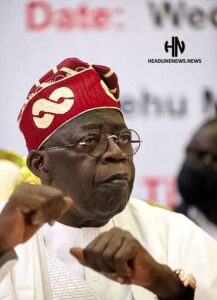
More importantly, Section 12(1) of the Constitution provides that “no treaty between the Federation and any other country shall have the force of law except to the extent to which it has been enacted into law by the National Assembly.” While security agreements may remain classified in full, this provision does not exempt them from legislative oversight. At minimum, non-sensitive sections—such as scope, tenure, cost obligations, and rules governing foreign kinetic action—should be disclosed to the National Assembly and, where appropriate, summarised for the public.
Sections 217–218 further place the Armed Forces under Nigerian command and civilian control, underscoring that foreign military action must not bypass domestic authority structures.

The choice of weapon has intensified scrutiny. The United States reportedly deployed Tomahawk cruise missiles, long-range strategic weapons originally designed for fixed, high-value targets. Each missile costs between $1.6 million and $2 million, excluding logistics. Historical U.S. data from Iraq and Syria records failure or deviation rates of up to 10–20% in environments where intelligence is uncertain or targets are mobile.
Unverified but credible reports suggest that Nigeria may bear the operational cost, estimated by defence analysts at about $50 million, including logistics and over a dozen missiles. If accurate, this raises serious value-for-money concerns. Such resources could have strengthened Nigeria’s own counterterrorism capacity through intelligence platforms, ISR drones, precision equipment, and specialist training. Alternatively, preferred U.S. equipment could have been transferred or sold under a transparent defence procurement framework—preserving sovereignty and operational control.

Conflicting casualty claims have further undermined confidence. The U.S. Department of Defense stated that the strike killed scores of ISIS-linked fighters. However, local communities in Sokoto and Nigerian security agencies have confirmed that no casualties were recorded. To date, no verified terrorist deaths have been officially acknowledged by Nigerian authorities.
This contradiction highlights a critical intelligence gap. If intelligence was foreign-generated, was it independently validated? If Nigerian-generated, why does it contradict post-strike assessments? Security sources now warn that terrorist elements dispersed during the operation and are regrouping, increasing the risk of reprisals.

Public safety concerns remain unresolved. Reports persist of missed targets and unexploded ordnance. While Tomahawk missiles are not radioactive, undetonated munitions pose serious explosive and chemical risks. International military protocol requires immediate public warnings and controlled disposal. Yet, no comprehensive advisory has been issued.
International law reinforces the need for restraint and transparency. Article 2(4) of the UN Charter restricts the use of force, even with consent, where civilian protection and accountability are compromised. Former UN Secretary-General Kofi Annan warned that “the Charter protects the sovereignty of states not to shield wrongdoing, but to protect the weak against the strong.”
What Nigeria should do now.
Rather than declassify sensitive security details, the government should:
Release non-operational sections of the collaboration framework—scope, tenure, financial obligations, and oversight mechanisms.
Formally brief the National Assembly in closed and open sessions as appropriate.
Issue public safety advisories on unexploded ordnance risks.
Publish an official casualty and intelligence assessment to reconcile conflicting claims.
Reprioritise Nigerian-led counterterrorism capacity, reducing dependence on costly external kinetic actions.
Nigeria is a sovereign nation, not a testing ground. Security cooperation is legitimate—but it must operate within constitutional bounds and public trust. In moments like this, measured transparency is not a threat to security; it is its foundation.
Princess G. Adebajo-Fraser MFR.
President, the National Patriots.




