

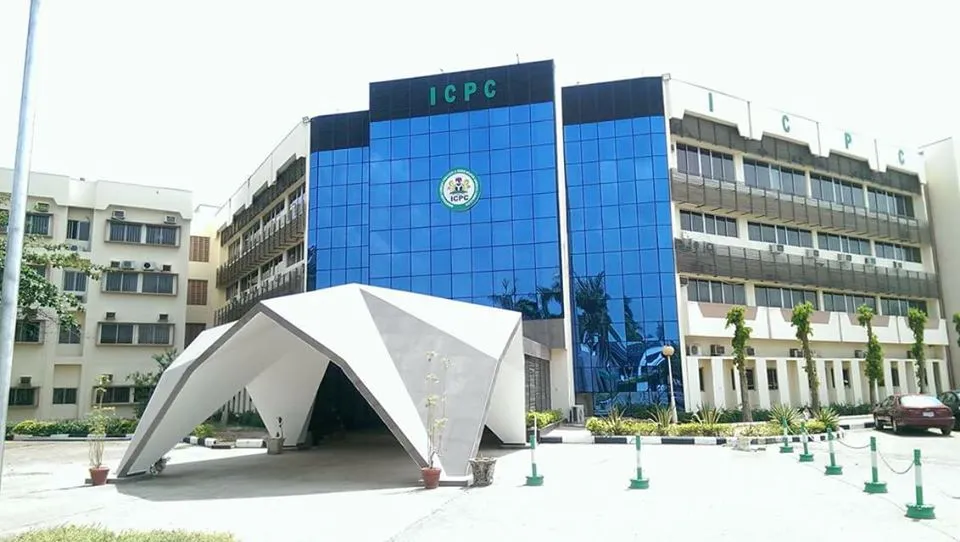
The Independent Corrupt Practices and Other Related Offences Commission (ICPC) has disclosed that the Goodluck Jonathan Legacy Model Housing Estate was conceived as a large-scale housing initiative during the tenure of former President Goodluck Jonathan.
In a ruling delivered by the Federal High Court in Abuja, an order was made for the permanent forfeiture of vast parcels of land valued at several billions of naira, originally designated for the housing estate, to the Federal Government.

Justice Mohammed Umar granted the application filed by the ICPC, which was presented in court by the commission’s counsel, Osuobeni Akponimisingha. The request was not challenged by the defence, led by Hassan Liman, a Senior Advocate of Nigeria (SAN).
The court further directed the ICPC, acting on behalf of the Federal Government, to oversee the completion of the proposed 962 housing units on the forfeited land. Justice Umar ruled that the supervision should be carried out jointly with the Federal Mortgage Bank of Nigeria (FMBN), the sole respondent in the suit, to ensure the houses are eventually allocated to intended beneficiaries.

According to the ruling, Plot No. 5 located in Cadastral Zone D12, Kaba District, Abuja, measuring about 122,015.80 square metres and valued at approximately N1.94 billion, was ordered to be finally forfeited. Also forfeited was Plot No. 4 in the same district, covering about 157,198.30 square metres and valued at N3.34 billion, which the court held was suspected to be proceeds of unlawful activity.
Justice Umar also instructed the ICPC to facilitate the transfer of the forfeited properties to the FMBN, identified as the victim of the alleged illegal dealings. Additionally, both agencies were ordered to constitute a joint committee to ensure the completion of the housing project.

Earlier, on 9 July, the court had granted an interim forfeiture of the lands following an ex-parte motion filed by the ICPC. The temporary takeover was approved pending the determination of the substantive case, after the commission raised concerns that the land could be sold off or diverted for personal use.
As part of the interim measures, the ICPC was directed to publish notices in national newspapers, inviting interested parties to show cause why the properties should not be permanently forfeited to the Federal Government.
Investigations by the anti-graft agency revealed that the lands were allocated by the Federal Capital Territory Administration (FCTA) for the construction of 962 housing units under the National Housing Fund scheme through the FMBN. An affidavit deposed to by ICPC officer, Iliya Marcus, stated that intelligence reports indicated the FMBN had engaged a private firm, Good Earth Power Nigeria Limited, to execute the project.

According to the findings, approval for the construction of the estate was granted on 30 July 2012, followed by a framework agreement between FMBN and the developer in January 2012. A consultant was also appointed to monitor the project and report milestones to enable payment to the developer.
Further investigations showed that the FMBN secured a $65 million loan from Ecobank to fund the project and subsequently paid N3.785 billion as an initial drawdown to the developer in November 2012. The commission noted that the payment was made despite the developer’s failure to meet key regulatory requirements.
The ICPC also discovered that the full project sum of $65 million was allegedly released to the developer without the construction of a single housing unit on the site. The agency warned that the developer was attempting to secretly dispose of the land to unsuspecting members of the public, a move that could make recovery difficult.

In urging the court to grant the forfeiture, the ICPC argued that the land, now estimated to be worth over N200 billion, should be preserved for the benefit of Nigerians and the Federal Mortgage Bank. The commission stressed that the forfeiture proceedings were separate from the ongoing criminal trial against the developer and were aimed at safeguarding public assets.
Justice Umar, in granting both the interim and final forfeiture orders, questioned the rationale behind the upfront release of the entire project funds without visible progress on the housing estate.



