


Abuja, Nigeria — December 2025.
Rep. Abdussamad Dasuki (Kebbe/Tambuwal Federal Constituency, Sokoto State) has urged President Bola Ahmed Tinubu to appoint seasoned retired military officers as ambassadors to countries critical to Nigeria’s defence cooperation, arms procurement and counterterrorism partnerships.
His position has received strong backing from the National Patriots, a national-interest advocacy group, which says Nigeria’s worsening security crisis and the sophistication of today’s warfare demand a more security-driven diplomatic corps, especially in mission-critical postings.
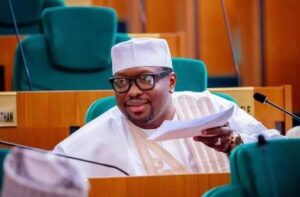
Dasuki’s Call
In his statement, Dasuki stressed that Nigeria is “abundantly blessed” with retired senior military officers who have undergone extensive strategic and tactical training, commanded high-level operations and gained invaluable battlefield experience over decades of service.
> “Our retired senior military personnel have served this nation with distinction. Their firsthand understanding of modern warfare, counterterrorism strategies and defence procurement puts them in a unique position to advance our national interests abroad,” he said.
He argued that deploying such officers as envoys to strategic countries would not only strengthen negotiations for essential military hardware, including modern reconnaissance drones and armed UAVs, but also ensure that the Nigerian government benefits from informed, experience-based advice at a time when insecurity has become an existential threat.
National Patriots’ Position
Beyond endorsing Dasuki’s appeal, the National Patriots say they have long argued that Nigeria must align its foreign policy machinery with its security realities. According to the group, it is no longer sufficient to treat ambassadorial postings as largely ceremonial or political rewards, particularly in countries where defence cooperation, intelligence sharing and arms acquisition are central to bilateral ties.
The organisation believes that ambassadors deployed to such nations should be able to speak the language of defence ministers, chiefs of staff and arms manufacturers with authority, technical depth and operational insight.
“For more than two decades, insecurity has been Nigeria’s most persistent national challenge,” the group notes. “These are not normal times, and they cannot be approached with normal, business-as-usual diplomacy. We need envoys who understand the battlefield as well as the briefing room.”

Historical and Global Context
The National Patriots point out that appointing retired military officers to strategic diplomatic posts is standard practice in many countries and is, in fact, regarded as a smart national security strategy rather than an anomaly.
They cite the United States, which has repeatedly appointed retired generals and admirals as ambassadors in conflict zones or defence-heavy theatres. A notable example is retired General Karl Eikenberry, who served as U.S. Ambassador to Afghanistan, leveraging extensive operational experience in the same country to shape both military and diplomatic engagement.
Israel, facing constant security threats, has a long tradition of sending former military and intelligence chiefs to capitals such as Washington, Moscow and Berlin, where defence cooperation, technology transfer and intelligence coordination are central to the relationship.

Turkey and Pakistan have also used retired senior officers as ambassadors to countries where defence ties and security diplomacy dominate the agenda, such as Saudi Arabia, China and key NATO or Gulf partners. Russia and China routinely embed security and military professionals in diplomatic roles when dealing with strategic regions and rival powers.
In the view of the National Patriots, Nigeria — confronted by terrorism, insurgency and transnational organised crime — is lagging behind in not systematically leveraging its pool of retired generals and senior officers in the same way.
Nigeria’s Security Reality
The group underscores that Nigeria remains one of the world’s most security-challenged states. Over the past 15 years, tens of thousands of Nigerians have been killed or displaced by Boko Haram, ISWAP, bandits and other violent actors. Large swathes of rural communities live under the constant threat of raids, kidnappings and extortion.
Despite increased budgetary allocations to defence and internal security, the country still struggles with gaps in air support, surveillance, intelligence, logistics and modern equipment. For the National Patriots, this is precisely why Nigeria’s diplomatic front line must be manned, in some key countries, by people who truly understand what the military lacks and how best to negotiate to get it.
Why Retired Officers in Embassies Matter
The National Patriots list several strategic advantages that could flow from appointing retired military officers as ambassadors to select nations:
First, they argue that such envoys would conduct more effective negotiations for arms, training and technology. Having spent years dealing with procurement processes, equipment performance and battlefield realities, retired officers are less likely to be misled by marketing rhetoric or pushed into unsuitable or overpriced deals.

Second, they say that military-trained ambassadors would deepen counterterrorism and intelligence partnerships. Defence ministries and security agencies in partner countries typically respond more quickly and more candidly to counterparts who understand operational risks, rules of engagement and force structure.
Third, these envoys could provide sharper, real-time strategic assessments to the Nigerian presidency and security chiefs. Rather than sending back generic diplomatic cables, they would be able to interpret unfolding conflicts, shifting alliances and technological trends through the lens of operational experience.
Finally, the presence of respected retired officers as ambassadors could boost Nigeria’s credibility abroad, signalling to partner nations that the country takes its defence relationships seriously and is willing to send its most experienced hands to represent it.

Constitutional Reality and Strategic Choice
The National Patriots acknowledge that the appointment of ambassadors is solely the constitutional prerogative of the President. However, they insist that the depth and persistence of Nigeria’s insecurity require a deliberate shift in how that prerogative is exercised.
According to the group, this does not mean sidelining career diplomats. Rather, it calls for a more strategic blend: career foreign service professionals where traditional diplomacy is paramount, and retired military experts where security and defence are dominant issues.
They argue that some embassies — particularly in countries that supply Nigeria with weapons, drones, armoured platforms, training and intelligence — should be treated as extensions of the national security architecture, not merely as protocol outposts.
A Strategic Test for the Tinubu Administration
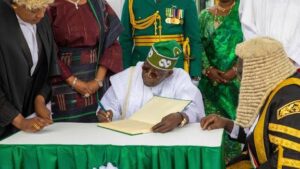
Dasuki’s intervention, backed by the detailed arguments of the National Patriots, puts a clear question before the Tinubu administration: will Nigeria continue with conventional, politically driven ambassadorial appointments, or will it move towards a more hard-headed, security-led model in strategic postings?
For the National Patriots, the answer should be obvious. In their view, a country fighting for its internal stability cannot afford to send lightweights or purely ceremonial envoys to capitals where life-and-death decisions about arms, intelligence and military cooperation are made.
They contend that the time has come for Nigeria to treat certain embassies as forward operating bases in the diplomatic arena — staffed by those who understand, from experience, what is at stake.
The group therefore strongly urges President Tinubu to seize this moment to reset Nigeria’s approach to strategic diplomacy, beginning with the next batch of ambassadorial nominations. They maintain that even a few carefully chosen retired officers in the right capitals could, over time, transform Nigeria’s ability to secure critical equipment, shape regional security conversations and defend its interests in an increasingly hostile and competitive world.
Princess Gloria Adebajo-Fraser MFR.
The National Patriots.




