

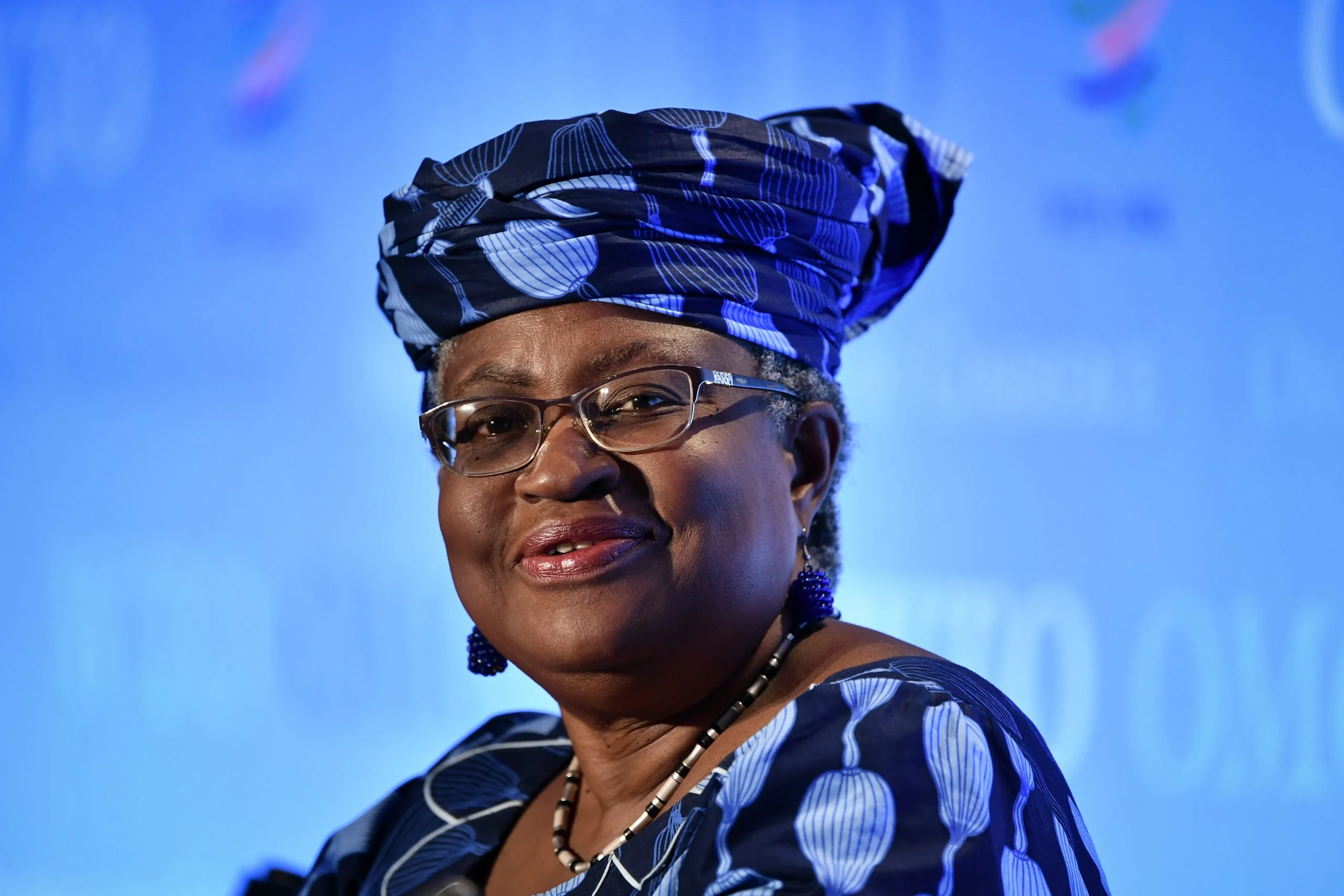
The Director-General of the World Trade Organisation, Dr Ngozi Okonjo-Iweala, has said Nigeria must intentionally position itself to attract global investors and relocated supply chains in order to create jobs, strengthen local manufacturing and reduce dependence on imports.
She made the remarks during a high-level discussion at Nigeria House on the sidelines of the World Economic Forum in Davos, where stakeholders examined Nigeria’s potential role as Africa’s digital trade and infrastructure hub.

Okonjo-Iweala noted that rising geopolitical tensions and trade disruptions across the world are forcing multinational companies to rethink where and how they produce goods. As firms move away from over-reliance on single countries, especially China, she said Nigeria has a rare opportunity to attract parts of these shifting global value chains.
According to her, this opportunity will not materialise automatically and requires deliberate action by the country.

She stressed that ongoing economic reforms must go beyond stabilisation and begin to translate into tangible job creation, particularly for Nigeria’s growing population.
She urged Nigerian authorities to clearly identify sectors with the highest potential and aggressively market the country as a credible investment destination.

Okonjo-Iweala said Nigeria should proactively court investors across major economies, including Asia, Europe and North America, as companies diversify their production bases.
She observed that while much of the supply chain relocation is currently happening within Asia, countries like India are benefitting significantly, and Nigeria should aim to attract a meaningful share of that movement.

Highlighting specific sectors, she pointed to renewable energy, especially solar manufacturing, noting that Nigeria currently imports products it has the capacity to produce locally.
She also cited the textile and fashion industry, lamenting that many popular fabrics worn in Nigeria are now imported despite the country’s history and capacity in textile production.
She argued that reviving local manufacturing in these areas would not only reduce imports but also create employment and deepen industrial capacity.

The WTO chief further identified pharmaceuticals as another critical sector where Nigeria could attract investment and integrate into global supply chains, given increasing global demand and the need for diversified production locations.
She emphasised that showcasing Nigeria’s strengths, reform progress and market potential should be a national priority if the country is to benefit from ongoing global economic realignments.

Also speaking on Nigeria’s economic direction, the Minister of Finance and Coordinating Minister of the Economy, Wale Edun, said the country remains focused on fiscal discipline, credible reforms and sustained engagement with global partners despite increasing global fragmentation.
He explained that government priorities include improving revenue generation, particularly by increasing the tax-to-GDP ratio, while ensuring that resources are channelled into critical infrastructure and social services.
Edun added that Nigeria’s strategy is anchored on attracting long-term investment and leveraging its natural and human resources to achieve sustainable economic growth in a rapidly changing global environment.




