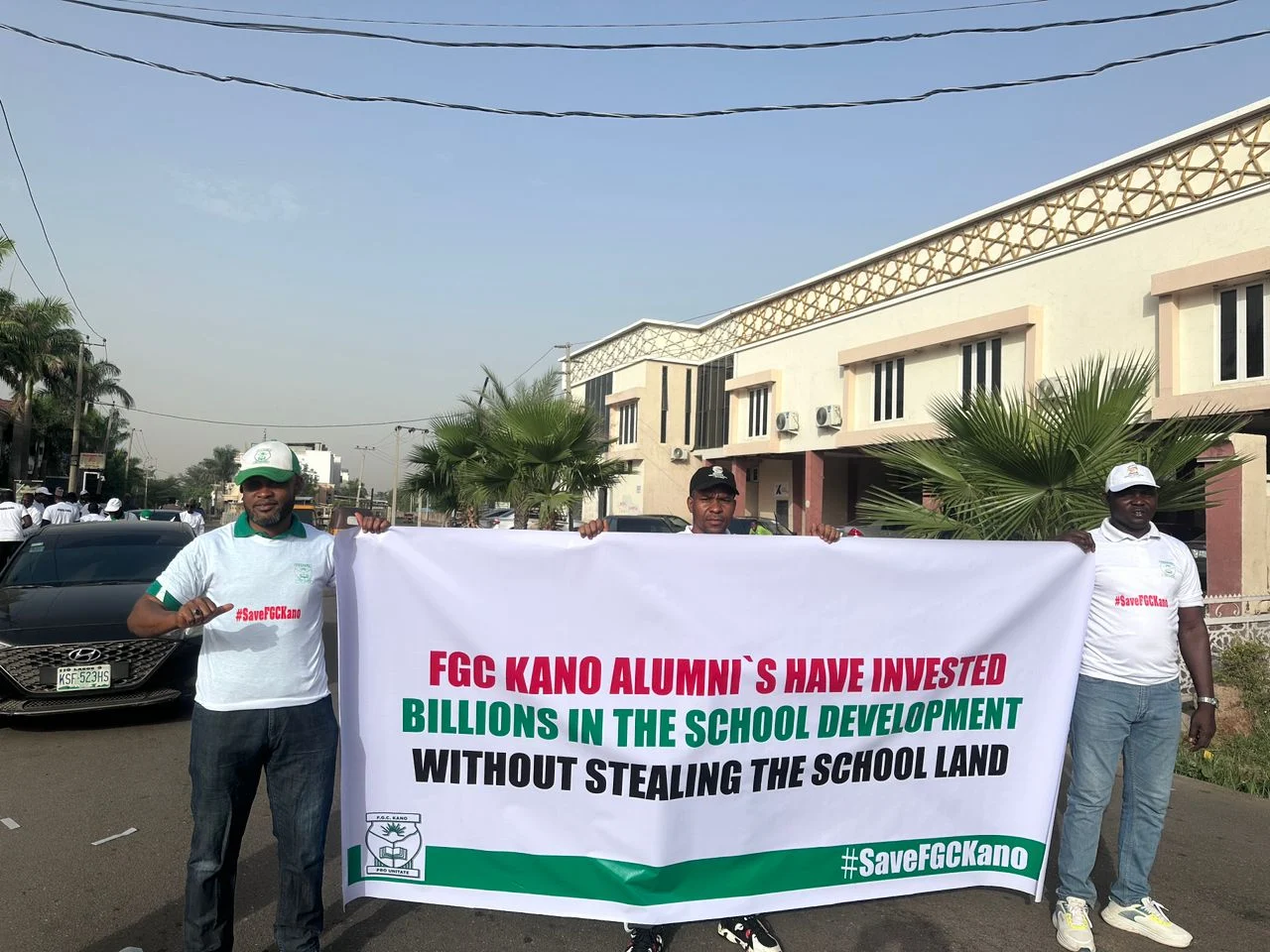
The Federal Government College Kano Old Students Association (FGCKOSA) has strongly opposed plans to concession around 30 hectares of the school’s land, warning that the move could undermine one of Nigeria’s premier unity schools.
In a statement on Monday, the alumni called on President Bola Tinubu to halt the proposed public-private partnership (PPP), describing it as a threat to the institution’s legacy and future. The group argued that unity schools were created to foster national integration, academic excellence, and long-term development, and that converting school land into a commercial venture prioritises short-term financial gain over education.

“We state, with utmost concern, that this initiative represents a destruction of a national educational legacy carefully built and handed over to the current generation of leaders,” the statement read.
FGCKOSA stressed that alumni have contributed billions of naira over the years to infrastructure and academic programmes without claiming any portion of the school’s land. The association also highlighted its own foundation, set to officially launch in June 2026, which plans to raise about N5bn to sustain the college’s legacy.
The alumni raised concerns that the proposed development—a mix of residential and commercial real estate—could compromise security, disrupt learning, and reduce vital open spaces needed for recreation and future expansion. They also questioned why the project must use school land when Kano State has ample alternative sites for development.

“There is no justification for appropriating land from an existing educational institution when alternatives clearly exist,” FGCKOSA said, warning the public against investing in the project, which is under dispute and could be overturned.
Developer Defends Project
Pluck Global Construction Company, the developer behind the concession, defended the project as a lawful PPP aimed at upgrading the school’s infrastructure. In a statement signed by Managing Director Musaddiq Talle, the company said it entered the agreement in June 2024 under government policy to improve facilities without direct public funding.

The firm explained that the project covers roughly 33 hectares of underutilised land and includes hostels, staff quarters, a health centre, a sports complex, classroom renovations, and other learning facilities, all valued at over N8bn. Under the land-swap model, the developer would take possession of a portion of the land after completion, as a return on investment.
“The project will create a safer, more conducive learning environment and help secure the school’s future through improved facilities and perimeter security,” the company said, adding that it is open to dialogue with stakeholders, including the alumni association, to address concerns and ensure transparency.
The dispute highlights growing tension between preserving educational legacies and exploring alternative funding mechanisms through public-private partnerships in Nigeria.