

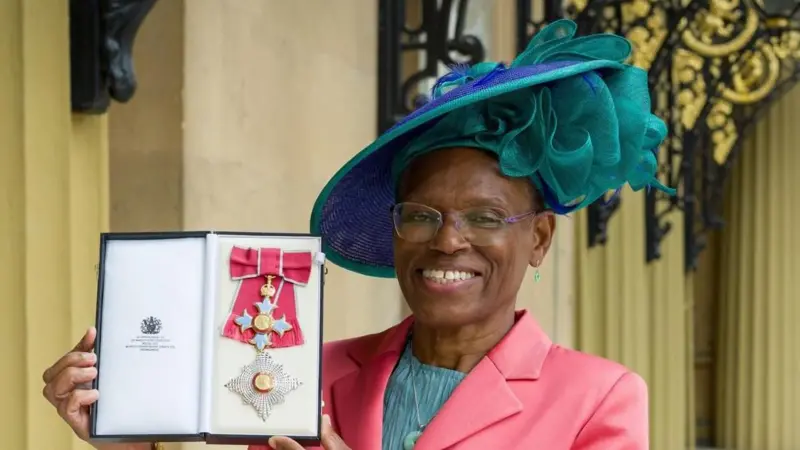
In 1990, Professor Dame Ijeoma Uchegbu landed in London from Nigeria with three small children and barely enough belongings to fill one suitcase. One of her daughters was still a baby. She was returning to the city where she was born three decades earlier, unsure of what lay ahead but determined to start over.
Reality hit fast. Not long after arriving, she and her children ended up in a homeless shelter. Feeding them, keeping them safe, and holding herself together became a daily struggle. Today, decades later, that same woman is a globally respected scientist whose work is changing modern medicine.
Her journey has been shaped by persistence, courage, and life-changing turns she never saw coming.
Beginnings filled with hope
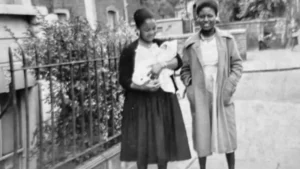
Dame Ijeoma’s story began before she was even born. Her parents travelled from Nigeria to the United Kingdom in 1960, and her mother was already pregnant at the time. When she arrived, they named her Ijeoma — a name that means “good journey”.
“They gave me that name believing everything would work out for them in a new country,” she once said.
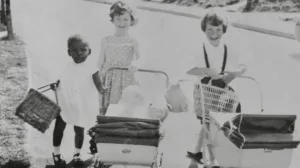
Both parents were university students, so as a baby, she was cared for by another family in Kent. At the time, this arrangement was common among West African students in the UK. She lived with them for four years, believing they were her real family — until one day her biological father came to take her away.
“I didn’t understand what was happening. My foster mother just disappeared, and suddenly my father was there,” she recalled.
Her parents had separated by then. It was not until she was about 10 years old that she learned the woman raising her was not her biological mother.
Questions left unanswered
At 13, she finally met her biological mother for the first time.
“She was shaking when she hugged me. She was overjoyed but very nervous. To me, she was a stranger, but we spent a beautiful weekend together.”
By that point, Dame Ijeoma had become one of six children. Visiting her mother, who lived with her younger sister, felt completely different from her everyday life.
“I had two adults all to myself. We went shopping, and she kept asking, ‘Do you want this?’ I returned home with a suitcase full of gifts.”
One thing remained unspoken — why her mother had been absent for so long.
“I was afraid the truth might hurt her, or even hurt me. So I didn’t ask.”
A year later, her mother moved to the United States. Not long after, she died at just 33.
“I screamed. I never imagined that would be the last time I’d see her.”
By then, she had already lost her foster mother and stepmother. Her father became her anchor.
“He was extraordinary. Even with 11 children, he never forgot me — birthdays, stories, trips to the zoo. He was always there.”
Her father dreamed constantly of returning to Nigeria, but the civil war kept delaying those plans.
“He’d always say, ‘Next year, we’ll go back.’”
A difficult homecoming
Growing up in Britain, Dame Ijeoma experienced racism despite having teachers who encouraged her academically.
“They told me I could be anything, but I didn’t see people like me in those professions.”
That mindset shifted when her father finally moved the family back to Nigeria.
Leaving the UK was heartbreaking.
“I tried to be brave, but when I told my headmistress I was leaving, I broke down. She tried to comfort me by saying, ‘You’ll have sunny Christmases.’ That just made me cry more.”
Ironically, the sun became one of her biggest challenges. Soon after arriving in Nigeria, she suffered severe sunburn and was bedridden for months. Doctors later discovered she was allergic to intense sunlight.
School life was no easier.
“I looked different, spoke differently, and people felt we hadn’t suffered the war like they did. Some said we only returned because things were better.”
Life around her was still marked by hardship — unreliable electricity, limited water supply, and lingering damage from conflict.
Academically, she struggled to adjust, except in one area.
“Science and maths were familiar, so I held onto them.”
That decision shaped everything that followed.
“It turned out to be the best thing that ever happened to me.”
Love, loss, and starting again
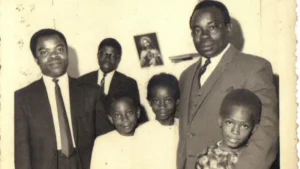
At just 16, she entered university to study Pharmacy. She later earned a master’s degree, married, and had three daughters. But the marriage eventually ended.
Looking for opportunity — and stability — she returned to the UK.
“I wanted to become a scientist, but Nigeria didn’t have the infrastructure I needed.”
Many doubted her.
“They laughed. They said I’d run out of money and come crawling back.”
She arrived in London nearly broke and soon found herself in a homeless shelter with her children.
“Eleven families shared one bathroom. Sometimes the kitchen was locked, so we couldn’t cook. The way we were treated was terrible.”
She stayed there for seven months.
“When I finally left, it felt like being released from prison.”
Still, returning to Nigeria never crossed her mind.
She began searching for PhD opportunities in nanotechnology. The scholarship was small, but government support helped cover rent.
Science and unexpected love
Three years later, at a scientific conference, her life changed again. There, she met German scientist Professor Andreas Schätzlein.
“After four days, I was madly in love.”
He later moved to the UK to be with her.
“He left everything.”
They became partners in both life and research.
Together, they work on nanotechnology — developing microscopic particles capable of delivering medicine directly to where the body needs it.
“When you take medicine, it spreads everywhere in the body. But that’s not always what we want,” she explained. “Nanoparticles allow us to target only the affected area.”
This approach could reduce severe side effects, from chemotherapy damage to addiction risks linked to strong painkillers like morphine and fentanyl.
Their research aims to deliver drugs to hard-to-reach places such as the brain and the back of the eye. Clinical trials are already underway, with hopes of treating blindness, improving pain relief, and tackling the opioid crisis.
Science with a sense of humour
Today, Dame Ijeoma is affiliated with both University College London and the University of Cambridge. Beyond research, she has found an unusual way to connect with people — comedy.
“I noticed students paid more attention when I joked,” she said. “So I took it seriously and enrolled in a 10-week comedy course.”
That journey ended with a stand-up performance on a London stage.
“I was terrified — but I loved it.”
Just like her life, it was unexpected, challenging, and deeply rewarding.

Adapted edition from Headline news.news



