

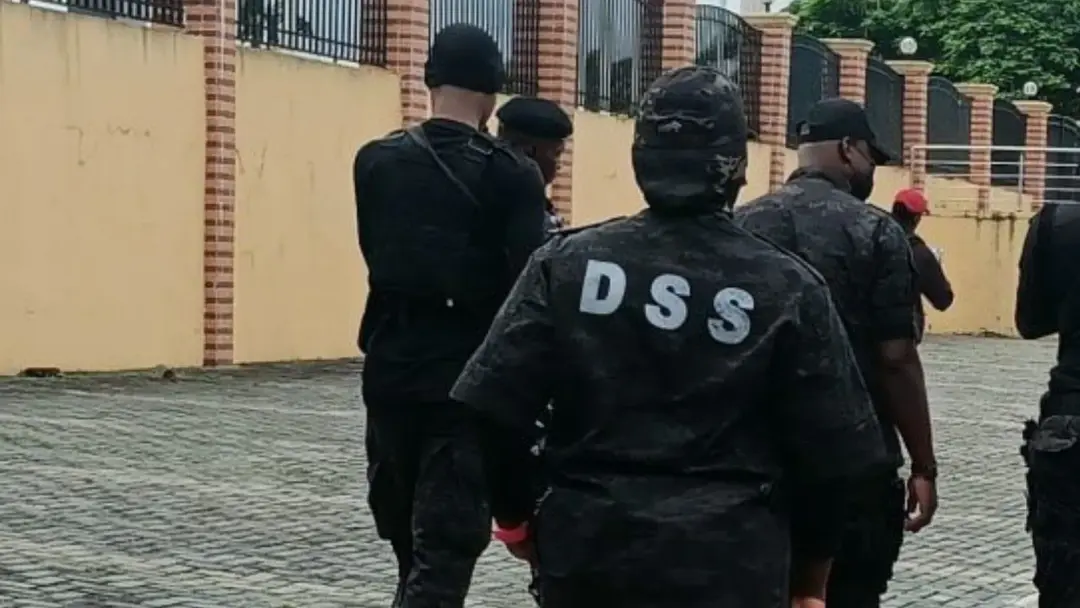
The Department of State Services (DSS) has reportedly arrested a medical doctor accused of supplying drugs to kidnappers operating in parts of Kwara State.
According to a statement issued by Rafiu Ajakaye, Chief Press Secretary to the Governor, the doctor was intercepted in the Jebba axis after intelligence uncovered his alleged role in supporting the criminal gangs.

Security officials revealed that the kidnappers have been seeking urgent medical attention due to gunshot wounds sustained during clashes with security operatives.
One official noted, “We are advising health facilities located near forested areas to strengthen their security, as these gangs may attempt to infiltrate them.”
Kwara State has experienced a series of attacks from bandits in recent months.

In November, armed men abducted 38 worshippers and killed three others in the Eruku community. The same area also witnessed the kidnapping of a farmer along the Eruku–Koro Road. Witnesses said the attackers, believed to be four in number, were heavily armed with AK-47 rifles and cutlasses.
Community sources disclosed that the bandits struck during the day and abducted one Annas Aasanru, a resident of Eruku.
In a separate incident that same month, the Ojibara of Bayagan, Oba Kamilu Salami, was kidnapped in Ifelodun Local Government Area.
However, on December 1, the monarch and six other abductees regained their freedom after local vigilante groups launched a fierce assault on the kidnappers’ hideout.

In Bokungi Village in Edu LGA, gunmen also abducted four rice farmers. The attack occurred during peak harvest hours, with the kidnappers reportedly surrounding the farmers as they gathered rice. Witnesses said the operation lasted several minutes with no resistance, after which the victims were forced into the bush and taken away.

What the Doctor’s Arrest Reveals
The arrest suggests that kidnapping operations are not isolated acts — they rely on hidden support systems, including medical professionals, informants, drug suppliers, and local collaborators.
It shows the networks are organized and resourceful enough to secure medical treatment for injured members, making the fight against them more complex.
It also highlights the need for:
-
Tighter monitoring of medical supplies
-
Increased security in rural health centres
-
Stronger intelligence gathering around medical personnel in high-risk areas




