

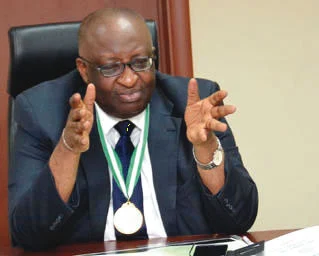
The Minister of Finance and Coordinating Minister of the Economy, Wale Edun, has reported that Nigeria spent N11.1 trillion on capital expenditure in 2024, achieving an 85 per cent implementation rate after extending the budget cycle to ensure the completion of priority projects.

However, some economists are questioning whether the spending has translated into tangible economic benefits. Professor Akpan Ekpo, a renowned economist, said the impact of the capital outlay has been limited due to delays in disbursement.
“It’s capital expenditure that drives growth. The 2024 budget has nearly a one- to two-year lag. For the 2025 budget, only 17 per cent of the capital expenditure has been released. We are not feeling the impact because of delays,” Ekpo stated. He emphasized that timely releases are critical to realizing growth and development.

Marcel Okeke, former Chief Economist at Zenith Bank, described the situation as “money illusion,” noting that naira depreciation and inflation have diminished the real effect of the spending. “The cost of materials for infrastructure has risen sharply. A bag of cement that cost much less in 2023 is now around N12,000. Inflation and naira depreciation undermine the impact of capital expenditure,” he said.

At the 2026 Macroeconomic Outlook event organized by the Nigerian Economic Summit Group in Lagos, Edun defended the spending, saying the government prioritized completing projects over abandoning them. “Capital expenditure in 2024 reached N11.1tn, representing 85 per cent performance. The 2025 capital budget is lower because the government focused on completing 2024 priority projects,” he said.

Edun stressed that the government met all statutory obligations, including foreign and domestic debt service and salaries, despite fiscal challenges. He linked capital spending to broader economic objectives such as stabilizing food prices, lowering the cost of capital, expanding mortgage lending, improving electricity delivery, and accelerating road construction.

He emphasized that capital expenditure must contribute to shared prosperity. “Nigeria cannot afford to pause or retreat. Success will determine whether stability is converted into sustained growth,” Edun said, highlighting the importance of productive investment and the role of the private sector in driving development.
Edun also called on Nigerians at home and abroad to invest in the economy, reiterating the government’s commitment to translating fiscal stability into inclusive, job-rich growth.




