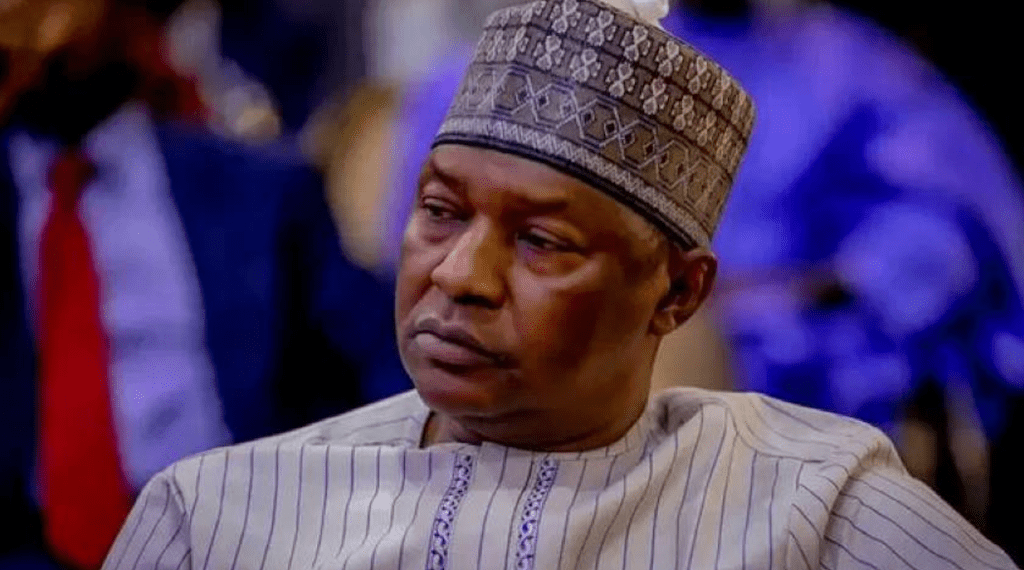
The Economic and Financial Crimes Commission (EFCC) has asked the Federal High Court in Abuja to order the permanent forfeiture of 57 properties allegedly linked to former Attorney General of the Federation, Abubakar Malami.
In a motion filed by its legal team led by Jibrin Okutepa (SAN) and Ekele Iheanacho (SAN), the anti-graft agency told the court that the respondents failed to provide enough evidence to overturn the interim forfeiture order earlier granted.
The suit, marked FHC/ABJ/CS/20/2026, lists Malami, Hajia Bashir Asabe, Abiru Rahman Abubakar Malami, and several companies allegedly linked to the assets as respondents.

EFCC said its application is based on provisions of the Advance Fee Fraud and Other Fraud-Related Offences Act, 2006, seeking a final order to transfer the properties to the Federal Government, on the grounds that they are suspected proceeds of unlawful activities.
Arguing the case, Okutepa explained that the matter is a non-conviction-based forfeiture, which allows the court to confiscate assets without a criminal conviction if they are believed to be linked to illegal activities.
He noted that the court had already granted an interim forfeiture order, which was published publicly, and insisted that no valid reason had been presented to stop the final forfeiture.
According to an affidavit by EFCC investigator Daniel Adebayo, the commission began investigating Malami following multiple petitions alleging corruption, abuse of office, and fraud.

The investigation involved reviewing financial records from banks and the Central Bank of Nigeria, as well as checks with agencies such as the Corporate Affairs Commission, Federal Inland Revenue Service, and Code of Conduct Bureau. Land registries in Kebbi, Kano, and Sokoto states were also examined, and the properties were physically verified.
The EFCC argued that Malami’s earnings while in office between 2015 and 2023 did not match the value of the assets under investigation.
According to the commission, he earned about ₦89.6 million in salary over eight years, alongside allowances and estacodes totalling about ₦253.6 million, figures it claims are far below the value of the properties.
The agency also alleged that some of the assets were acquired through proxies and corporate entities, while several buildings lacked proper approvals, suggesting attempts to conceal the origin of the funds.
The 57 properties, valued at about ₦213.2 billion, are spread across Abuja, Kebbi, Kano, and Kaduna states, with some reportedly linked to Rayhaan University in Kebbi.
The case is expected to continue on April 21, when the court will hear arguments on whether the assets should be permanently forfeited.