

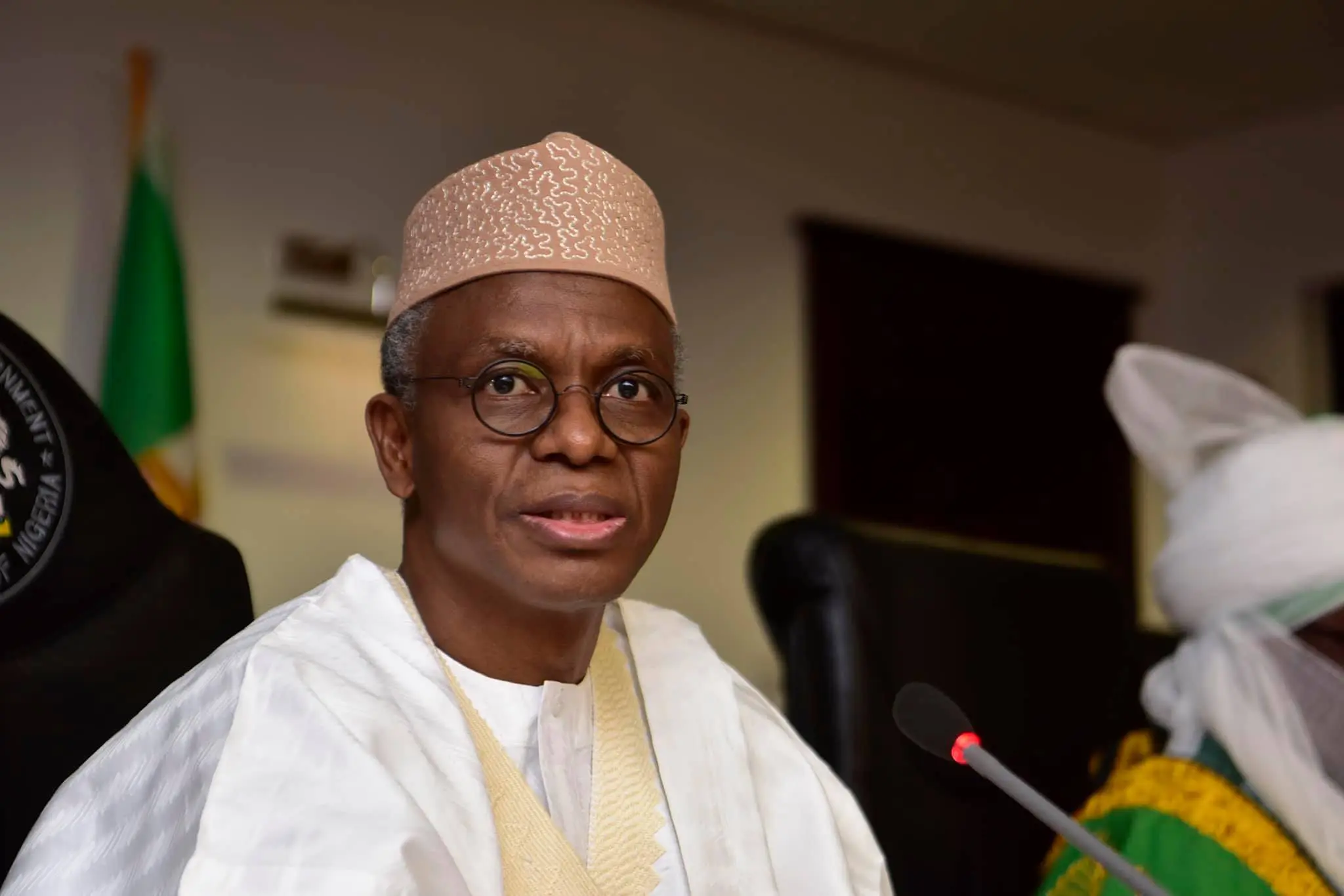
When kingmakers turn angry, they rarely stay quiet. Wounded influence ferments into insurgent energy; those who once built thrones sometimes feel compelled to test—or even topple—the very structures they helped erect.
I was reminded of this truth while watching Mallam Nasir El-Rufai’s dramatic performance at Abuja airport on Thursday and his fiery interview on Arise News the following night. The short man from Kaduna is now as furious as General Murtala Mohammed was in 1975 when he openly threatened to remove the leader he had helped install—General Yakubu Gowon.
The parallel is striking. In Shehu Shagari’s autobiography, Beckoned to Serve (p. 178), he recounts how Murtala, after Gowon rejected his revised memo, stormed into Shagari’s office and declared: “Don’t mind him! We shall soon change him. We put him there and we can remove him any time!”

Shagari pleaded for peace and stability. Murtala smiled, shook his hand warmly, and left. Weeks later, he carried out the threat—Gowon was overthrown in a bloodless coup.
Fast-forward five decades: El-Rufai helped engineer Tinubu’s emergence in 2023. He was central to the coalition of northern governors that frustrated Buhari’s preferred succession plan and cleared the path for Tinubu’s APC candidacy. Now, the same El-Rufai says he “ought to have retired” from politics but for “the disaster that I contributed to imposing on Nigeria.” That “disaster,” in his telling, is the Tinubu presidency—which he has vowed to terminate in 2027.

His words last week were not mere rhetoric. He sensationally admitted participating in the interception of the National Security Adviser’s telephone communications. “The government thinks they are the only ones that listen to calls but we also have our ways,” he declared on live television. “Someone tapped his phone and told us that he gave the order.”
That single sentence is a confession of a serious crime—unlawful interception of communications, a violation of Section 37 of the 1999 Constitution (privacy of correspondence and telephone conversations), the Cybercrimes Act 2015, and the Criminal Code.

His excuse? The government does it too. But reciprocal illegality does not cancel criminality; it compounds it. Two wrongs do not neutralise each other—they multiply the injury. In law, one party’s misconduct does not legalise another’s. The remedy for state overreach is legal challenge, not imitation.
When powerful men normalise what should alarm them—when they boast of practices that drench them in petrol for their enemies to ignite—the Yoruba would quietly ask whether èèdì (a self-destructive spiritual affliction) is not at work. Èèdì is not external harm; it is the force that drives a person to injure himself with his own hand and tongue.

Yet El-Rufai does not appear troubled. He is a witch who eats the heart and liver of his victim in the open marketplace. He confessed to phone-tapping as calmly as if it were a patriotic duty. His justification was that the government taps phones illegally too. But illegality by one side does not legitimise illegality by the other.
In Yoruba thought, when affection curdles into estrangement, the resulting fury is more combustible than the flare of hell. Centuries ago, William Congreve captured it perfectly: “Heaven has no rage like love to hatred turned, Nor hell a fury like a woman scorned.” Replace “woman” with “kingmaker,” and the line fits El-Rufai’s current temper.

He has a history of such boasts. In 2017, he was quoted celebrating the death of President Umaru Yar’Adua (“I am grateful to God because I am alive and Umaru is dead”) and claiming he fought two presidents: Yar’Adua, who “ended up in his grave,” and Goodluck Jonathan, who “ended up in Otuoke.”
Now, in 2026, he frames his mission in terms of mortal combat: “This government is gone by the grace of God… We are going to surprise this government and give Nigerians a very credible alternative platform and a candidate that will defeat the incumbent in the next election.”

He is not alone. Those who had the capacity to tap the NSA’s phone will do far more—and stand by it.
What is coming is not merely an electoral contest; it is lightning, thunder, and rain shrieking, crashing, and seeking to reshape history. The real question is not who wins this fight; it is who survives it.

While the big men bicker over intercepted calls and power, the people suffer unrelenting violence. El-Rufai, his allies, and the government are erect and alert when listening to private conversations in classrooms and newsrooms, but limp and impotent when bandits and terrorists operate openly. The eunuch of the feuding husbands is very impotent in threading his own woman, yet he boasts he can thread any needle in the dark.
When those entrusted with state power treat surveillance as sport, and those outside power treat it as justified revenge, privacy becomes casualty. What we treat as bravado is actually erosion of trust, law, and the fragile peace that holds this democracy together.

In 1952, Professor Alan F. Westin warned that once surveillance becomes routine in government hands, it rarely remains confined there; it spreads to private actors, political rivals, corporations—and eventually becomes an industry.
Nigeria is already on that trajectory. If the government taps phones unlawfully, it violates the constitution. If private citizens do it, they commit crime. If both do it, there are simply two violators—two criminals.

The tempest does not care that his ocean should not breach the beach of law and decency. But when two tempests clash, the beach disappears. The table collapses. The rackets tear. Even the ball bursts.
What Mallam El-Rufai blithely dropped as a contest has personal and institutional ruin as its end. The players will be left standing in debris, surveying the wreckage of institutions needed for national stability.

If I were President Tinubu, I would know this man deserves close scrutiny. What kind of man says what he says and sleeps peacefully in his house? All his engagements last week left no one in doubt: he is ready for the state. He get mind.
His witch is one battle axe who never denies his witchery. He boasted of phone-tapping as calmly as Murtala threatened to sack Gowon. And like Murtala, he may carry out the threat.
But Tinubu is no Gowon. He is Bola Ahmed Tinubu—Ogboju Ode, the intrepid hunter who has walked forests thicker than the wild dread of D.O. Fagunwa’s Forest of a Thousand Demons. He is not Jonathan, cooked in his own presence. He is not Yar’Adua, whose nimble fingers were cut off the soup plate before his time. He is not Buhari, an overhyped General with balls made of rubber.

He is a truly hard man blessed enough to make law and process bend before the weight of his ambition.
Yet El-Rufai also has a history of snatching meat from the jaws of lions. The coming duel between a short, unyielding Esu and a daring man of money and power would be an epoch.
And what is an epoch if it is not a decisive turning point—a thunderclap that alters the course of conflict, history, and power relations?




