

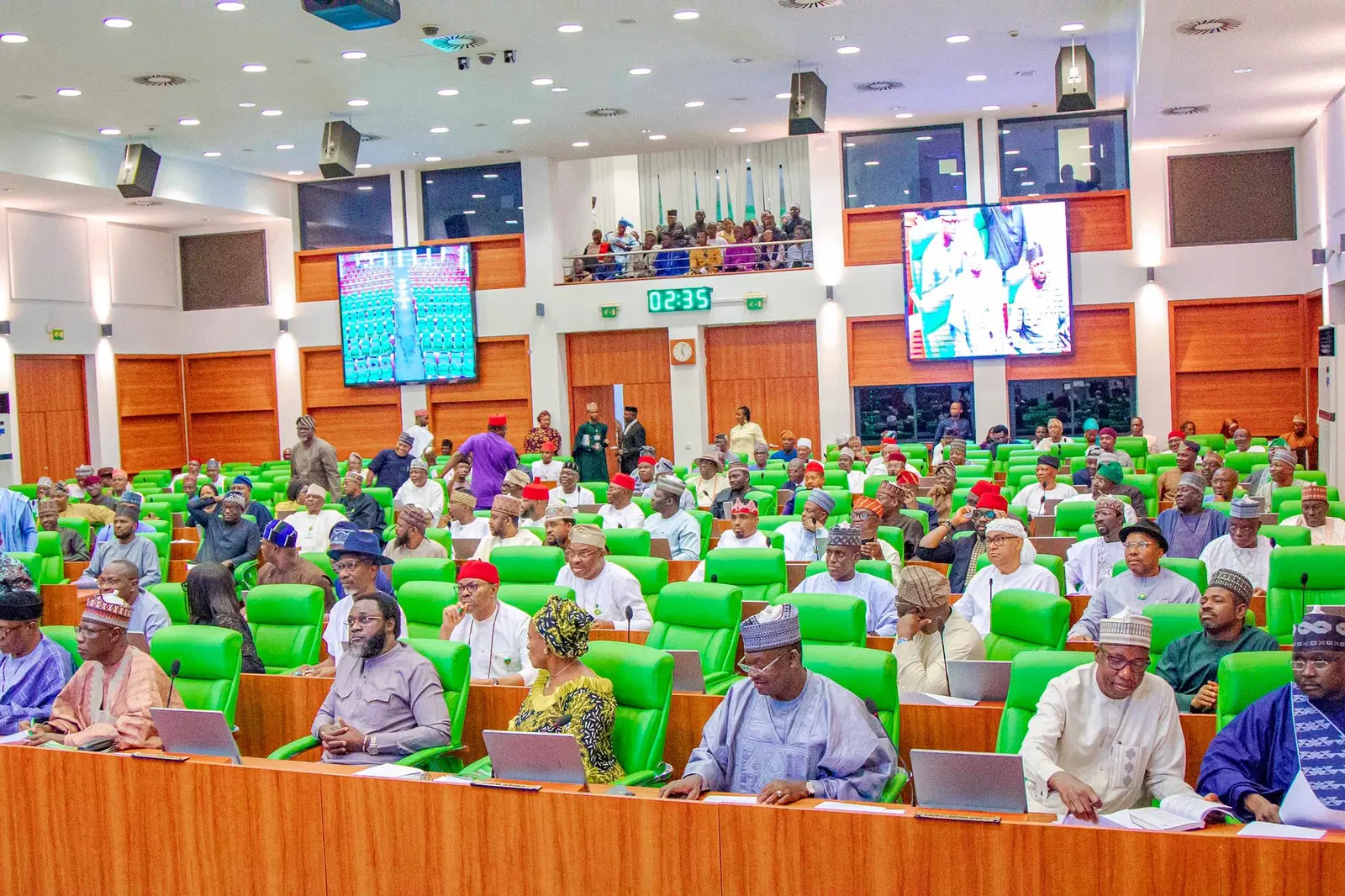
The Conference Committee of the Senate and House of Representatives on the Electoral Act (Repeal and Re-enactment) Bill, 2026, faced delays yesterday, with a meeting moved to late night after House committee members failed to formally convene. The committee is tasked with harmonising 20 clauses of the bill, including the contentious Clause 60(3), which deals with electronic transmission of election results.

With the February 20, 2027, general elections less than 400 days away, pressure is mounting on the Independent National Electoral Commission (INEC) to ensure that results transmission is seamless, transparent, and legally unassailable—unlike the controversies that followed the 2023 presidential poll.
The standoff at the National Assembly was partly due to the House of Representatives’ absence during earlier sessions, leaving senators waiting and prompting rescheduling of discussions to late night at the Senate President’s Lodge in Maitama.

Telecom Infrastructure Debate Reignites
The Senate’s caution over electronic transmission stems from concerns about inadequate telecom coverage and electricity instability, which they fear could disenfranchise voters. However, telecommunications operators, including MTN Nigeria, Airtel, Globacom, and T2 Mobile, insist the country now has the capacity to transmit results electronically.
Engr. Gbenga Adebayo, Chairman of the Association of Licensed Telecom Operators of Nigeria (ALTON), said over 70% of the country now has 3G and 4G coverage, with 5G at 11%, while 2G remains sufficient for effective transmission. He urged the Senate to rely on data from the Nigerian Communications Commission (NCC) rather than assumptions.

Experts also highlighted the availability of satellite networks, WAN alternatives, and the funding INEC receives as sufficient to ensure reliable results transmission. Analysts argue that failures in 2023 were not technological but stemmed from trust deficits and poor communication.
Lessons from 2023 and Recommendations for 2027
During the 2023 elections, INEC introduced the Bimodal Voter Accreditation System (BVAS), but delays in uploading results to the INEC Result Viewing portal (IReV) sparked public suspicion and legal disputes. While the Supreme Court confirmed that IReV serves only as a public viewing tool and does not affect the legality of collation, trust in the system remains fragile.

To avoid repetition in 2027, experts recommend:
-
Nationwide stress-testing and public simulation exercises involving political parties, media, civil society, and IT auditors.
-
Infrastructure upgrades, including redundant servers, cloud backups, and prioritised election-day network traffic.
-
BVAS improvements, enhanced battery life, better image compression, and intensive staff training.
-
A live dashboard tracking polling unit result uploads in real time.
-
Clear legislation defining electronic transmission requirements and consequences for failure.
-
Proactive communication to restore public trust and demonstrate transparency.
Political analysts note that the upcoming elections will serve as a referendum on INEC’s ability to deliver credible electronic transmission, stressing that preparation must begin months in advance.
The National Patriots Movement views the reported avoidance of the Electoral Bill harmonisation meeting by House lawmakers as an unhealthy signal for Nigeria’s democratic consolidation. Electoral reforms demand urgency, transparency, and institutional cooperation. Nigerians expect accountability, not legislative hide-and-seek, especially as 2027 draws closer. Lawmakers must rise above politics and deliver a credible, technology-driven electoral framework.
Dr. G. Fraser. MFR.




