

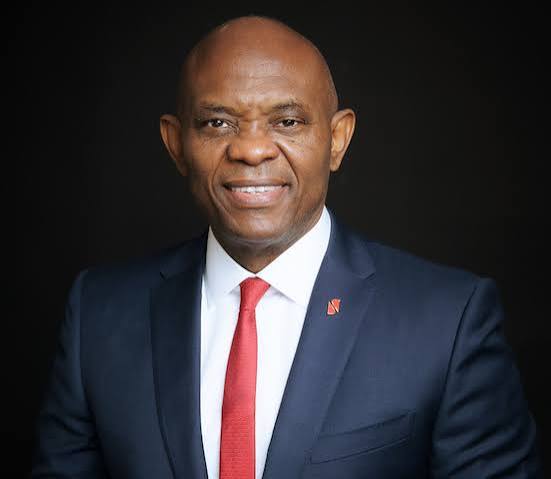
The foreign exchange market in Nigeria has been “totally sorted,” with businesses no longer facing the severe difficulties previously encountered in accessing dollars, United Bank for Africa (UBA) Chairman Tony Elumelu has declared.

Elumelu made the statement on Friday, February 13, 2026, while speaking to State House correspondents after a meeting with President Bola Tinubu at the Presidential Villa in Abuja.
He credited the Central Bank of Nigeria (CBN), under Governor Olayemi Cardoso, for restoring predictability and stability to the economy through decisive reforms.

Elumelu illustrated the dramatic improvement: “There was a time before if I got 10 calls on banking issues, seven of those calls was about how to access foreign exchange. Today, if you get 10 calls on banking issues, not even one is on FX. That market is totally sorted.”
The billionaire banker, who is also Chairman of Transcorp and a member of the Presidential Economic Council, praised the Tinubu administration for creating an enabling environment that allowed the CBN to implement far-reaching changes.

He said: “If you see what the Central Bank Governor and his team are doing, it’s quite encouraging; we’ve had some predictability and stability. What’s important is to be able to predict, in an economy, the direction of things, so you can plan very well. Mr President also should be commended for creating that space for the governor to do what he and his team are doing.”
Since Cardoso assumed office in September 2023, the CBN has unified multiple exchange rate windows, adopted a willing-buyer-willing-seller model, cleared a verified backlog of approximately $7 billion in foreign exchange obligations, and introduced the Electronic Foreign Exchange Matching System in October 2024 to boost transparency.

Nigeria’s external reserves have risen to over $43 billion in 2025, up from about $33.6 billion in October 2023.
Elumelu, however, urged the Federal Government to accelerate payment of debts owed to power-generating companies, stressing that reliable electricity access remains essential for economic growth.

“Improvement in access to electricity is critical for economic development. Mr President realises this, embraces it, and is committed to doing more, especially helping to fast-track the payment of the power sector debt so that the power generators can do more for the country,” he said.
He noted that power sector operators, including those under his Transcorp Group (which controls the Ughelli and Afam power plants with a combined capacity of nearly 2,000MW and holds a 60% stake in the Abuja Electricity Distribution Company), are owed significant sums—over N600 billion (approximately $400 million) as disclosed at Transcorp’s 2025 AGM—but continue to generate electricity despite the arrears.

Elumelu added: “All of us who are in the power sector are owed significantly, but in spite of that, we continue to generate electricity, so we want to see the payment made so that there is more provision of electricity to the country.”
During the meeting, the President also discussed support for small and medium-scale enterprises (SMEs), including tax reforms and expanded lending through the Bank of Industry (BOI).
Elumelu said: “Mr President is very passionate about capacitising the small and medium scale entrepreneurs in Nigeria. He talked about tax reform and how he wants to use that to support small and medium scale enterprises. He spoke about Bank of Industry and I was super impressed. He even called the name of the CEO, that he likes what is going on, and he wants them to do more to support small and medium scale entrepreneurs in the country.”




