


In the aftermath of the Federal Capital Territory (FCT) local elections, Minister of Aviation and Aerospace Development, Festus Keyamo, has launched a sharp rebuttal of opposition allegations that the polls were marred by widespread irregularities.
Reacting to claims circulating on social media and at press briefings, Keyamo described the opposition’s argument as “lazy and shameless,” insisting that isolated corrections on a handful of result sheets cannot invalidate an entire electoral exercise.

According to figures released by the electoral authorities, a total of 2,822 polling units participated in the FCT elections.
Opposition actors reportedly highlighted fewer than 10 polling units where result sheets were corrected or altered for various administrative reasons, using these as the basis to question the integrity of the entire process.
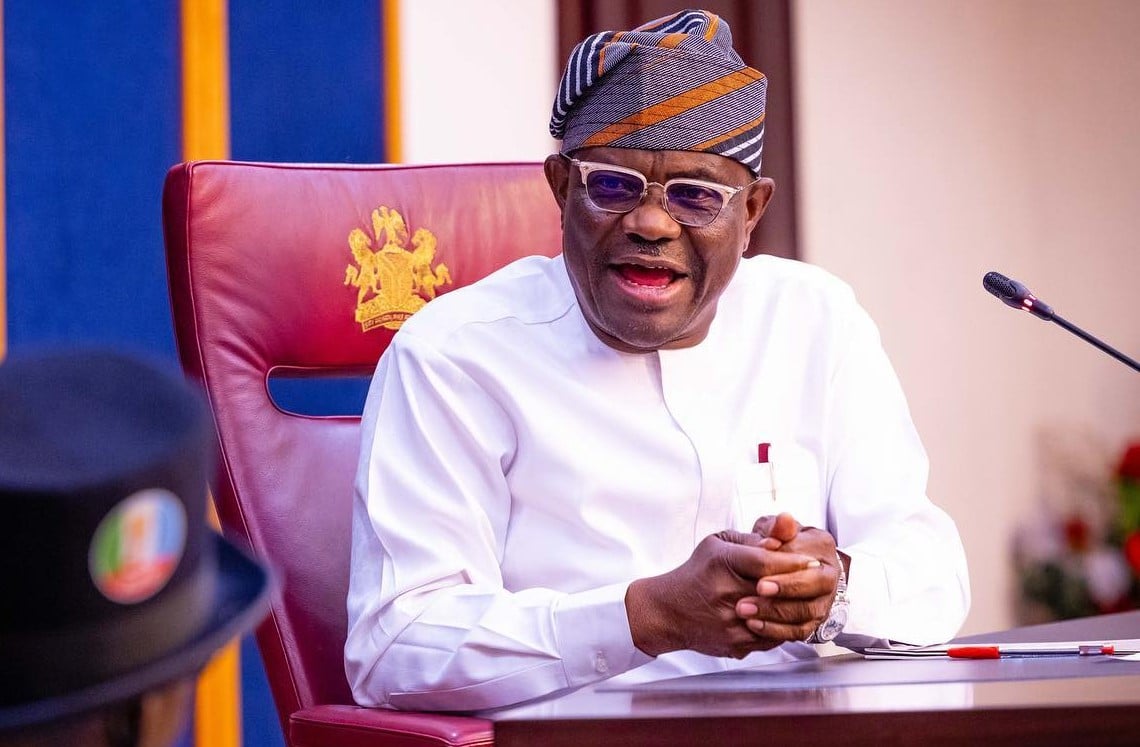
“Out of 2,822 polling units in the FCT, they display result sheets that were corrected in less than 10 units to attempt to prove that the whole election was marred by irregularities,” Keyamo said. “Nigerians are not fools.”

Even if the disputed units were expanded hypothetically to 50 polling units, that would still represent less than 2 percent of total polling units—leaving over 2,770 units unaffected.
Analysts argue that electoral jurisprudence, both in Nigeria and comparable democracies, requires that irregularities be substantial and proven to have materially altered the outcome before an election can be invalidated.

In several of the units cited, sources indicate that corrected figures did not disadvantage opposition candidates and, in some instances, even reflected outcomes favourable to them.
Observers say this weakens the narrative of systemic manipulation.

Political analysts further note that corrections on Form EC8A or similar result sheets are not automatically evidence of fraud. Such adjustments may arise from arithmetic errors, overwriting, or reconciliation of figures in the presence of party agents.
The central legal test remains whether due process was followed and whether party representatives endorsed the final entries.

The opposition, however, has framed the development as evidence that “democracy is in danger.”
Keyamo rejected this characterisation, accusing critics of attempting to “create mass hysteria and stir social unrest amongst unsuspecting Nigerians.”
Electoral trends from recent off-cycle contests in Rivers, Kano and the FCT suggest that voter behaviour remains competitive and issue-driven.
In different jurisdictions, both ruling and opposition parties have recorded victories, reinforcing the argument that Nigeria’s electoral space, while imperfect, is not one-sided.
Supporters of the administration argue that the FCT elections serve as a meaningful test case ahead of 2027.
They point to the peaceful conduct of the polls, limited incidents, and orderly collation process as indicators of institutional resilience.

Under President Bola Ahmed Tinubu, the ruling All Progressives Congress (APC) maintains that its reform agenda—spanning fiscal restructuring, fuel subsidy removal, currency stabilisation and enhanced security cooperation—requires political stability and policy continuity.
While critics continue to challenge aspects of the reforms, the electoral process itself remains legally distinct from policy disagreements.
The FCT Minister, Nyesom Wike, has also drawn commendation from stakeholders for maintaining a relatively calm atmosphere before and during the elections, with security agencies adopting visible yet restrained deployment.
Adding her voice to the debate, Princess Gloria Adebajo-Fraser, MFR, Governance & Perception Management Consultant, Strategist & Researcher, commended the Independent National Electoral Commission (INEC) for what she described as a professionally managed exercise.
“This election is a testament to the growing political awareness of Nigerians,” she said. “Despite empty propaganda and sustained campaigns of calumny, voters demonstrated that they understand the vision and mission of President Tinubu.
Governance performance, not noise, is increasingly shaping electoral decisions.”
She further congratulated the APC on what she described as “an outcome that reflects grassroots engagement and confidence in ongoing reforms,” noting that “democracy matures when institutions are allowed to function and disputes are resolved through lawful channels.”

Legal experts continue to caution that allegations of malpractice should be pursued through established judicial mechanisms rather than amplified rhetorically. Nigeria’s electoral framework provides for petitions, forensic review of documents and tribunal adjudication where necessary.
For now, the arithmetic remains central to the debate: isolated administrative corrections affecting a statistically minor fraction of polling units do not, on their own, constitute systemic failure.
As political actors reposition for 2027, the contest over perception may intensify—but the numbers from the FCT poll present a clearer story than the noise suggests.
Dr. Imran Khazaly
Headlinenews.news Special report.




