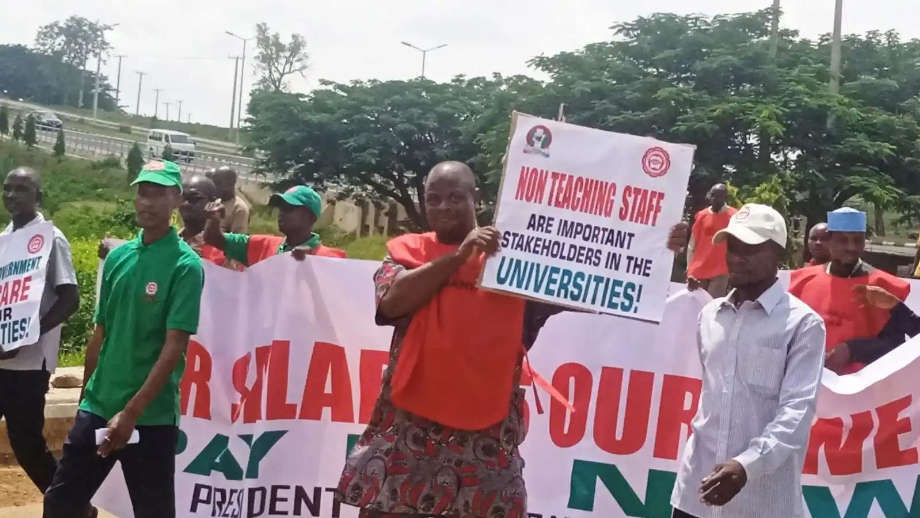
The ongoing nationwide strike by non-academic staff in public universities has continued to disrupt academic and administrative activities across the country, as fresh negotiations between the Federal Government and union leaders ended in a deadlock on Monday.
The meeting, which involved the Federal Government and the Joint Action Committee (JAC) of the Senior Staff Association of Nigerian Universities (SSANU) and the Non-Academic Staff Union of Educational and Associated Institutions (NASU), failed to produce any agreement, though discussions are expected to resume today by 3 p.m.
The industrial action, which began after the expiration of a one-month ultimatum on April 30, has grounded operations in public universities nationwide, shutting down administrative offices, clinics, hostels, and other support services.

Already, some institutions are feeling the impact. The University of Maiduguri (UNIMAID) has postponed its e-examinations, while staff at the University of Jos (UNIJOS) staged a peaceful protest over unresolved welfare issues and delayed agreement renegotiations with the Federal Government.
The unions are demanding full implementation of a negotiated agreement and insist on a 40 per cent salary increase, rejecting the government’s proposed 30 per cent adjustment. They also accuse the government of bypassing proper collective bargaining processes.
Speaking after Monday’s meeting, union leaders said they would not suspend the strike without consulting their members, stressing that their demands remain unchanged.
SSANU National President, Mohammed Ibrahim, described the strike as fully effective nationwide, saying all key university operations have been shut down, including what he called “essential services.”

“We are demanding fairness, equity and proper negotiation. Nothing has changed in our position,” he said, adding that the unions would only listen to government proposals but would not call off the strike without resolution.
At UNIJOS, union members marched through the campus chanting solidarity songs, accusing authorities of inequality in staff welfare and delays in addressing longstanding concerns. Union leaders also alleged bias from the Federal Ministry of Education in handling labour matters.
Meanwhile, the strike has left students stranded and institutions struggling to maintain basic operations, with growing concerns over academic delays and disrupted examinations.
As negotiations resume today, attention remains on whether both sides can reach a compromise to end the paralysis in Nigeria’s public university system.