

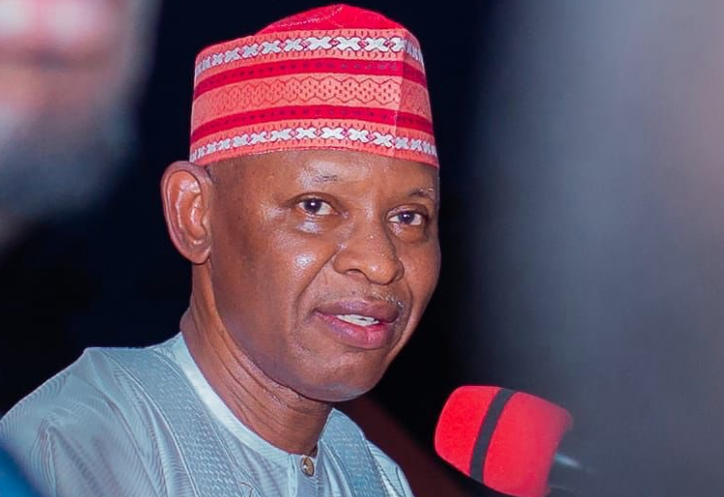
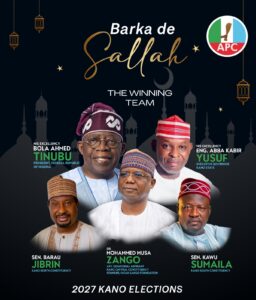
A major political recalibration is unfolding in Kano State, as Governor Abba Yusuf and a significant bloc of political actors have formally realigned with the All Progressives Congress (APC), marking one of the most consequential shifts in the state’s recent political history.

The defection, which includes members of the State House of Assembly, federal lawmakers, local government chairmen, councillors, and key political appointees, signals a strategic repositioning ahead of the next election cycle.
According to those involved, the move is driven by a shared objective to enhance political stability, deepen governance outcomes, and align more closely with federal-level development initiatives.
For Kano, a state with a long-standing tradition of strong political identity and ideological loyalty, this development represents more than a routine party switch.
It reflects an evolving calculation among political stakeholders that governance effectiveness and access to federal collaboration may increasingly shape political decisions in the coming years.

Governor Yusuf, addressing supporters at a reception ceremony, framed the decision as one rooted in pragmatism rather than sentiment.
He emphasized the need to work within a broader national framework to unlock opportunities for infrastructure development, security improvements, and economic growth.
“Our focus must remain on delivering tangible results to the people. Alignment with a platform that offers structure and access to national resources is a necessary step toward achieving that goal,” he stated.
He further announced plans to establish a council of elders, aimed at fostering internal cohesion, managing transitions, and ensuring that diverse interests within the state are harmonised under the new political arrangement.

Fractures Within the Political Base
The defection has, however, triggered visible tensions within Kano’s political ecosystem, particularly among loyalists of the Kwankwasiyya Movement, a dominant force in the state’s recent political trajectory.
In a significant response, Mustapha Kwankwaso resigned from his position as Commissioner for Youths and Sports Development, citing concerns over divided loyalties and the need to maintain ideological consistency.
His resignation underscores the deeper internal recalibrations taking place as political actors weigh allegiance against evolving realities.

While a considerable number of stakeholders followed the governor into the APC, others have chosen to remain within their original political structure.
Meetings and consultations are ongoing among this group, suggesting that the political landscape in Kano may continue to witness further adjustments in the weeks ahead.
APC Consolidates Position
Leaders of the APC have described the development as both strategic and timely, noting that Kano remains a critical battleground in Nigeria’s political architecture.
The party’s reception of Governor Yusuf and his supporters was marked by strong messaging around unity, discipline, and forward-looking governance.
Party stakeholders expressed confidence that the influx of new members would strengthen the APC’s grassroots presence, expand its political reach, and enhance its prospects in forthcoming elections.
“This is not just an addition of numbers; it is a consolidation of capacity and influence,” one party leader remarked, pointing to Kano’s demographic and electoral significance.
National Implications
Beyond Kano, the development reflects a broader pattern of political realignments across several states, where prominent figures and stakeholders are recalibrating their positions ahead of the next general elections. These movements suggest a growing emphasis on political platforms perceived to offer structural advantage, governance continuity, and alignment with national policy direction.

Analysts note that such shifts are often driven by a combination of factors, including access to federal resources, electoral strategy, and the desire to remain politically relevant in an increasingly competitive landscape.
However, they also caution that the success of such realignments ultimately depends on the ability of political actors to manage internal cohesion, maintain public trust, and translate political advantage into measurable governance outcomes.

The Road Ahead
For Kano State, the immediate challenge lies in navigating this transition without deepening divisions or disrupting governance momentum.
The establishment of the proposed council of elders may prove critical in managing competing interests and ensuring a smooth integration process.
At a broader level, the development underscores a fundamental reality of Nigerian politics—fluidity remains a defining characteristic, and alliances are often shaped as much by strategy as by ideology.
As the political calendar advances, all eyes will remain on Kano, not just as a state undergoing internal transformation, but as a key indicator of how political power may be reconfigured nationally in the lead-up to the next elections.




