G7 nations are convening an emergency meeting on Monday to address surging oil prices, as crude topped $100 a barrel and stock markets tumbled amid the escalating US-Israeli military campaign in Iran.
Finance ministers from major industrialized nations, including UK Chancellor Rachel Reeves, will discuss the global economic impact of the conflict. Brent crude briefly hit nearly $120 a barrel over concerns about prolonged disruptions to energy supplies through the strategic Strait of Hormuz. In response, the UK’s FTSE 100 fell 1.5% in early trading.
The Financial Times reports the G7 may consider a coordinated release of oil from strategic reserves, led by the International Energy Agency (IEA). If approved, this would mark the first such action since 2022, when countries released reserves following Russia’s invasion of Ukraine.

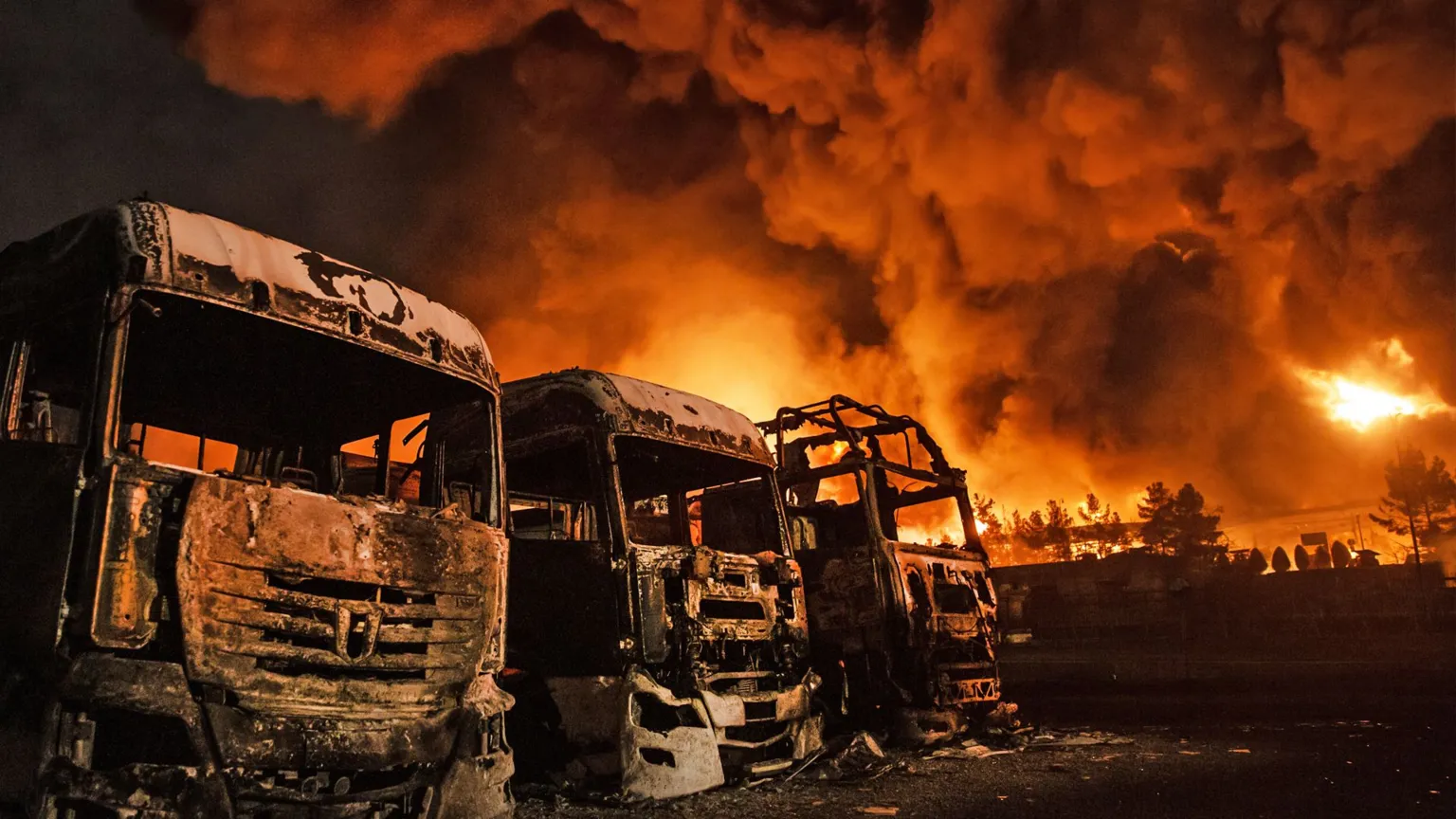
About 20% of the world’s oil typically passes through the Strait of Hormuz, but shipping has largely halted since the conflict began over a week ago. Over the weekend, the US and Israel launched fresh airstrikes on Iran, targeting oil depots and other sites, while Iran retaliated against energy infrastructure in neighboring Gulf states. Saudi Arabia reported intercepting two waves of drones aimed at a major oilfield.
Adding to the tension, Iran named Mojtaba Khamenei as successor to his father Ali Khamenei as Supreme Leader, signaling that hardliners remain firmly in control.
Oil prices in Asia saw dramatic swings on Monday morning. Brent crude briefly jumped more than 25% to $119.50 a barrel before settling near $107, while US West Texas Intermediate (WTI) crude hovered around $104. UK gas prices for month-ahead delivery spiked nearly 25% to 171p per therm, before easing to 156p.

European stock markets opened lower, following steep falls in Asia. Germany’s Dax and France’s Cac 40 both fell about 2.5%, while London’s FTSE 100 saw widespread losses, with energy giants BP and Shell among the few gainers. Asian markets suffered more dramatic declines: Japan’s Nikkei 225 dropped 5.2%, and South Korea’s Kospi fell 6%, temporarily triggering a trading halt to curb panic selling.
Adnan Mazarei of the Peterson Institute for International Economics said the spike in oil prices was expected, given the disruption to Gulf production and indications of a prolonged conflict. “People are realizing that this won’t end quickly,” he said, noting that US assurances are “becoming more unrealistic.”
Meanwhile, US President Donald Trump sought to downplay the impact, claiming on Truth Social that short-term oil price increases are “a very small price to pay for U.S.A., and World, Safety and Peace.” Energy Secretary Chris Wright clarified that Israel, not the US, was targeting Iran’s energy infrastructure, even as rising pump prices raised domestic concerns. AAA data showed the average price of regular gasoline in the US jumped 11% last week to $3.32 per gallon.
The G7’s meeting will be closely watched as governments weigh emergency measures to stabilize global energy markets amid growing geopolitical uncertainty.