

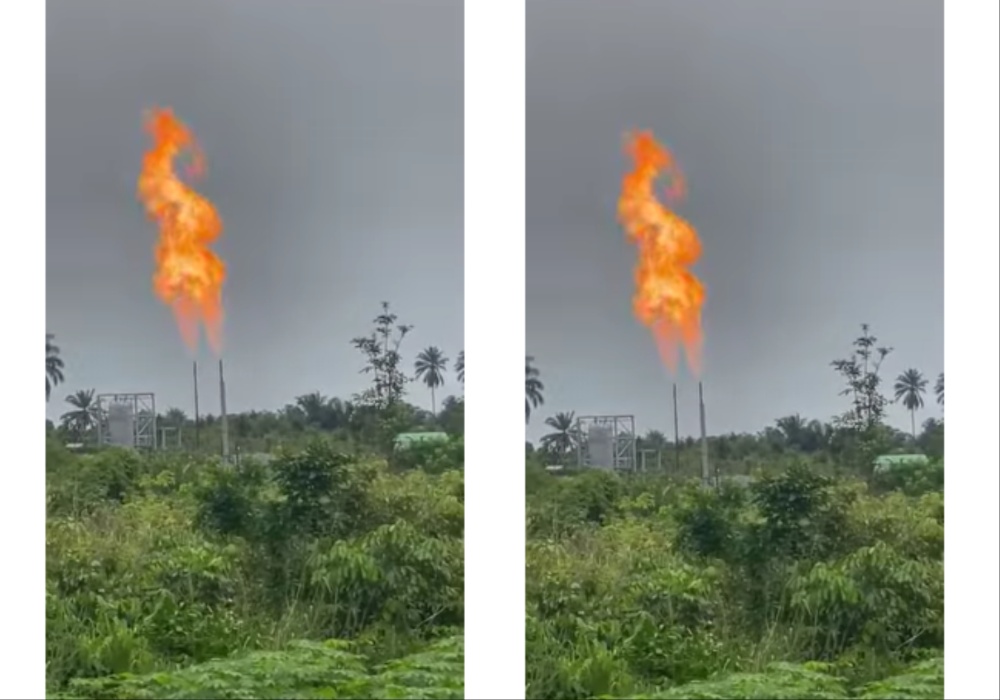
RESIDENTS of Ikot Ebidang in Onna Local Government Area of Akwa Ibom State have raised alarm over the devastating effects of oil and gas exploration in their community, describing the local environment as “unlivable” due to noise, pollution, and health hazards from gas flaring.

The community, host to Natural Oilfield Service (Sterling Global), reports constant exposure to noxious gases, loud sounds from flare sites, corroded rooftops from combustion residues, declining crop yields, and frequent heat- and skin-related ailments. Some residents have abandoned their homes, while those who remain experience sleepless nights.

During a dialogue on renewable energy, stakeholders described how aquatic ecosystems and farmland have been degraded, with pollution of rivers and forests, soil nutrient depletion, and general environmental destruction. A community member stated, “The soil nutrient is reducing, and the gas flare has altered aquatic life. Our forest and rivers are polluted…we are dying, we need help.”

The residents have called for a renegotiation of the Memorandum of Understanding (MoU) between the community, the company, and the government to address environmental harm. They urged authorities to halt flaring within residential areas, pipe associated gas away from the community, and provide compensation for livelihood losses alongside adequate healthcare facilities.

Environmental expert Dr Nnimmo Bassey, Executive Director of Health of Mother Earth Foundation (HOMEF), emphasised that gas flaring is illegal and a violation of human rights, warning of long-term health risks such as cancers, reproductive problems, and blood disorders if the activities continue.

Community members were also advised to document real-time evidence of oil spills and gas flare impacts using photographs, GPS tagging, and sample collection. Facilitators Umo Isua-Ikoh of Peace Point Development Foundation (PPDF) and Edem Edem, former African representative of the Climate Investment Fund, stressed that evidence documentation is critical for potential legal action and for posterity.

The dialogue concluded with calls for the government and company to prioritise community welfare, provide renewable energy solutions to mitigate the effects of extractive activities, deploy environmental advocates, and ensure routine environmental monitoring and air quality inspections.




