

Hamas has dismissed recent statements from an Israeli government official demanding that the Gaza-based group surrender its weapons within 60 days, warning that Israel would resume its war on Gaza if the demand is not met.

A senior Hamas official, Mahmoud Mardawi, said he was unaware of any formal ultimatum and described the remarks attributed to Israeli leadership as media threats that are not part of the ongoing negotiations.

His reaction followed comments by Israel’s cabinet secretary, who said at a conference in Jerusalem that Israel could restart military operations in Gaza if Hamas fails to disarm within the proposed timeframe. The official claimed the two-month period was requested by the United States and that Israel was adhering to it.

He added that the deadline could be linked to an upcoming international meeting focused on Gaza’s reconstruction, noting that the situation would be reviewed before any final decision is taken. According to him, if diplomatic efforts fail, the Israeli military would be ordered to proceed.
Responding to the warning, Mardawi said any move to renew the war would have serious consequences beyond Gaza and insisted that Palestinians would not submit to pressure.

The second phase of a ceasefire arrangement, which began in mid-January, reportedly includes discussions led by the United States on disarmament and the possible deployment of international peacekeepers. Hamas has consistently rejected disarmament while Israeli forces remain in Gaza.
Earlier this month, a senior Hamas leader also opposed calls for Palestinian factions to give up their weapons, arguing that disarming an occupied population would leave it defenseless.

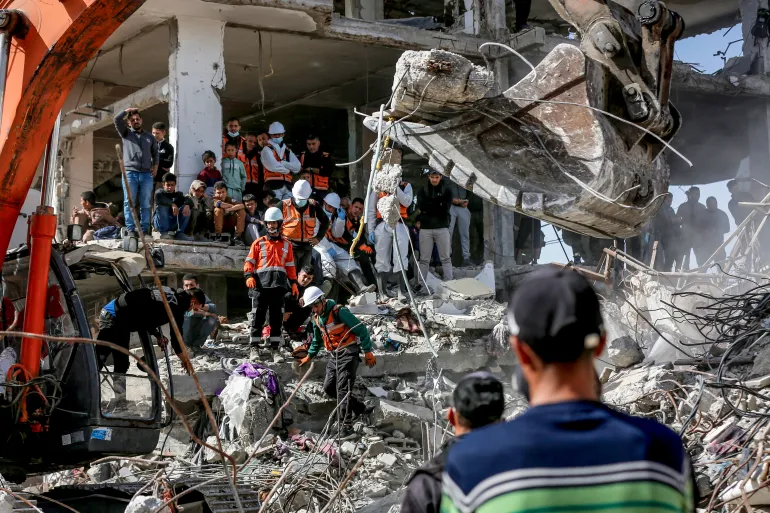
Since October 2023, Israel’s military campaign in Gaza has resulted in the deaths of more than 72,000 people, including many children. Despite a US-brokered ceasefire that began in October, hundreds of Palestinians have been killed, with Gaza authorities accusing Israel of repeated violations.
Gaza continues to face severe shortages of food, medicine, medical equipment, and shelter materials, worsening the humanitarian crisis affecting nearly two million residents, most of whom have been displaced.




