

In the outskirts of Buenos Aires, 43-year-old Diego Nacasio says he no longer needs to check a calendar to know when the month is slipping away. By the middle of each month, the combined salaries he and his wife earn from full-time retail jobs are already exhausted.

From that point, the family survives by taking on extra work, selling personal belongings, relying on credit cards, and borrowing small sums just to cover essentials like food until their next paycheques arrive.

Nacasio says the financial pressure is unlike anything he has experienced before. Despite having better jobs than in the past, he says his family can no longer afford basic needs for an entire month. What once allowed them to build a home, own a car, and support their teenage son has now become a daily struggle marked by debt and uncertainty.

Stories like his are becoming increasingly common across Argentina. Recent figures show that nearly half of the population is drawing on savings, selling possessions, or borrowing from banks and relatives to meet basic expenses. Many households have also been forced to cut back on services and daily activities to make ends meet.

Experts warn that the situation is particularly alarming because even working families are now taking loans simply to buy food. Sociologists say this growing dependence on credit is trapping people in a cycle of stress, delayed payments, and mounting debt.
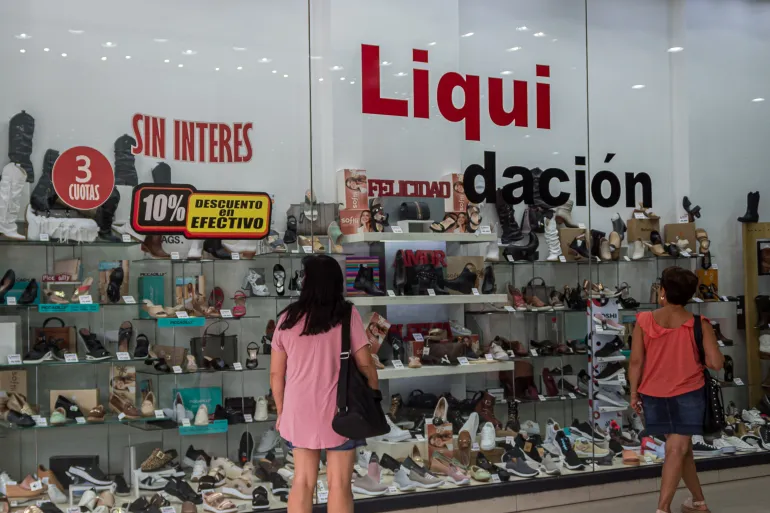
President Javier Milei’s administration maintains that its strict austerity programme has stabilised the economy, reduced inflation, and laid the foundation for future growth. While some sectors, such as banking and agriculture, have shown signs of recovery, others—including manufacturing and retail—have suffered sharp declines, with businesses shutting down due to falling demand.

Although inflation has eased from record highs, analysts argue that wage growth has failed to keep up with real living costs. Price increases for essentials such as electricity, fuel, food, and medicine have placed a heavy burden on households, even as official inflation figures suggest moderation.
As consumption drops, more Argentines are relying on credit to survive. Almost half of supermarket purchases are now made using credit cards, while unpaid personal loans have reached their highest level in more than a decade.
Teachers, factory workers, and retirees alike describe daily life as an obstacle course of juggling jobs, borrowing money, hunting for discounts, and paying only minimum loan balances. Many say the pressure has become emotionally and financially overwhelming.

Economists warn that Argentina’s long-standing debt problem has now turned into a full-blown social crisis, worsened by the spread of informal lenders and limited alternatives for struggling families. While proposals have emerged to help low-income earners restructure debts, critics argue that deeper reforms are needed.
They say lasting solutions must focus on wages keeping pace with the real cost of living, so families are not forced into debt simply to put food on the table.
Despite the hardship, Nacasio says owning a home has spared his family from even worse conditions. Still, he believes the current situation is unsustainable and hopes for changes that will allow working people to live with dignity once again.




