

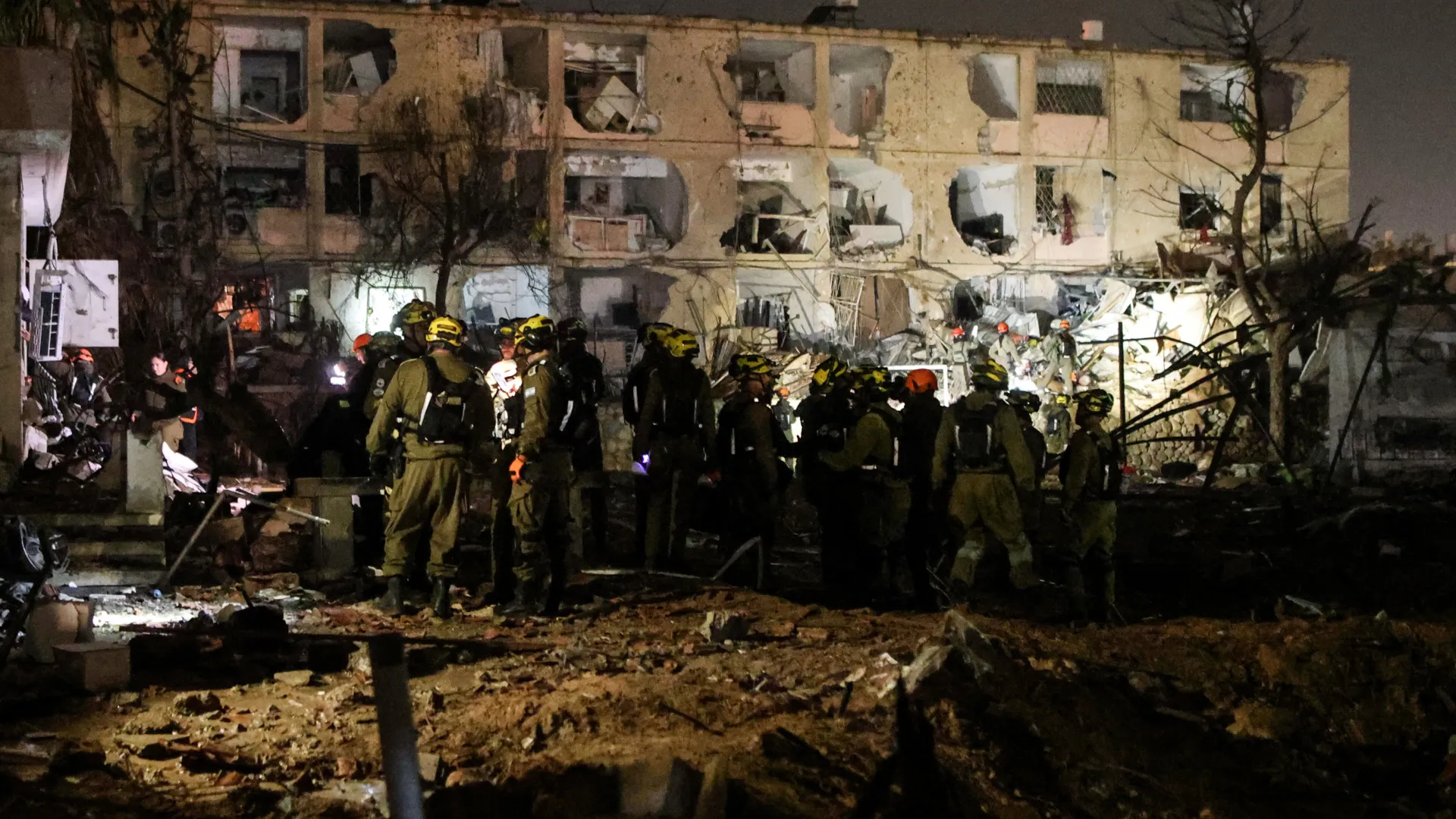
Iranian missile attacks on two southern Israeli towns injured at least 180 people, some seriously, officials report. Arad saw 116 casualties, while Dimona recorded 64, following ballistic strikes on Saturday evening.

The International Atomic Energy Agency (IAEA) confirmed that Israel’s nuclear research facility near Dimona, located about 13 km from the town, was not damaged. Iranian authorities claimed the strikes were in response to an earlier attack on Iran’s Natanz nuclear site.

On Sunday, at least seven more people were injured in a missile strike on Tel Aviv. The Israeli Air Force stated that Tehran has launched 400 missiles at Israel since 28 February, intercepting approximately 92% of them.
Residents described the destruction as severe. In Arad, apartment buildings were heavily damaged, leaving craters and debris. Medics reported treating multiple children with head and chest injuries caused by falling objects and shattered glass. Dimona suffered similar devastation, including collapsed ceilings and destroyed residential buildings.

Israeli Prime Minister Benjamin Netanyahu and President Isaac Herzog visited the affected areas to assess damage and meet victims. Firefighters noted that missile interceptors failed to neutralize two warheads, which weighed hundreds of kilograms, resulting in direct hits.

The Shimon Peres Negev Nuclear Research Center, colloquially known as the Dimona reactor, remains intact. While officially dedicated to research, it is widely believed to host Israel’s nuclear arsenal, making any nearby attacks highly significant.

The ongoing strikes underscore the human cost of the conflict and Israel’s urgent efforts to investigate breaches in its air defense system. Both Israel and the United States have maintained that eliminating Iran’s potential nuclear capacity remains a key objective in the conflict.




