

In early December, hundreds of women gathered on Iran’s resort island of Kish to take part in a marathon, dressed in identical shirts and leggings, with their hair loosely tied back. In a country where strict dress codes are enforced with fines and prison terms, the runners focused on the race, disregarding official rules and the complimentary headscarves included in their race packs in anticipation of enforcement.

Just weeks earlier, a viral moment captured a band performing the iconic “Seven Nation Army” riff to a cheering, headbanging crowd on the streets of Tehran — a clip that drew global attention after being reshared by Jack White, guitarist of The White Stripes.
More recently, shop owners and traders staged protests in several Iranian cities, chanting slogans against the government over their inability to pay rent as the national currency plunged to historic lows. These demonstrations marked the largest public unrest since the 2022 nationwide protests triggered by the death of Mahsa Amini, who died in police custody after being arrested over alleged violations of Iran’s hijab rules.

Although still limited in scale, the protests reflect deepening dissatisfaction across the country, as citizens increasingly reclaim public spaces and personal freedoms through scattered, uncoordinated acts of resistance. While the population quietly pushes back, Iran’s Islamic theocracy — long resistant to Western cultural influence — appears preoccupied with preserving its grip on power rather than confronting the growing civil disobedience.
Leadership Under Strain
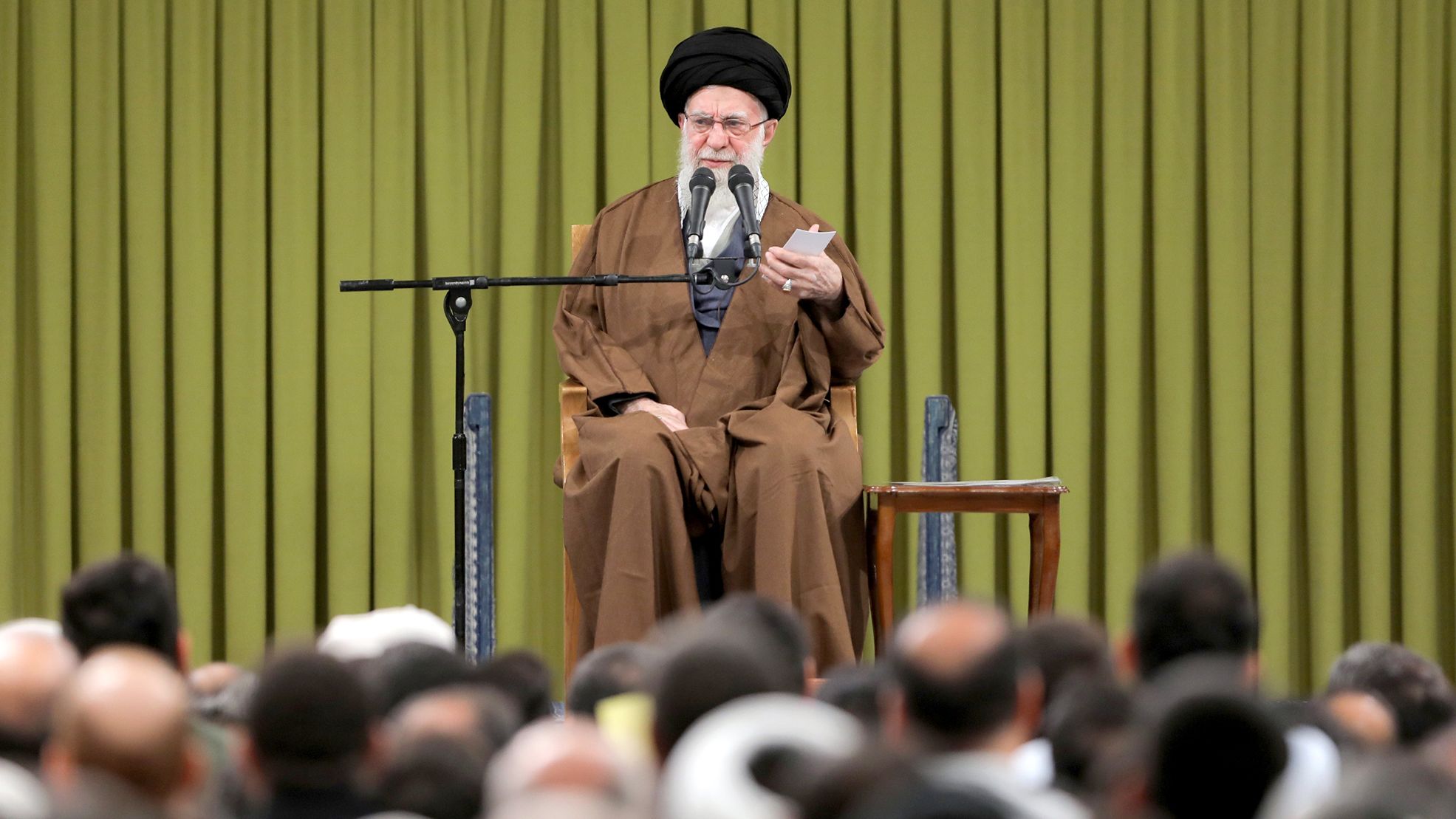
At the center of the crisis is 86-year-old Supreme Leader Ayatollah Ali Khamenei, whose decades-long efforts to insulate the regime from threats now appear increasingly ineffective. At home, defiant youth challenge Islamic norms, the economy reels from a collapsing currency, water shortages worsen, and protests slowly resurface. Abroad, Israel continues lobbying the United States for tougher action against Tehran.
With few viable options, Khamenei has adopted a cautious strategy, avoiding bold decisions as pressure mounts. Analysts say the leadership appears paralysed.

“Many observers describe a sense that no one is really making decisions,” said Mohammad Ali Shabani, editor of London-based outlet Amwaj.media. “Any major move Khamenei makes now would carry serious downsides, so he seems to be sitting things out.”
During a surprise 12-day conflict with Israel in June, Khamenei was reportedly kept incommunicado in a secure underground bunker. The war left Iran’s military weakened, its nuclear infrastructure damaged, and public confidence in the leadership eroding rapidly.
A Nation in Crisis
In the months since, Iran’s internal challenges have intensified. Chronic electricity outages, soaring inflation, and rising unemployment have deepened public frustration. Smog now blankets major cities after authorities turned to lower-grade fuel to keep power running during winter.
Water scarcity has reached alarming levels. Twenty provinces have endured the country’s worst drought in more than four decades, prompting President Masoud Pezeshkian to publicly suggest relocating residents from Tehran to reduce strain on dwindling supplies.
Economic hardship continues to worsen. Inflation has surged, the rial has collapsed to record lows, and mass money printing has inflated government budgets into the quadrillions. Protests by traders erupted as basic goods became increasingly unaffordable.

Foreign Policy Stagnation
Iran’s once-calculated foreign policy has stalled under relentless Western sanctions. Its regional influence has weakened as Israel intensifies strikes against Iranian-backed groups, while last year’s fall of Syria’s Assad dynasty stripped Tehran of a critical strategic ally.
Despite decades of surviving crises — including the devastating eight-year war with Iraq after the 1979 revolution — Iran now faces simultaneous economic, environmental, political, and social breakdowns.
As internal divisions widen, Khamenei continues to rely on familiar tactics: expanding missile and drone production, attempting to rebuild damaged proxy networks, and rejecting Western conditions for negotiations.
“Everyone wants change,” Shabani said. “Hardliners want the past, reformists want the future, and moderates want anything different. No one is satisfied with the status quo.”
The Question of Succession
Khamenei’s eventual exit — whether through death or removal — is expected to be a defining moment for the Islamic Republic. Analysts say it could reshape Iran’s domestic and foreign trajectory, depending on who succeeds him.
“His departure would be the most pivotal moment in the history of the Islamic Republic,” said Ali Vaez, director of the Iran Project at the International Crisis Group. “But the outcome depends entirely on what comes next.”

Potential successors include Mojtaba Khamenei, the Supreme Leader’s son, and Hassan Khomeini, grandson of the 1979 revolution’s founder. Analysts stress that the decision will be driven by internal power dynamics rather than outside influence.
External Pressures Mount
As domestic unrest simmers, external threats persist. Israeli Prime Minister Benjamin Netanyahu visited the United States this week, urging President Donald Trump to take stronger action against Iran, this time focusing on its ballistic missile program.
While Trump has repeatedly claimed Iran’s nuclear ambitions have been neutralised, analysts say Israel is shifting its justification for confrontation.
“Netanyahu’s pivot to missiles is not about a new discovery,” said Sina Toossi of the Center for International Policy. “It’s about creating a new rationale after the nuclear argument lost credibility.”
Trump echoed the tough rhetoric, warning that any attempt by Iran to rebuild its capabilities would be met with force.
“If they’re trying to build up again, we’ll knock them down,” he said. “We’ll knock the hell out of them.”



