

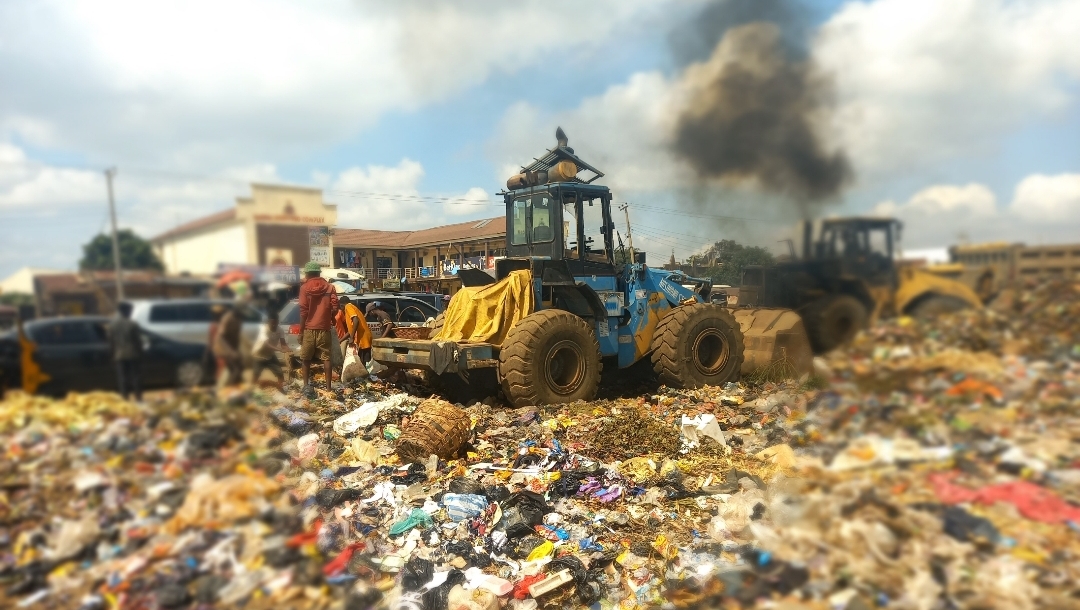
Lagos State is producing more than 20,000 metric tonnes of waste every day, according to the President of the Association of Waste Managers of Nigeria, Dr. Olugbenga Adebola.
He made this known during a quarterly forum organised by the Property and Environment Writers Association of Nigeria in Lagos, where stakeholders gathered to discuss challenges and solutions for managing waste in growing cities.
Adebola explained that waste generation in Lagos is driven by its massive population, with each resident producing between 0.5kg and 1.2kg of waste daily. When multiplied across the state’s estimated population of over 27 million people, the volume becomes overwhelming.
Despite the scale of the problem, he stressed that waste should not be seen as useless, but as a potential resource if properly managed. According to him, effective waste management plays a key role in environmental sustainability and even serves as a form of preventive healthcare.

However, he pointed out several challenges affecting the system. These include rapid urbanisation, limited land space, and inadequate infrastructure for waste disposal. One major issue, he noted, is the lack of accessible dump sites, which often leaves waste collectors unable to continue operations after picking up refuse.
He also highlighted poor waste segregation as a persistent problem, explaining that many residents are not motivated to separate their waste due to a lack of incentives. In addition, weak implementation of existing policies continues to slow progress in the sector.
Adebola, however, commended the Lagos State Government for plans to rehabilitate dump sites, a move he believes will improve the efficiency of waste collection and disposal.

Speaking at the event, Chairwoman of the association, Mrs. Okwy Iroegbu-Chikezie, acknowledged ongoing efforts by the Lagos Waste Management Authority to improve the system. She noted that the state is currently implementing a 10-year, technology-driven waste management plan aimed at modernising operations.
Key initiatives under the programme include transitioning from traditional dumpsites to material recovery facilities, upgrading transfer stations, and promoting recycling through schemes like “Trash for Cash.” The government also plans to introduce compressed natural gas-powered trucks and smart bins to support cleaner and more environmentally friendly waste collection.
Despite these efforts, she noted that only about 40 percent of waste generated in Lagos is currently collected, leaving a significant portion unmanaged.
Both speakers agreed that for Lagos to function effectively as a megacity, innovative solutions, stronger policies, and collective responsibility will be needed to tackle its growing waste challenge.




