

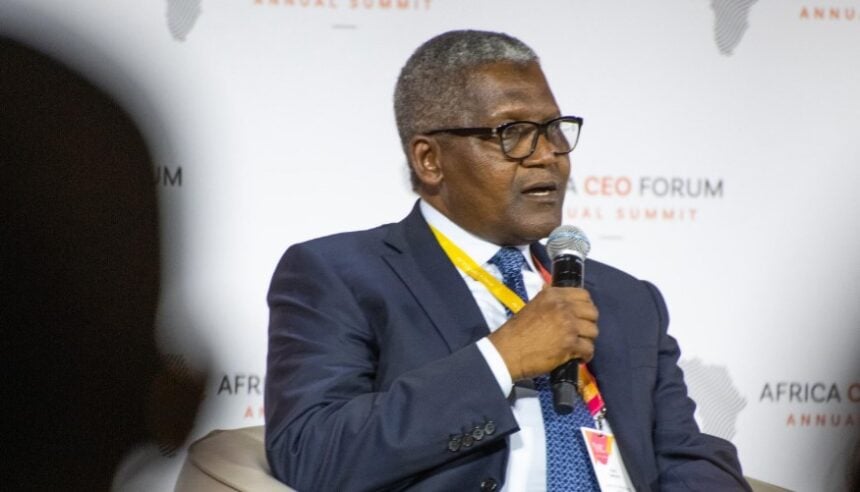
Chairman and CEO of Dangote Group, Aliko Dangote, has cautioned that the ongoing Middle East conflict could force Nigeria and other African countries to adopt COVID-style work-from-home measures if the crisis escalates further.
Dangote made the remarks on Monday after meeting President Bola Tinubu at his Ikoyi residence in Lagos, highlighting the risk posed by global oil price volatility on Africa’s debt-burdened economies.
He explained, “Normally we in Africa don’t have much savings. People live day-to-day. If they don’t work that day, they won’t eat.”
Citing Indonesia’s response to energy shortages—where authorities reduced workweeks to four days and considered full work-from-home arrangements—Dangote warned that Africa could face similar disruptions if global energy prices continue to rise.

“This crisis is not only about energy. It will hurt people who rely on small businesses, like barbers, bread sellers, and industries dependent on generators,” he said. “If it doesn’t de-escalate, prices will keep going up and governments cannot increase salaries to match, so ordinary people will feel the pinch.”
Dangote called for urgent prayers and international intervention to resolve the conflict, emphasizing its disproportionate impact on Africa despite the continent having no involvement.
Economic Opportunities Amid Challenges
The billionaire also spoke positively about President Tinubu’s recent UK state visit, describing the £746 million infrastructure agreement signed during the trip as a major boost for Nigerian business and investor confidence.
“It’s not just about the money. It’s about showing confidence in Nigeria. Other countries, like Germany, will follow suit,” Dangote said. He added that Nigerian investors can now access the UK Export Finance agency, opening a largely untapped credit resource for private sector projects.
The infrastructure agreement focuses on port development and other critical sectors, aimed at enhancing connectivity and supporting economic growth.
Dangote concluded that while Nigeria produces oil, the country remains vulnerable to global price shocks due to reliance on imported refined petroleum, underscoring the urgent need for measures to cushion citizens and businesses from the ongoing crisis.




