

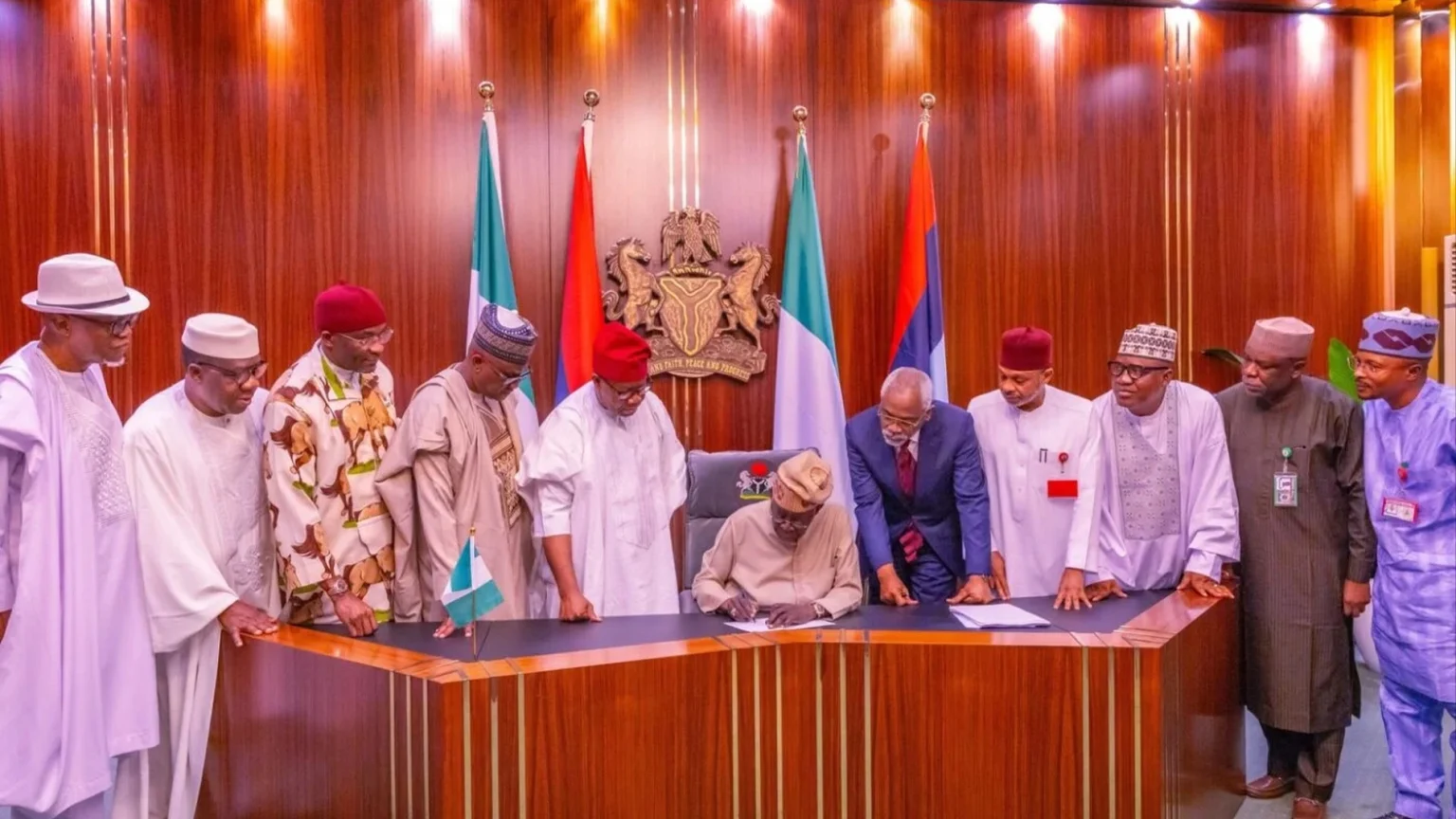
President Bola Tinubu has signed the newly amended Electoral Act 2026 into law, shortly after the National Assembly concluded harmonisation of the bill. The swift assent underscores the administration’s resolve to put in place the legal framework that will guide the 2027 general elections.

The Electoral Act 2026 marks the fifth amendment of Nigeria’s electoral law since the return to democratic rule in 1999. Previous revisions were carried out in 2003, 2006, 2010 and 2022. Similarly, the 1999 Constitution has undergone multiple alterations over the years, reflecting continuous efforts to refine the nation’s democratic process.

While periodic amendments are often necessary to address loopholes and improve electoral integrity, the frequency of such reviews has sparked debate about Nigeria’s political culture and the persistent mistrust among members of the political class. Analysts argue that mature democracies rarely require constant constitutional and electoral adjustments.

One of the most contentious issues in the new law was the method of transmitting election results. After intense deliberations, lawmakers approved real-time electronic transmission of results, with manual transmission allowed only as a backup where technical challenges arise. Supporters describe this as a pragmatic solution, especially in areas where internet connectivity may be unreliable.
However, some opposition figures and civil society groups have expressed concern that retaining manual transmission as an alternative could create room for manipulation. They argue that vulnerable systems may be exploited if not carefully monitored.

Despite the controversy, the law reinforces the centrality of Form EC8A, the primary document used at polling units to record results. The form must be signed by electoral officers and party agents before results are transmitted through any approved channel. Observers stress that strict adherence to this procedure is crucial to safeguarding the credibility of elections.
The amendment also provides explicit legal backing for the Independent National Electoral Commission’s IReV portal, allowing electronically transmitted results to be admissible in court during election disputes. Additionally, the timeframe for publishing notices of election has been reduced from 360 days to 300 days before the polls, a move that could shift the 2027 general election to January.
Another notable reform is the recognition of only two methods for selecting party candidates: direct primaries and consensus. The delegate system was removed, with lawmakers citing concerns that it encouraged manipulation and excessive monetisation of the process. Direct primaries, which allow all registered party members to vote, are seen as a way to broaden participation and reduce undue influence by powerful interests.

Historically, the open ballot system has played a role in Nigeria’s political evolution. For example, President Tinubu emerged as the Social Democratic Party’s candidate for the Lagos West Senatorial District in 1991 through such a system, which emphasised transparency in candidate selection.
While opinions remain divided over aspects of the amendment, there is broad agreement on the need for credible and transparent elections. President Tinubu described the legislative debates preceding the law’s passage as democracy in action and emphasised that although technology is essential, human integrity remains central to the electoral process.

As preparations for 2027 gather momentum, stakeholders agree that beyond legal reforms, vigilance, transparency and public confidence will be critical in strengthening Nigeria’s democracy.




