

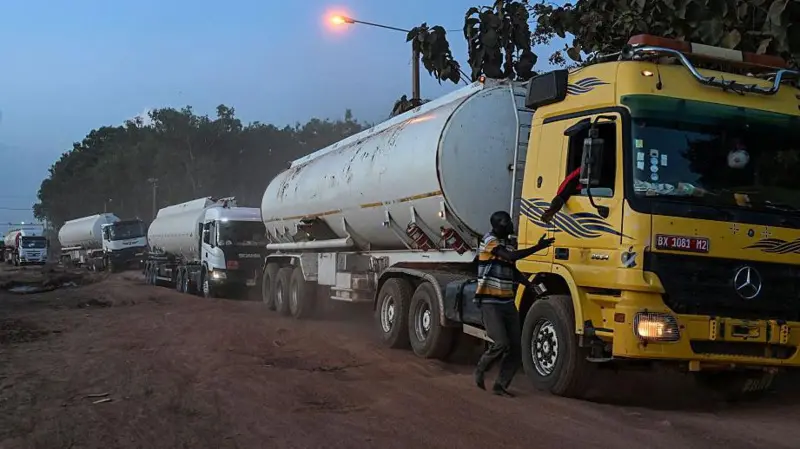
Niger has cancelled the licences of several transport companies and drivers after they refused to deliver fuel to Mali amid ongoing threats from jihadist groups.
An al-Qaeda-linked group imposed a fuel blockade on Mali in September and has targeted petrol tankers on major routes, prompting heightened security concerns.

The landlocked country relies heavily on fuel imports and, in July, signed an agreement with Niger to receive 85 million litres of fuel over six months for its vast northern desert regions, where militant activity is prevalent.
Niger, a key oil-producing nation and Mali ally, has faced challenges in transporting fuel along the 1,400km (870-mile) route, with convoys frequently attacked despite military escorts.
In November, Niger successfully delivered 82 fuel tankers to Mali, temporarily stabilizing the country’s energy supply after other shipments from Senegal and Ivory Coast were disrupted by militant attacks.
However, subsequent deliveries were hindered after transport operators and drivers refused to undertake the dangerous journeys. In response, Niger’s Transport Ministry revoked the licences of 14 transport firms and 19 drivers. One additional operator received a one-year suspension.

“This refusal represents a serious violation of legal and regulatory obligations,” Transport Minister Abdourahamane Amadou said in a statement dated January 6. The affected operators are also required to surrender their transport documents and licences.
The militant group Jama’at Nusrat al-Islam wal-Muslimin (JNIM) has expanded its insurgency to include economic disruption, kidnapping drivers and setting fuel tankers on fire. The blockade has previously forced the temporary closure of schools and universities across Mali due to fuel shortages.

The situation has drawn international concern, with the United States warning Americans against travel to Mali last November, and France advising its citizens to leave the country.
Mali’s military government, led by Gen. Assimi Goïta since his 2020 coup, initially enjoyed popular support for pledging to address long-standing security challenges, including a separatist rebellion in the north by ethnic Tuaregs that was overtaken by Islamist militants.

Although a UN peacekeeping mission and French forces were deployed in 2013 to contain the insurgency, both have since withdrawn. The Malian junta has hired Russian mercenaries to combat insecurity, yet large parts of the country remain outside government control.



