A Nation Misread, a Crisis Misframed, and the Urgent Task of Reclaiming Nigeria’s Voice
▪︎ The Shockwave — A Decision That Redefines Perception
On October 31, 2025, former U.S. President Donald Trump declared that Nigeria would be designated a Country of Particular Concern (CPC) under America’s International Religious Freedom Act (IRFA), citing years of “Christian persecution” and directing Congress to investigate.
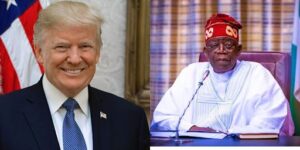
The announcement sent shockwaves through Nigeria’s diplomatic and political circles. For an administration fighting to attract investment and rebuild global confidence, the CPC tag is not just symbolic — it could freeze progress across finance, trade, and diplomacy.
But this moment, painful as it seems, can still become Nigeria’s turning point — if it responds with speed, unity, and clarity.
The CPC Mechanism — What the Label Really Means
Under U.S. law, CPC status is reserved for countries that “engage in or tolerate systematic, ongoing, and egregious violations of religious freedom.” It often comes with sanctions, visa bans, and aid restrictions.
Countries like China, Iran, North Korea, Pakistan, Eritrea, and Saudi Arabia are long-time CPC members because their governments actively restrict or persecute religious minorities. Nigeria, by contrast, has no such state policy.


Indeed, Nigeria was previously listed in 2020, then removed in 2021 after the U.S. admitted the earlier designation lacked sufficient evidence. The 2025 decision, therefore, appears driven more by political and advocacy pressures than by new, verifiable data.
▪︎.The Reality — Violence Without Religion at Its Core
Nigeria’s tragedy is not theological; it’s structural. The killings across its regions stem from overlapping crises:
Boko Haram and ISWAP terrorism in the North-East.
Banditry, kidnappings, and rural attacks in the North-West.
Farmer–herder clashes in the Middle Belt.
Communal and criminal violence in parts of the South.
Both Christians and Muslims are victims. The perpetrators are non-state actors exploiting weak policing and poverty, not religious zealots backed by government.
Labeling this a “genocide of Christians” ignores the tens of thousands of Muslim victims killed by the same extremist networks. It is not persecution. It is insecurity — indiscriminate, unrelenting, and ungoverned.
▪︎. The Local Dimension — When Nigerians Export Their Own Crisis
Part of Nigeria’s current predicament was self-inflicted. Over recent years, a handful of politically motivated Nigerians and diaspora activists — some linked to opposition networks and religious advocacy groups — lobbied aggressively in Washington, presenting one-sided narratives to U.S. legislators and human rights organizations.
By framing Nigeria’s conflict purely as Christian persecution, they found sympathy among American evangelical and conservative blocs. These groups, in turn, influenced Congressional hearings, USCIRF briefings, and think-tank reports — many of which omitted Muslim casualties entirely.
Their goal may have been domestic political embarrassment for the Tinubu government, but the cost is now national, not partisan.
▪︎. The Diplomatic Vacuum — A Silence That Spoke Too Loudly
While these narratives grew louder abroad, Nigeria’s voice faded. The absence of a sitting Ambassador in Washington, the slow replacement of career diplomats, and muted engagement with think-tanks and NGOs meant no one countered the story.
By the time preliminary CPC recommendations surfaced in advocacy reports earlier this year, Nigeria had no unified response mechanism.
This vacuum allowed misinformation to harden into “evidence.”
Diplomacy abhors silence; others filled our absence.
▪︎ The Media Gap — When the World Hears Only One Side
Not a single major international outlet — CNN, BBC, Al Jazeera, Reuters, or The New York Times — published Nigeria’s official position before the designation.
That void gave activists and partisan commentators a monopoly on the narrative.
To correct this, Nigeria must immediately launch a global communications offensive.
Outlets like the National Patriots, and Headlinenews.news can partner with the Ministry of Information and key embassies to coordinate interviews, opinion pieces, and data-driven briefings.
Global narratives can only change when facts travel faster than propaganda.
▪︎ The Comparative Lens — Lessons from Others Who Recovered
Vietnam exited CPC status after just two years — through an action plan, prisoner releases, and verifiable reforms.
Sudan was delisted after scrapping repressive laws and inviting international monitors.
Uzbekistan left CPC after opening religious registration and releasing detainees.
In each case, governments engaged, implemented, and communicated. Countries that stayed silent — Eritrea, Iran, North Korea — remain blacklisted.
Nigeria’s challenge is not unique. The path to reversal is well-charted — and achievable.


▪︎ The Realpolitik — Why This Is Also About Power
The CPC issue cannot be divorced from geopolitical currents. Nigeria’s growing ties with BRICS states, energy partnerships with China and India, and strategic autonomy unsettle some Western policymakers.
This designation could easily double as economic pressure disguised as moral concern — a diplomatic signal to pull Nigeria back toward U.S. alignment.
That makes effective lobbying, professional diplomacy, and strategic storytelling all the more crucial.
▪︎ The Way Forward — From Reaction to Reinvention
A. Appoint an Ambassador of Weight and Credibility
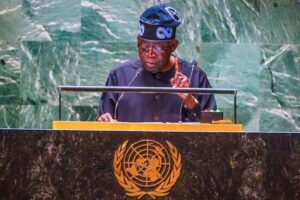
President Tinubu must immediately appoint a respected, retired diplomat as Ambassador to Washington — someone who commands bipartisan respect on Capitol Hill and credibility with the U.S. media.
B. Send a High-Level Delegation — With Balance and Authority
A powerful, unified delegation should depart for Washington within weeks, including:
Minister of Foreign Affairs and Minister of State.
Attorney-General and DG NIA.
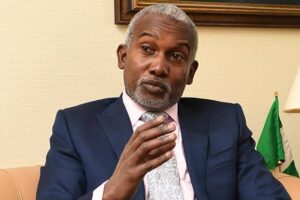
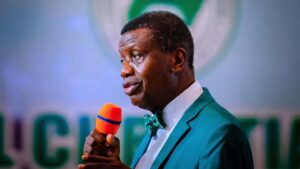
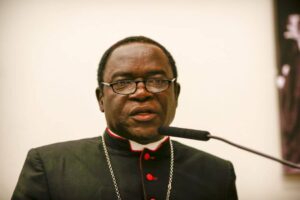
A respected Muslim cleric, alongside Bishop Matthew Kukah and Pastor E. A. Adeboye.
Veteran diplomat Prince Bolaji Akinyemi.
President of the Nigerian-American Chamber of Commerce.
Two senior media professionals including a perception management consultant.
Their assignment: secure a six-month suspension of sanctions while negotiating a verifiable reform compact.
C. Engage U.S. Lobbying and Advocacy Networks
The delegation must also retain reputable lobbying firms — those with direct access to Congress, think-tanks, and the faith-based advocacy sector in Washington.
Nigeria cannot fight narratives with silence; it must fight them with access, facts, and alliances.
D. Form a Presidential Task Force on Religious Freedom and Human Rights
An inter-ministerial team should collect, verify, and publish data monthly on attacks, arrests, prosecutions, and protection efforts — evidence Congress can measure.
E. Protect and Reform
Secure churches, mosques, and schools in vulnerable regions.
Review blasphemy and discriminatory laws at state level.
Fast-track trials for communal and sectarian crimes.
Empower interfaith councils and youth peace programs to defuse local tensions.
F. Manage Perception Professionally
Nigeria must hire a global reputation and media relations firm — such as Fraser Consulting — to manage communications with Western press, coordinate coverage, and rebuild Nigeria’s credibility through measurable storytelling.
▪︎ Faith and Unity — Nigeria’s Strongest Counter-Argument
Nigeria’s reality is one of coexistence, not religious war.
Muslims and Christians share streets, schools, and sometimes even families. They mourn together when tragedy strikes.
That truth — visible, emotional, and verifiable — must be placed before Congress, before the U.S. Commission on International Religious Freedom, and before the global media.

Unity is Nigeria’s most persuasive evidence.
▪︎ Restoring Confidence — Winning Back the Future
If left unchecked, this CPC tag could spook investors, downgrade perception, and undermine the Tinubu administration’s progress.
But swift action, transparency, and clear diplomacy can reverse it.
Nigeria must show that it is not a nation at war with faith, but one at war with terror — and winning.
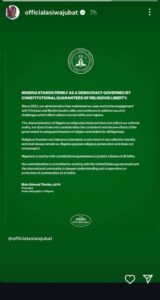
Statements from president of Nigeria
Bola Ahmad tinubu

▪︎ Conclusion — Speak, Engage, and Reclaim the Light
This designation is not destiny.
It is a test of leadership, communication, and conviction.
If Nigeria appoints the right Ambassador, sends the right delegation, and works with credible lobbying and media partners, it can turn this moment of misunderstanding into a renaissance of respect.
International diplomacy punishes silence but rewards engagement.
Now is the time to speak — with one voice, one truth, and one purpose:
To show the world that Nigeria is not a “Country of Particular Concern,”
but a Country of Particular Courage.
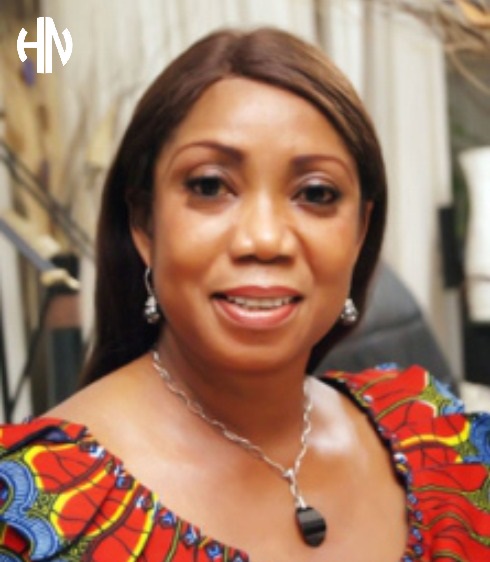
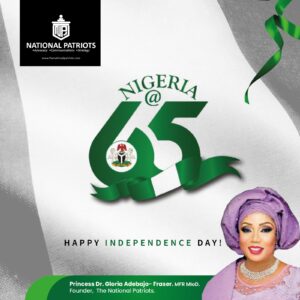
Princess Gloria Adebajo-Fraser MFR.
The National Patriots.