Nigeria ranks as the world’s second-largest Guinness market, even amid inflation and economic strain.
This contradiction raises a deeper question: is hardship the full story, or is Nigeria’s consumer economy more resilient—and more complex—than widely portrayed?
Nigeria’s position as the second-largest consumer of Guinness stout globally is not anecdotal—it is a verified commercial reality. According to Diageo, Nigeria stands just behind Great Britain in Guinness consumption, with Ireland, the brand’s origin, trailing in third place.
For a country frequently described as being under severe economic pressure, this ranking is both striking and instructive.

At first glance, it appears contradictory. Public discourse is dominated by concerns over inflation, rising fuel costs, taxation, and shrinking disposable income.
Yet, consumer behaviour tells a more layered story.
In the first nine months of 2025 alone, Nigeria’s major brewers recorded approximately ₦1.54 trillion in combined revenue from beer and related beverages.
That figure is not limited to stout, but it reflects the scale of sustained demand within the beverage sector.

This is where the popular narrative of “drinking away sorrow” begins to fall short.
Emotional consumption does exist, but it cannot explain a market of this magnitude. Consumption at this level requires more than coping behaviour—it requires active purchasing power, structured distribution, and a sizeable base of consumers willing to prioritise discretionary spending.
The implication is clear: Nigeria’s economic reality is not one-dimensional.
While hardship is evident and widely felt, there remains a significant segment of the population with enough financial capacity to sustain one of the largest Guinness markets in the world.
This does not invalidate the complaints of economic strain.
Rather, it highlights a dual reality—pressure on one hand, resilience on the other.


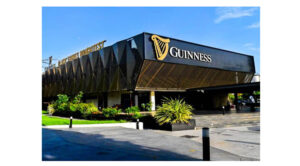
Culturally, Guinness has long been embedded in Nigeria’s social fabric. It is not merely a beverage but a symbol tied to social gatherings, hospitality, nightlife, and identity. Decades of local production and brand integration have positioned it beyond the status of an imported luxury.
This cultural entrenchment helps explain why Nigeria leads all African nations in Guinness consumption and continues to maintain strong demand despite economic fluctuations.
However, the commercial success of alcohol consumption must be weighed against its public health implications.
The World Health Organization (WHO) states that alcohol contributes to over 200 diseases and health conditions, including liver cirrhosis, cancers, cardiovascular diseases, and mental health disorders.
Globally, alcohol was responsible for approximately 2.6 million deaths in 2019.
Nigeria’s profile reflects this burden.
While a significant portion of the population abstains from alcohol, consumption patterns among drinkers are concerning.
WHO data indicate that heavy episodic drinking is prevalent, with a substantial proportion of drinkers engaging in high-risk consumption.
The consequences are measurable: tens of thousands of deaths annually in Nigeria are linked to alcohol-related conditions, including liver disease, road traffic accidents, and certain cancers.

Beyond disease, alcohol also contributes to premature mortality.
Global studies show that sustained high consumption can reduce life expectancy by several years, depending on intake levels.
In a country where life expectancy already lags behind global averages, this adds another layer of strain to public health outcomes.
Comparatively, Nigeria’s ranking should not be romanticised.
Countries like the United Kingdom, which lead in Guinness consumption, are simultaneously grappling with rising alcohol-related deaths. Ireland, despite its historic association with Guinness, has seen gradual shifts toward reduced consumption in recent years.
Nigeria, therefore, stands at a crossroads: it has demonstrated market strength, but it must also confront the health implications that accompany such consumption patterns.
The deeper lesson lies in understanding Nigeria’s economic paradox.
A nation experiencing genuine financial strain can still sustain strong consumer demand in specific sectors. This is not unusual in emerging economies, where spending patterns are often uneven. Essential costs may rise sharply, while social and cultural expenditures remain protected.
Thus, the idea that Nigerians are simply “drinking away their sorrows” does not hold under scrutiny. If buying power were entirely eroded, consumption at this scale would not be possible.
What exists instead is a complex balance—economic pressure coexisting with pockets of liquidity and prioritised spending.
For policymakers, this duality offers important insight.
First, reform efforts should be assessed with nuance. The presence of strong consumer sectors suggests that economic activity, though strained, remains active.
Second, the resilience of consumer spending should not distract from its consequences. High alcohol consumption, if unchecked, carries long-term costs in healthcare, productivity, and social stability.
Nigeria’s Guinness story is therefore both a signal and a warning. It signals a level of economic resilience that contradicts narratives of total collapse. At the same time, it warns of the risks associated with sustained high consumption in a country already facing health and developmental challenges.
Understanding this balance is essential.
Nigeria is not a nation devoid of capacity, nor is it one free from hardship.
It is a country navigating both realities at once—spending and struggling, consuming and coping, resilient yet vulnerable.

The National Patriots notes that Nigeria’s position as the world’s second-largest Guinness market reflects a deeper economic reality.
A nation in total collapse cannot sustain such levels of discretionary consumption. With about ₦1.54 trillion recorded in brewery revenues within nine months of 2025, it is evident that meaningful buying power still exists despite inflation and public concerns.
However, this must not be misread as prosperity. WHO data show alcohol contributes significantly to liver disease, road accidents, cancer and premature death in Nigeria.
The National Patriots therefore advises that those who choose to drink should do so occasionally and strictly in moderation, with due regard to their health status.
Nigeria must interpret this paradox with clarity and responsibility.
The National Patriots finds it striking that, even under severe economic pressure, Nigeria remains the world’s second-largest market and consumers for Guinness Stout, behind only Great Britain, while Ireland ranks third.
Diageo itself describes Nigeria as its second-largest Guinness market globally.
At the same time, the pressure on households is real: Nigeria’s headline inflation stood at 15.06% in February 2026, while petrol prices have surged sharply in March, with reports of pump prices hitting about ₦1,400 per litre in parts of the country. With an increase in rent and compulsory taxation, yet demand for alcohol and brewery products remains resilient.
In the first nine months of 2025 alone, Nigeria’s major listed brewers recorded about ₦1.54 trillion in combined revenue from beer and other beverages. That says two things. First, Nigerians are still one of the most commercially resilient consumer populations in the world.
Second, hardship has not erased social consumption; it has merely coexisted with it.
Among African countries, Nigeria clearly stands in a league of its own in Guinness consumption, revealing both cultural loyalty and a consumer paradox policymakers should study more seriously.
Dr. G. Fraser. MFR.
Headlinenews.news Special Report