


Nigeria’s declaration of a state of emergency on terrorism has ignited renewed public expectations for a genuine overhaul of the country’s security architecture. For over a decade, banditry, insurgency, and extremist networks have expanded across the North-West, North-East, and North-Central, transforming from local criminal groups into transnational threats. With attacks now recorded in more than 15 states daily, Nigerians are demanding a decisive break from the status quo.
The stakes are higher than ever. The United States is reassessing its security engagement with Nigeria, and the ongoing pressure related to the Country of Particular Concern (CPC) designation underscores the seriousness of global scrutiny. Nigeria now understands that unchecked terrorism can trigger international sanctions, disruption of aid flows, and even foreign intervention if sovereignty appears compromised.
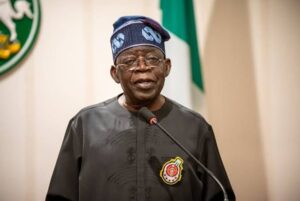
For the first time in years, the Federal Government appears ready to treat terrorism as a national survival issue, not a political inconvenience. The President’s declaration sets the tone. But declarations alone do not defeat insurgents. Leadership does.
● Global Standards Demand Professional Defence Leadership — Not Political Placements
In modern warfare, the competence of national security leadership is not optional. It is the foundation upon which strategy, coordination, morale, and international cooperation rest.
Across the world:
Kenya assigned counterterror portfolios to intelligence specialists after the Westgate attack.
Pakistan and India place seasoned generals with operational experience in charge of counterinsurgency theatres.
Somalia’s gains against Al-Shabaab only became significant when professional commanders—not political allies—took over strategic planning.
The U.S. Department of Defense interfaces strictly with officials who possess advanced military, intelligence, or strategic credentials.

No serious nation places political appointees at the apex of its counterterror campaign. In countries fighting non-state armed groups, these roles require:
Not less than 20 years of operational command experience,
Field exposure in active theatres,
Expertise in counterterrorism and intelligence,
Mastery of modern warfare technologies,
Proven capacity to lead multi-agency operations.
These are the global benchmarks.
Nigeria cannot expect meaningful U.S. collaboration — especially the review of CPC status — while its defence architecture is led by individuals whose backgrounds do not align with the complexity of the threat environment.

● Terrorism in Nigeria Has Escalated Into a Full-Scale Hybrid War
Nigeria is facing a compound security crisis:
Boko Haram/ISWAP continue asymmetric warfare in the North-East.
Bandits now operate with military-grade weapons, drones, intelligence networks, and external funding.
Kidnapping syndicates have evolved into regional terror enterprises.
Attacks increased sharply even after the state of emergency declaration — a direct challenge to presidential authority.
This is no longer a policing problem. This is warfare.
A police officer is trained for law enforcement, community order, and criminal investigation. Counterterrorism leadership, however, requires:
Theatre command experience
High-intensity conflict management
Advanced military training
Strategic warfare planning
Air-ground coordination
Intelligence fusion
Cyber and communications security
Logistics and force deployment expertise

The gap between Nigeria’s threat level and the expertise of some in its defence leadership is now too wide to ignore.
● Why Nigeria Must Rebuild Its Security Architecture Immediately
To succeed under the state of emergency, Nigeria needs a defence structure aligned with international counterterrorism standards.
A. Professionalisation of Top Security Roles
The top tier of national defence must be staffed exclusively by individuals with:
Senior military pedigree
Proven counterinsurgency experience
Operational success in difficult theatres
Ability to command multi-branch operations
Political sentiment cannot be allowed to override professional criteria in roles that determine the survival of the Nigerian state.
B. Modernisation of Warfare Capability
The President must empower professionals to lead:
Aerial warfare modernisation, including drones, ISR platforms, and precision airstrike systems
Acquisition of cyber defence, surveillance, and intelligence fusion technologies
Strengthening of logistics, supply chains, armour, and force mobility
Expansion of troop welfare — feeding, housing, insurance, mental-health support
Recruitment and restructuring to increase force strength and battle readiness

No foreign-funded terror network should ever be better equipped or more organised than the sovereign government of Nigeria.
C. A Command-and-Control Culture That Matches Global Best Practice
Nigeria urgently needs:
Secure digital communication systems
Real-time intelligence sharing
Unified national operations centre
Clear lines of authority and accountability
A command structure immune to political interference
The war cannot be won with fragmented structures or mixed messaging.
● The Strategic Advisory Team: A New Model for Presidential-Level Intelligence and Oversight
To complement official institutions, the President would benefit from a covert 6–8 person Strategic Advisory Team, composed of:
Retired senior military generals
Serving defence professionals
National security technocrats
NGOs like the National Patriots
Select media with investigative expertise (e.g., Headlinenews.news)

Nigerians of integrity with no political entanglements
This team would:
Provide undiluted intelligence directly to the President
Offer real-time, theatre-ground assessments
Recommend strategies unfiltered by bureaucracy
Detect sabotage, misinformation, or institutional complacency
Ensure Nigeria’s terrorism response stays aligned with global standards
Many nations at war maintain similar parallel advisory structures for accuracy, speed, and strategic clarity.
● The President’s Political Future Depends on the Success of This Project
Nigeria’s security crisis threatens:
National stability
Economic recovery
Investor confidence
International reputation
The safety and unity of millions of citizens
The political implications are clear:
No administration survives prolonged insecurity.
The President’s re-election prospects — and his legacy — will be defined almost entirely by whether he wins or loses the war on terrorism.
He cannot afford sentimentality.
He cannot afford political balancing in technical security roles.
He cannot rely on appointees who lack the professional depth required for modern warfare.

Contracts, boards, and advisory appointments can accommodate political allies.
National defence cannot.
Conclusion: Nigeria Must Choose Professionalism or Prolonged Conflict
The terrorists have already issued their answer to the President’s state of emergency — escalating attacks across multiple states. This is a direct confrontation with the authority of the Nigerian state.
Nigeria must respond with a defence structure that is worthy of the moment.
Professionalism, expertise, and modern warfare competence must replace political placements.
A unified, technologically advanced, military-driven counterterrorism strategy must be activated immediately.
And the President must surround himself with the most capable strategic minds, not the most loyal political allies.
Failure is not an option.
Nigeria’s security, global standing, and political stability depend on what the government does now.
Princess G. A. Adebajo-Fraser MFR.
The National Patriots.




