

The Nigerian National Petroleum Company Limited (NNPC) is actively pursuing partnerships with foreign investors, including a major Chinese petrochemical firm, to revive its long-dormant 445,000-barrel-per-day state-owned refineries through equity sales and operational collaboration.

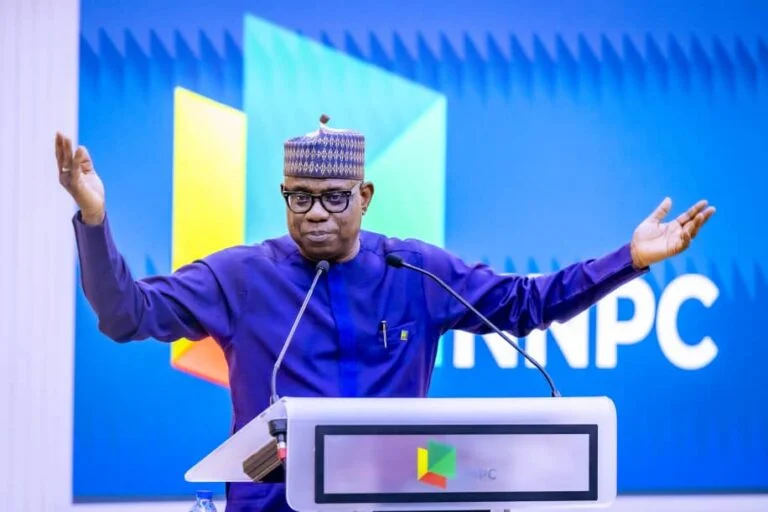
Group Chief Executive Officer Bayo Ojulari disclosed the strategy during a fireside chat titled “Securing Nigeria’s Energy Future” at the Nigeria International Energy Summit 2026 in Abuja on Wednesday.
Ojulari explained that the board-approved reset shifts away from full government control toward bringing in technically competent operators with proven refinery management experience. Rather than outright sales or O&M contracts, NNPC is prepared to divest significant equity stakes to give partners “skin in the game” while retaining a minority interest.

“So the current NNPC strategy, as approved by our board, is to focus on getting partners that have a track record of running refineries. We are not looking for contractors. We are not looking for Operations and Maintenance,” Ojulari said.
“We are looking for an entity that runs refineries. We will probably look at options where you can sell down some of our equity, so that they have a skin in the game. And with that, with the operational capacity, we will then cooperate with them. They lead the operation, and then we use that to develop, rebuild our own skills and support.”

He stressed the goal of creating a self-financing, commercially viable refining system, noting that global refinery margins are typically slim and NNPC’s current structure is ill-equipped for profitability without external expertise and capital.
Ojulari confirmed that talks with potential investors are progressing, including a recent meeting with a Chinese company that owns one of the world’s largest petrochemical plants.

“Incidentally, I’m just coming from a meeting with one of the potential investors, where we are looking at their plants. They are moving; they are going to the refinery tomorrow to inspect. And we also have a few other companies as well,” he revealed.
Nigeria’s four state-owned refineries Port Harcourt (two plants), Warri, and Kaduna have operated far below capacity for decades despite multiple rehabilitation contracts costing billions of dollars. Utilization has averaged only 50–55%, with output often limited to mid-grade products that destroyed rather than created value.

Ojulari described the refineries as a major pressure point upon his assumption of office, fueled by public frustration over repeated failures and wasted funds.
“Nigerians were angry. A lot of money had been spent, and expectations were very high. We were under extreme pressure,” he said.
An internal review exposed structural inefficiencies, rising contractor costs, and a financing model that benefited EPC contractors and financiers while leaving NNPC with unsustainable losses.
“There were political pressures to keep them running, but if we continued, it would have been value destruction for the next 30 years,” Ojulari stated.
He highlighted that the Dangote Petroleum Refinery (650,000 bpd) has provided critical breathing space for domestic fuel supply stability.
“Thank God for Dangote Refinery. Whether you love Dangote, you hate him, say whatever you want to say, Nigerians should thank God for Dangote,” Ojulari said, drawing applause.
He praised its local ownership and operational success as a strategic asset for energy security, noting NNPC’s own equity stake and ongoing engagement with Dangote Group to deepen cooperation under the Petroleum Industry Act framework.

“We said, what’s the hurry? We have a refinery that is working. It’s not owned by NNPC, but it’s a Nigerian refinery, built in Nigeria, working in Nigeria,” he added.
Ojulari expressed cautious optimism for oil production, projecting Nigeria could reach 1.8 million barrels per day in 2026, though he described the 2025 budget benchmark of 2.06 mbpd as overly ambitious.
The comments reflect NNPC’s shift toward commercial realism, acknowledging that continued state-run refinery operations under the existing model are economically unsustainable, while positioning private sector collaboration including with Dangote as essential for long-term viability and reduced import dependence.




