

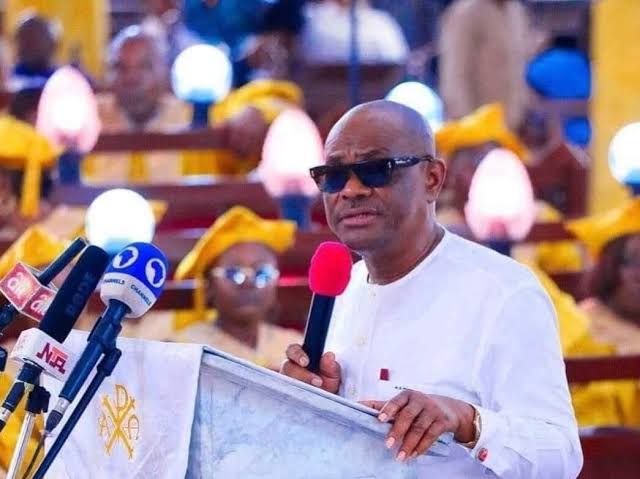
FCT Minister Nyesom Wike remains one of the most polarising figures in Nigerian politics, admired by some for his boldness and strategic depth, and criticised by others for his combative style and disruptive influence. His political journey, especially his ongoing feud with Rivers State Governor Siminalayi Fubara, has once again brought the state into the centre of national attention.

Wike’s brand of politics is defined by intensity, control, and an unwillingness to compromise. He is widely regarded as a political tactician who thrives in confrontation and sees politics as a battlefield where loyalty is absolute and dissent is unforgivable. This disposition, while earning him a reputation as a master of political survival, has also made him a destabilising force within both the PDP and the APC.

The current crisis in Rivers State is rooted not only in personal ambition but also in long-standing political and ethnic undercurrents. Wike’s fallout with his former political protégé, Governor Fubara, goes beyond allegations of betrayal. At its core lies a struggle for control, influence, and the fear of losing a political structure painstakingly built over years. Wike appears deeply unsettled by Fubara’s perceived alignment with his long-time political adversaries, many of whom he once fought to the margins of Rivers politics.

This conflict has also revived discussions around ethnic representation and power balance in the state. Fubara’s emergence as the first civilian governor from the riverine Ijaw extraction has been framed by some as a long-overdue correction of historical marginalisation, while others see it as a threat to the established political order dominated by upland interests. These tensions have only intensified the bitterness of the Wike–Fubara rivalry.

Observers note that Wike’s political style mirrors the harsh realities of Nigerian politics itself — a space often likened to a jungle where strength, cunning, and survival instincts matter more than ideals. In this environment, betrayal is commonplace, alliances are temporary, and power is pursued relentlessly. Wike, unlike many of his peers, does not disguise this reality. He wears his aggression openly and makes little effort to appear conciliatory.

However, there are growing concerns that Wike’s current political maneuvers, particularly his perceived role in weakening opposition parties, may ultimately work against him. The same political fire he uses to dominate others could consume his own future. History has shown that Nigerian politics is unforgiving, even to its most skilled players, and today’s enforcer can quickly become tomorrow’s casualty.

Governor Fubara, on the other hand, is not without criticism. Analysts argue that his quiet, strategic posture masks a calculating and potentially ruthless political instinct. His willingness to confront his benefactor suggests a leader determined to assert independence, regardless of the consequences. This mutual hardline approach on both sides has pushed Rivers State to the brink of prolonged instability.

The metaphor of falling rafters captures the gravity of the situation. What appears stable can collapse suddenly, injuring everyone beneath it. Rivers State now stands at such a precarious point, where unchecked ambition and unresolved grievances threaten governance, peace, and public trust.
As tensions escalate, the absence of respected mediators and wise counsel is glaring. The need for restraint, dialogue, and statesmanship has never been more urgent. Without intervention, the political structure of Rivers risks caving in under the weight of personal battles, leaving lasting damage far beyond the ambitions of the key actors involved.




