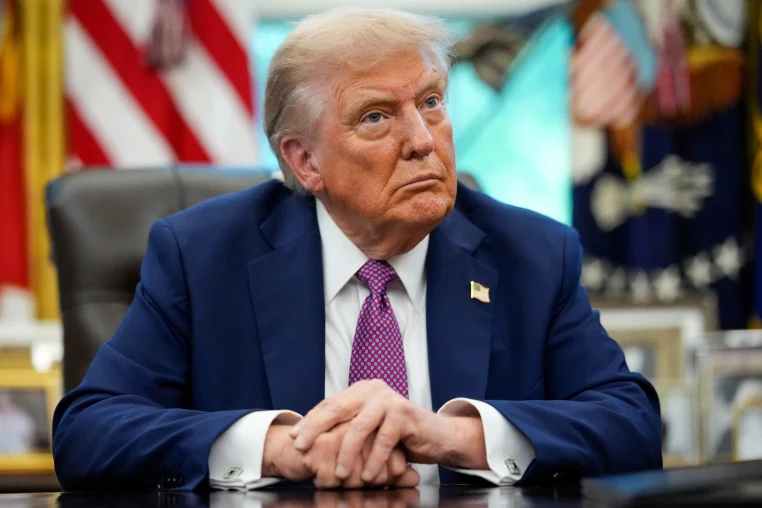
Oil prices declined on Wednesday amid expectations of increased supply after United States President Donald Trump said Venezuela would hand over up to 50 million barrels of crude oil to the US.
According to Oilprice.com, Venezuela and the United States have reached an agreement under which the South American country would export crude valued at about $2bn to the US market.
Brent crude fell below $60 per barrel on Wednesday evening following Trump’s statement that Venezuela’s “interim authorities” would supply between 30 million and 50 million barrels of “high-quality” oil to the US at market prices. The shipment is estimated to be worth close to $2bn.

The deal with the US-aligned leadership in Venezuela is expected to boost the supply of heavy crude to refineries along the US Gulf Coast and could further limit illicit shipments of discounted Venezuelan oil to China, Reuters reported.
Venezuela’s state oil company, PDVSA, has been unable to ship crude cargoes to Asia for nearly a week as the US “oil quarantine” of the country continues, according to shipping data reviewed by Reuters on Tuesday.
Chevron remains the only Western oil company authorised by the US Treasury to operate in Venezuela, exporting crude directly to the US Gulf Coast. Meanwhile, shipments to Asia have stalled, reducing supplies to China, Venezuela’s largest oil customer.
Bloomberg reported that Chinese buyers have cut back on Venezuelan crude purchases as the discount between Brent and the country’s flagship Merey blend narrowed from $15 per barrel last month to about $13 per barrel. The rise in Venezuelan oil prices follows a US naval blockade that has disrupted tanker movements to and from the country. US Secretary of State Marco Rubio said earlier this week that the blockade is unlikely to be lifted anytime soon.

The US is now seeking greater access to Venezuela’s oil reserves, with Trump reiterating on Tuesday that the country would “turn over” between 30 million and 50 million barrels of crude to the United States.
Trump has also demanded that Venezuela’s interim leader, Delcy Rodríguez, grant the US and private companies “total access” to the nation’s oil industry. The crude exports could be sourced from floating storage that has accumulated since the naval blockade began offshore Venezuela in mid-December.
Venezuela entered 2026 amid heightened political uncertainty following the capture of President Nicolás Maduro by US forces and his transfer to the United States alongside his wife, Cilia Flores, to face federal charges.
Maduro later appeared in a US court, where prosecutors revived longstanding allegations including narco-terrorism conspiracy and cocaine trafficking. He has denied all charges.
After his detention, Venezuela’s Supreme Court announced that Vice President Delcy Rodríguez had assumed office as Acting President, citing the need for institutional continuity. The developments have renewed attention on the future of Venezuela’s economy and its oil-dependent energy sector, even as Trump stated that the US would oversee the oil-rich nation.
By Wednesday evening, Brent crude was trading at $59.99 per barrel, while West Texas Intermediate (WTI) fell to $56.10. Analysts project that prices could decline further as additional oil flows into the US market.