

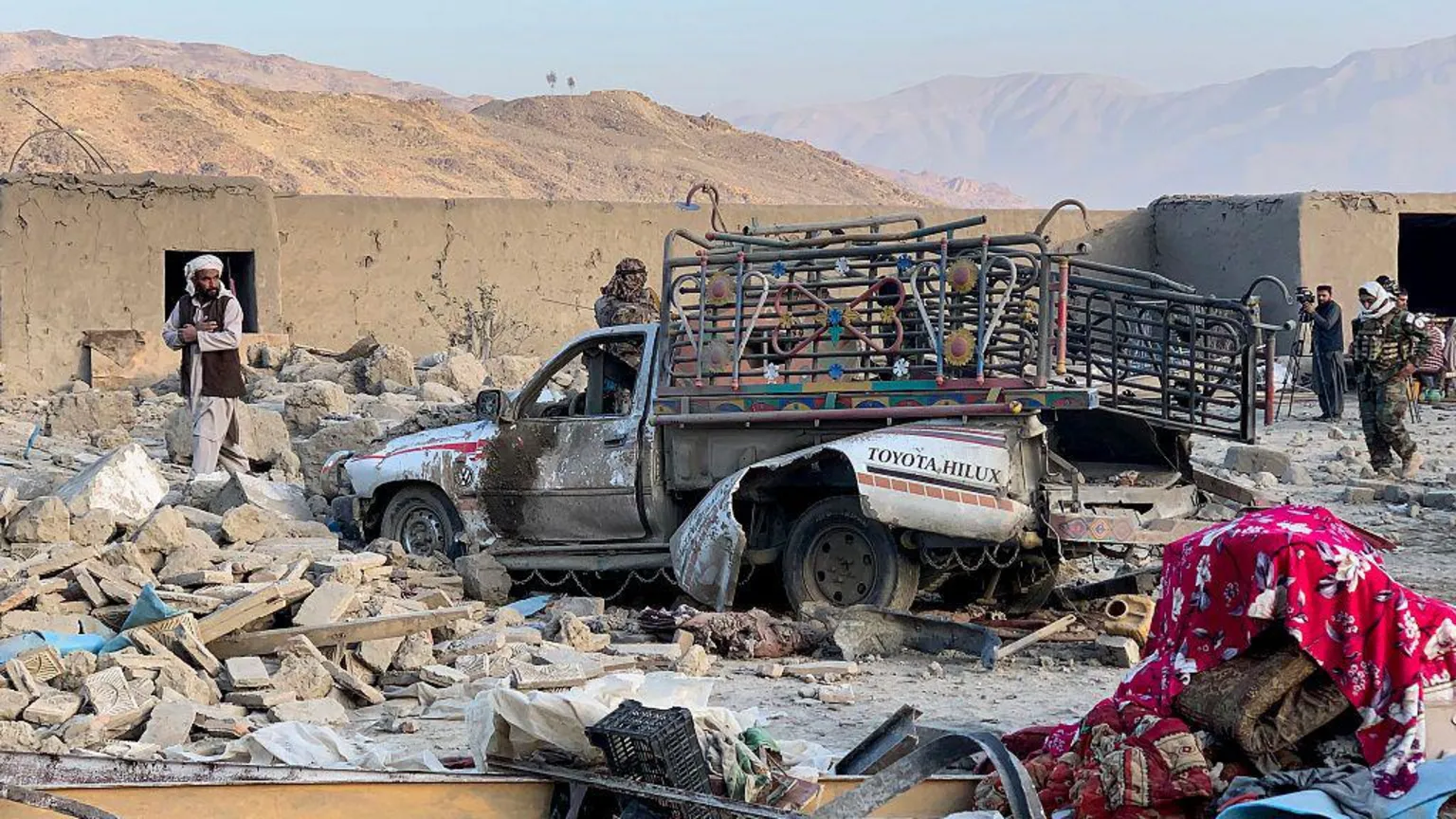
Pakistan carried out multiple overnight air strikes on Afghan territory, which the Taliban reported killed at least 18 people, including women and children.

Islamabad stated the strikes targeted seven alleged militant camps and hideouts along the Pakistan-Afghanistan border, citing recent suicide bombings inside Pakistan as the reason for the operation. The Pakistani Ministry of Information and Broadcasting described the attacks as “intelligence-based selective targeting” of members of the banned Tehreek-i-Taliban Pakistan (TTP), which it calls “Fitna al Khawarij,” along with their affiliates and Islamic State-Khorasan Province operatives.

“The strikes are a retributive response to recent terrorist attacks in Pakistan,” the ministry said in a statement on X. Among the recent attacks cited was a bombing at a Shia mosque in Islamabad earlier this month, as well as multiple attacks in north-western Khyber Pakhtunkhwa since the start of Ramadan. Pakistan accused the Afghan Taliban of failing to act against militants and claimed to have “conclusive evidence” that the attacks were directed from Afghanistan.

Afghanistan condemned the strikes, accusing Pakistan of targeting civilian homes and religious institutions in Nangarhar and Paktika provinces. In Girdi Kas village, Bihsud district, resident Shahabuddin told reporters that of 23 family members, only five survived after their house was destroyed. Taliban officials confirmed that 18 members of the family were killed.

In the Bermal and Urgun districts of Paktika, a guesthouse and a religious school were reportedly hit, though officials and locals said both were empty at the time of the strikes.
The Taliban’s defence ministry called the attacks a “blatant violation of Afghanistan’s territorial integrity” and a “clear breach of international law,” warning that “an appropriate and measured response will be taken at a suitable time.” The ministry also criticized Pakistan’s military, claiming that strikes on civilian targets highlight “failures in intelligence and security.”

The air strikes follow a fragile ceasefire agreement reached in October between Pakistan and the Taliban after months of deadly cross-border clashes, and come just days after Saudi Arabia mediated the release of three Pakistani soldiers captured during last year’s border fighting.
Pakistan and Afghanistan share a 1,600-mile (2,574 km) mountainous border, which has been a persistent hotspot for militant activity since the Taliban returned to power in 2021.




